

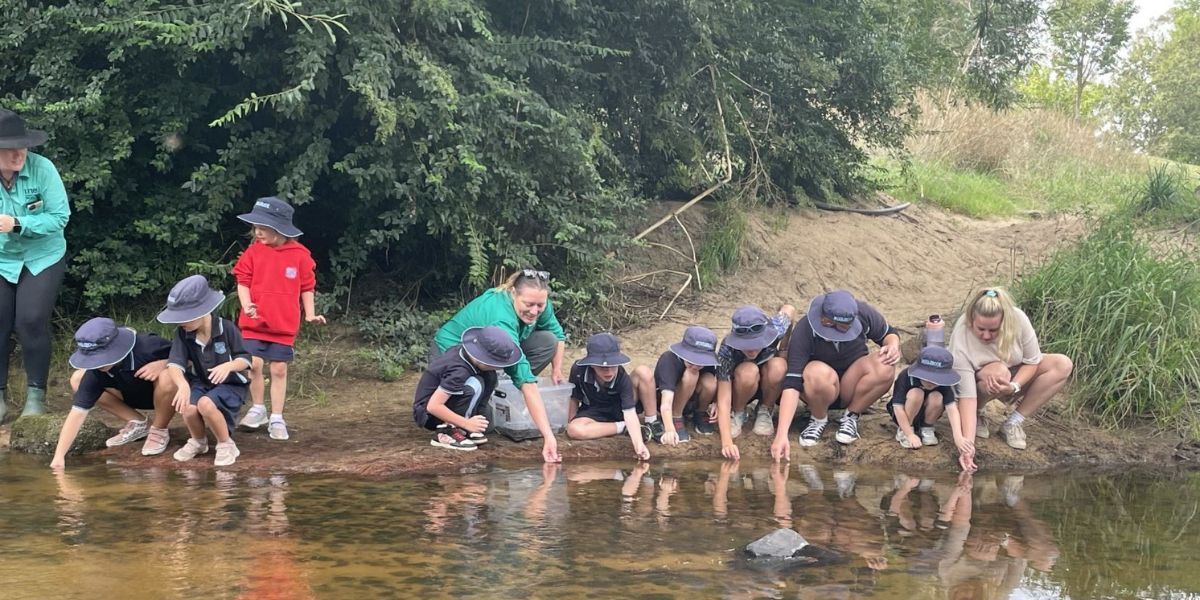
A record number of Bell’s turtle (Wollumbinia belli) hatchlings have been released into the Macdonald River near Walcha and Bendemeer this week, marking a major milestone in local turtle conservation.
This project is funded by the Australian Government Natural Heritage Trust and delivered by Northern Tablelands Local Land Services, a member of the Commonwealth Regional Delivery Partners panel.
A cohort of 1,085 hatchlings have joined the river’s ecosystem, reflecting the success of a multi-year conservation project aimed at restoring the endangered population.
Northern Tablelands Local Land Services, in partnership with the University of New England, has been incubating Bell’s turtle eggs as part of this ongoing project since 2016.
“This release marks the latest milestone in this effort,” said Dr Lou Streeting, Postdoctoral Fellow at University of New England.
“It brings the total number of Bell’s turtle hatchlings released back into our waterways over the past seven years to 3,808.”
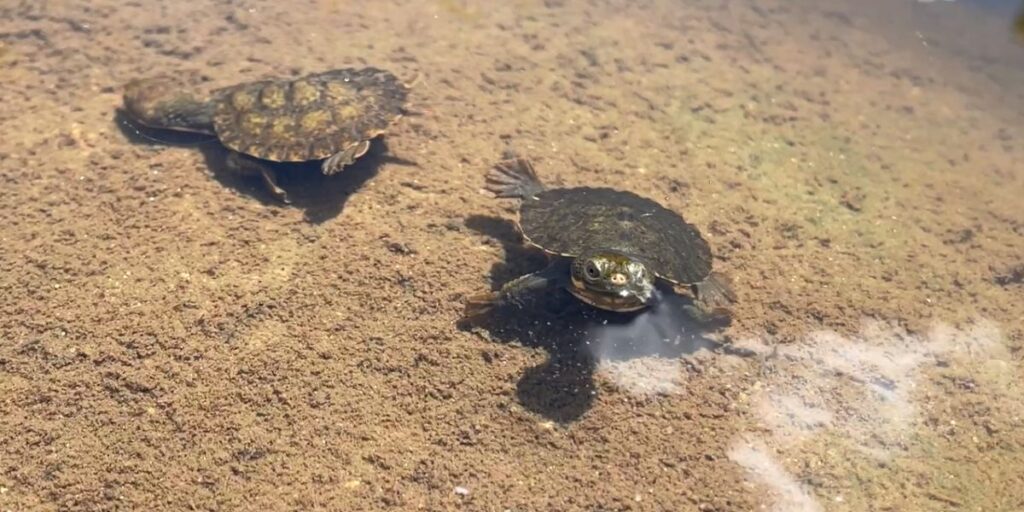
Bell’s turtles are an endangered species found only in the Northern Tablelands of New South Wales and while there are healthy adult populations, the population has become endangered due to the number of juvenile turtles declining. This is largely a result of foxes preying on the turtles’ nests during breeding season.
Together with the protection of turtle nests from depredation by foxes, the conservation effort is expected to make a significant contribution to the long-term recovery of the Bell’s turtle
population in the Macdonald River catchment.
“We are using a dual approach to boost recruitment in wild populations,” said Martin Dillon, Senior Land Services Officer, Northern Tablelands Local Land Services.
“We’re working with landholders to protect Bell’s turtle nesting areas from foxes, and we work closely with researchers from the University of New England turtle lab to raise hatchlings for release to boost wild populations.”
“Our team has worked to ensure that these turtles are given the best possible start in life, and we’re thrilled to see the results of our conservation efforts,” said Mr Dillon.
The project will continue for the coming years, ending June 2028, with a focus on enhancing the survival rates and ensuring the long-term recovery of the species.
Pictured: Woolbrook School releasing turtle hatchlings.
Something going on in your part of the region you think people should know about? Send us a news tip or email newsdesk@netimes.com.au.