

Moree Plains is a big paddock, even by New England standards.
The Moree Plains Shire Council is responsible for just over 14,000 people living on 18,000 square kilometres of land. The population is centred in Moree and connected the other population centres by the Northern Tablelands’ largest road network spanning 2,466 kilometres.
The region also has a reputation for taking on progressive projects on a large scale. In 2015, they built one of the early solar farms that could supply clean energy to around 15,000 homes. It’s building solar powered cotton gins and is investing $20 million for the upgrade of the Artesian Aquatic Centre. As well as these projects, every year, Moree Plains produces crops like cotton, pecan nuts, oats, barley, sorghum and premium wheat. At the same time sheep, cattle, oil seeds and olives contribute to the Gross Regional Product (GRP) of more than $750 million a year.
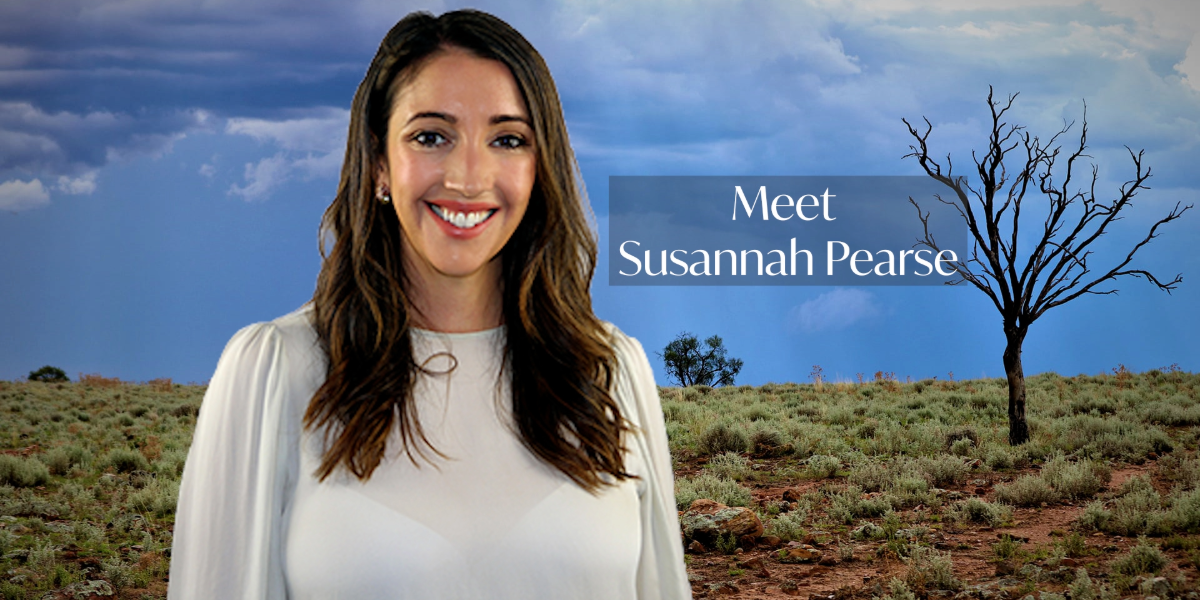
Susannah and Oscar Pearse are two of the producers on the plains. Susannah also brings a background of marketing and communication to the mix and is deputy mayor at the Moree Plains Shire Council.
Susannah met Oscar in Brisbane, where she worked and lived. After just a few visits to Moree, she questioned her life and says, “I thought, is there a better way to do things”. The answer was yes.
That “better way” took her away from working for an organisation that “encouraged people to eat, drink (alcohol) and gamble more” to living on a farm that has been in (well known ag leader and NSW Farmers board member) Oscar’s family for six generations.
“Farming seems like a really honourable way to earn your living,” says Susannah.
After 14 years on the Moree Plains, that same attitude has ensconced Susannah in the Moree Plains community. Her passion for inclusion, listening and getting on with the job lead her to the Moree Plains Shire Council, where she is – for a couple more weeks – the Deputy Mayor.
Moree offers so much, but there is an underbelly
“Often, the reason we (Moree) hit the news is not for the right reasons,” Susannah says with some trepidation.
Crime is a magnet to legacy media; they look for the “flash in the pan” but often miss the true story. Moree has some “significant underlying social issues,” says Susannah, but “until we fight for the people who are worst off in our community…we’re going to continue to have these issues”.
To change the focus of the community, it takes time and heart…and money. The state government has heard the call for help and have invested $13.6 million into strategies. The first step has been to conduct an audit of the more than 50 community service organisations operating around the Moree Plains, and discover what those organisations are actually doing, and what they deliver to support the community. The audit is investigating how much money is going into those organisations, how they are spending it and what outcomes they are producing for the community.
“I get frustrated with branding of issues in Moree being Aboriginal issues, they are not.”
Susannah Pearse sees the youth crime and other community issues as more about where you live, not who you are.
“A bigger determinate in our area is actually if you live in South Moree or not.”
This is more about a person’s economic status, not whether a person is Aboriginal or not.
Susannah remains positive about the future of the local Aboriginal community.
“We have a really proud Gomeroi culture here…and we need to celebrate that with the Aboriginal community”.
Attracting people to Moree
Moree has an appeal, and Susannah is quick to sell up the opportunity and affordability.
“You can buy affordable housing…speak to anyone in Moree, no one has a problem finding a job…and we’re well connected. If you want to get back to big smoke… you can jump on a plane and get there,” Susannah said.
But is the infrastructure in place to cater for new arrivals to Moree? Susannah says yes, “It’s not very sexy, but our sewage treatment plant can handle up to 20,000 people”.
The town has also boosted its water supply which will sustain the towns industries through droughts.
Moree and the towns and farming communities on the surrounding black soil plains look like they are heading in the right direction, but that future is up to the community.
Who will lead the community in the future?
“We have had a very wise councillor, Councillor Mike Montgomery here for over 30 years…he always says ‘The community never gets it wrong’,” Susannah said.
You can watch the full interview with Susannah Pearse on New England Today, our YouTube channel:
Something going on in your part of the New England people should know about? Let us know by emailing newsdesk@netimes.com.au