

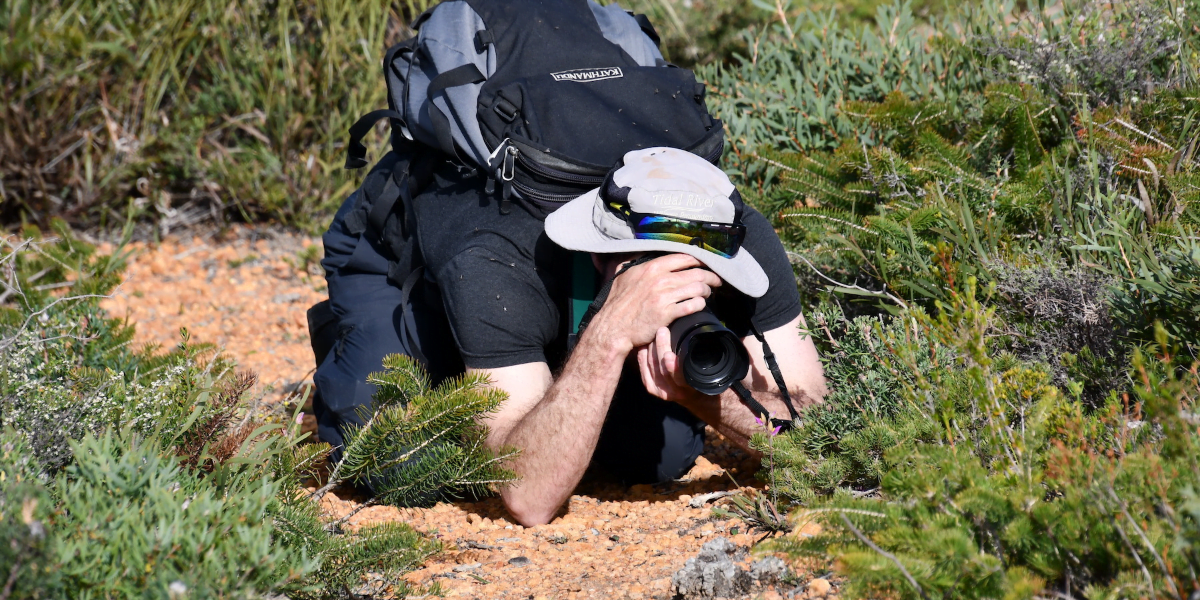
New research finds almost 4000 Australian plant species have not been photographed before in the wild, which may lead to their extinction.
Scientists have documented plant species for centuries to help us understand and protect the incredible diversity of flora in our world. But according to new research, many have never actually been photographed in their natural habitats – and that’s a problem.
Researchers from UNSW Sydney and the Australian Institute of Botanical Science, part of the Royal Botanic Gardens and Domain Trust, surveyed 33 major online databases of plant photographs to examine the photographic record of Australian plant species. The findings, published in New Phytologist, reveal out of 21,077 native Australian vascular plant species, almost 20 per cent lack a verifiable photograph.
Lead author of the study and UNSW Science PhD student Thomas Mesaglio says Australia is one of the richest areas in the world for native species.
“It was surprising to see how many plant species had just line drawings, illustrations, paintings, or even no media at all,” Mr Mesaglio says.
Senior author of the study from UNSW Science Associate Professor Will Cornwell says a lack of detailed photos can have real consequences. Many plant species that are difficult to identify in the wild may go extinct if scientists cannot properly identify them with the help of photos.
“We had assumed every plant species would have simply been photographed by someone, somewhere, throughout history. But it turns out this isn’t the case,” says A/Prof. Cornwell.
“This is where citizen scientists can come in and help us fill this gap with their photos.”
It’s one thing to have comprehensive photographic records for professional scientists to use in identification guides. But when the plant world is under threat from multiple fronts, including habitat clearing and climate change, photos can help engage the public in plant science.
“People can engage with, sympathise with, and get much more excited about plants with photographs, which is vital when our natural environments are more at risk than ever,” Mr Mesaglio says.
“Because digital photography is so accessible now, anyone can also help make a meaningful contribution to science using the camera in their pocket.”
Using a platform like iNaturalist, keen citizen scientists can have their snaps identified by experts and share the data with aggregators like the Atlas of Living Australia and the Global Biodiversity Information Facility to be used in research and conservation.
“Since April last year, we’ve identified nearly 10 per cent of those previously unphotographed species thanks to members of the public uploading their photographs and experts who’ve kindly identified them,” Mr Mesaglio says.
“There could be many more in personal collections or behind paywalls just waiting to be shared.”
“We also suspect more photos exist, but they’re hidden away on social media or behind scientific paywalls that aren’t accessible, discoverable, or searchable,” Mr Mesaglio says.
“Of the species with photographs, many have a single photo. We not only want to capture those unrepresented species but also continue building the photographic record for all species.
“Doing so will help us identify, monitor and conserve our native species for generations to come.”
Using a platform like iNaturalist, keen citizen scientists can have their snaps identified by experts and share the data with aggregators like the Atlas of Living Australia and the Global Biodiversity Information Facility to be used in research and conservation.
Like what you’re reading? Support New England Times by making a small contribution today and help us keep delivering local news paywall-free. Donate now