

A new exhibition opening in Gunnedah next month will invite visitors to look, listen, and join a conversation about bringing First Nations languages back into everyday life.
Guwaalaylaya!: Keep speaking to each other! will open at the Gunnedah Bicentennial Creative Arts Gallery at 6pm on Wednesday, 16 December, and run until Friday, 29 January, 2027.
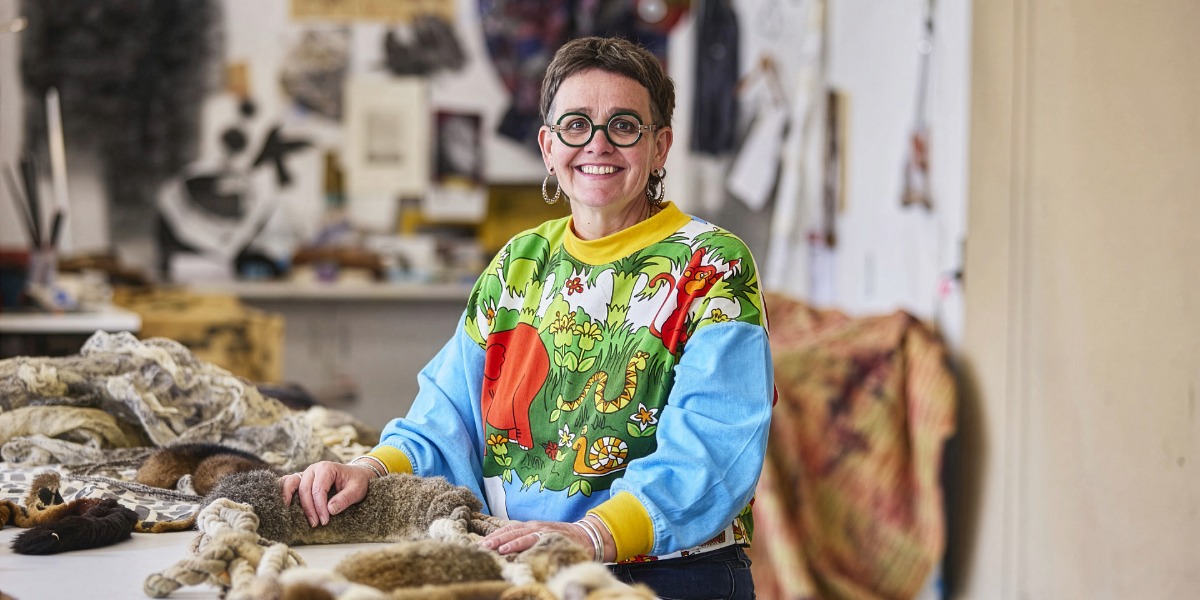
The multimedia collection showcases the many ways creative practice supports language revitalisation. It features work by language practitioners and artists from the region and across the state, including Gamilaraay artist Juanita McLauchlan.
The exhibition is curated by Charles Sturt University Associate Professor Christopher Orchard.
He said Gamilaraay Country was the ideal place to launch the exhibition, following a call by Uncle Greg Griffiths of the Bulingha Murri Ganuur, Guyinbaraay/Guinberai clan of the Gomeroi/Gamilaroi Aboriginal peoples to “rebuild our ancestral birthright as multilingual peoples, speaking not just our own languages, but our neighbours’ too”.
“In many ways, this exhibition responds to that call to action by bringing multiple languages into dialogue with each other and lighting the fire of that ancestral work,” said Charles Sturt University Associate Professor Christopher Orchard.
“That call came from a voice from this Country, so what better place to continue the work than Gunnedah.”
Some works in the collection carry First Nations words and stories. Others make space for learning, teaching, and remembering, or bring languages into new forms and settings.
“Together they show that language is not only something to be studied but something to be lived with, practiced in community and carried forward through relationships with people, kin and Country,” Associate Professor Orchard said.
“In Gamilaraay, speaking isn’t only with the mouth. It’s sign, it’s gesture. It’s all ways of communicating story.”
“Our languages hold knowledge that can’t simply be translated into English.”
“A single word can carry how a material might behave, where it’s found, when it’s ready and whose responsibility it is.”
By placing the works side by side, the exhibition brings different languages into conversation with one another.
“Bringing these works into dialogue forms new relationships, and those relationships start the next process of speaking to each other,” he said.
“Guwaalaylaya! invites visitors to listen, look closely, and join the conversation.”
Associate Professor Orchard said language revitalisation “doesn’t only happen in classrooms and with dictionaries”.
“This exhibition explores how language informs creative and cultural practice, and how revitalisation takes shape wherever people are making things together and using language as they go,” he said.
“The works in this collection are not just about creating something and attaching a language name to it – they explore what it means to start in language, not end in language, and to have language inform the entire process.”
“You can see how thinking with language shapes the artists’ decisions from the very beginning.”
He thanked Winanga-li Aboriginal Child and Family Centre for providing a space to work, connections with artists, and support for the project.
“Winang-li’s ongoing support in the generation of this collection was critical,” he said.
“Knowledge in our languages comes from Country. When you learn the name of something in language, you’re also beginning to learn its relationships,” Associate Professor Orchard said.
“It is impossible not to be in deeper relationship with Country when you are thinking with our languages.”
“It also holds you accountable and makes you responsible for the choices you make.”
Don’t miss any of the important stories from around the region. Subscribe to our email list.