

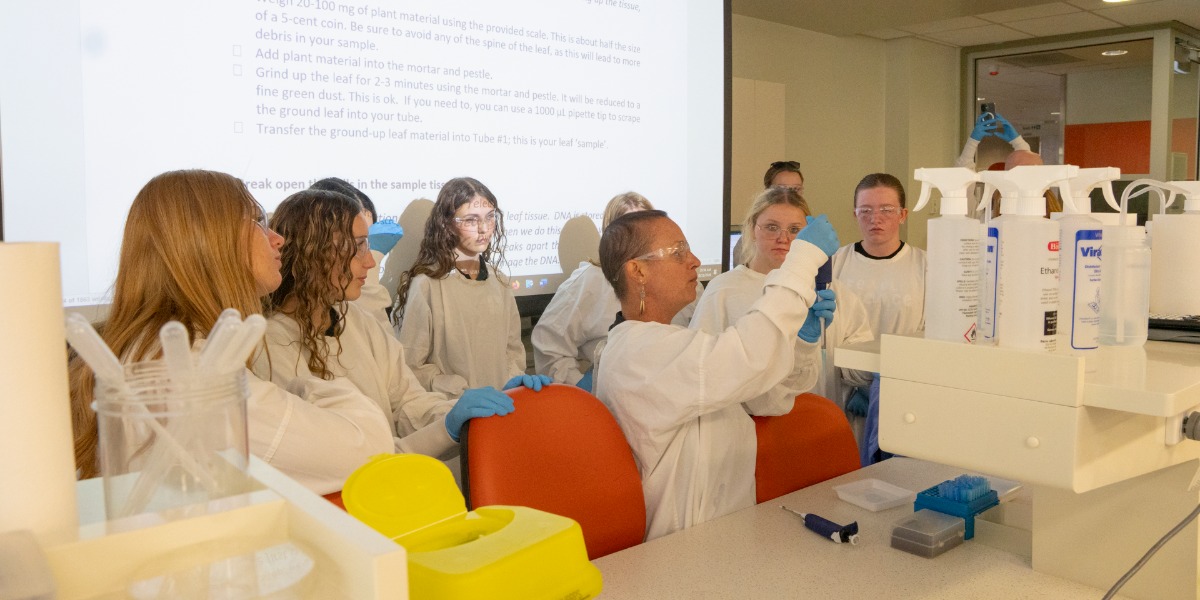
Up to 180 First Nations students from Northern and Western NSW will get the chance to step inside a university lab and meet Indigenous scientists, thanks to a $750,000 boost for DeadlyScience.
The three-year funding from the Greater Charitable Foundation (GCF), its largest commitment to date, will expand the DeadlyScience Pathways Program in partnership with the University of Newcastle.
The program is for Year 9 and 10 students and aims to build stronger pathways from school into further study and jobs.
“You can’t be what you can’t see,” said DeadlyScience CEO and founder Corey Tutt.
“Meeting a First Nations scientist, walking into a university lab, or hearing from someone who grew up in a town like yours can open up possibilities students hadn’t considered before.”
The first cohort arrived on campus this week for a three-day program of laboratory activities, campus tours, pathway presentations, and mentoring with Indigenous academics and researchers.
“We want young mob to come away thinking, ‘I can do this too’, and this program means we can give more First Nations learners the chance to explore those possibilities and support them as they take their next steps,” Mr Tutt said.
Among the mentors is University of Newcastle Professor Kelvin Kong, of the Hunter Medical Research Institute’s (HMRI) Immune Health Research program and Australia’s first identified Aboriginal surgeon.
“Aboriginal and Torres Strait Islander doctors play a vital role in building trust in the healthcare system while inspiring future generations to pursue careers in medicine,” Professor Kong said.
Students will learn about study and career options through the Wollotuka Institute, the university’s centre for Indigenous education and research.
“STEM is not separate from Aboriginal and Torres Strait Islander knowledge systems,” said University of Newcastle Pro Vice-Chancellor Indigenous Strategy and Leadership Loren Collyer, a Bandjin woman.
“It’s embedded in how our people have cared for Country, shared knowledge and solved problems for thousands of years, and it continues to be reflected in our experiences today.”
The expanded program will also set up formal work experience for up to 20 Year 10 and 11 students each year.
The Schneider Electric Foundation is also supporting the program, with HMRI and the university as partners.
“We’re especially excited that it will support students from school through to the workplace and help inspire the next generation of engineers,” said Schneider Electric Foundation Chair Colette Munro.
“This is the largest funding commitment that Greater Charitable Foundation has ever made, reflecting our belief in the potential of these young people,” said GCF’s Kirrah McClelland.
“By building confidence, connections and a clearer understanding of what is possible, we hope more young people will feel empowered to pursue the futures they choose.”
Something going on in your part of the New England people should know about? Let us know by emailing newsdesk@netimes.com.au