

This investigative story has been written by University of Melbourne student Jingfang Ma as part of her internship with New England Times and North Coast Times.
When illness, a missed deadline, and a slow appeal knock an international student off course, the cost is measured in more than marks. New visa rules are making those setbacks harder to recover from.
Lin, an international student from China, whose name has been changed at her request, began a Master of Nursing at Southern Cross University (SCU) in January. She planned to graduate at the end of 2027, qualify as a registered nurse, and then apply for a permanent skilled migration visa so she could stay and work in Australia as a nurse. But illness that caused her to miss a practical nursing assessment in May disrupted those plans.
Lin said she had a medical certificate from a general practitioner. But she missed the standard deadline to apply for Special Consideration, and spent the following months trying to resolve the problem through the university’s administrative processes.
Because she missed the assessment, she failed the unit. The unit is a prerequisite for later units in her course, so she cannot enrol in them until she passes it. Under her current course arrangements, she may not graduate until August 2028, around eight months later than planned.
“For a young person, time is very precious,” she said.
Her setback has come just as the federal government tightens the rules for international students. On Friday, 2 October, a new round of student visa rules came into effect. Most people in Australia on temporary visas can no longer apply for a student visa without leaving the country. For international students whose studies have not gone as planned, the changes could make already difficult decisions, such as whether to stay at their university or move to another one, even harder.
For Lin, the new rules settled that question. In September, she was still considering transferring to another university to finish her degree. By October, she had given up on the idea.
She will now stay at SCU and accept the delay. Lin said that means she will need a new student visa to finish her course. Under the new rules, most student visa holders also have to apply from outside Australia, but students who need up to 12 more months who complete their studies with the same provider can still apply onshore.
The tightening rules around student visas making things harder
International education is Australia’s largest services export. According to the Australian Bureau of Statistics (ABS), education-related exports were worth around $55 billion in 2025, up six per cent on the previous year. Universities Australia says international student fees make up about a quarter of university revenue.
Over the past two years, the federal government has steadily tightened the rules around international education. The fee to apply for a student visa rose to $2,000 on Tuesday, 1 July 2025. The latest reforms aim to curb what the government calls “visa hopping”. This is when students make repeated visa applications, or switch courses in ways that do not reflect genuine academic progress.
The government set the National Planning Level, a national target for the number of new international students starting courses each year, at 295,000 for 2026. In July, it announced the same level would apply in 2027. The planning level is not a hard cap, but it affects how quickly visa applications are processed. Each university and college gets its own share of the total. Once applications for a provider reach 80 per cent of its allocation, more students can still be approved, but their applications are processed more slowly.
The October reforms also limit who can bring family. Most new student visa applicants can no longer include partners and children in their application, with some exceptions.
“This is a sweeping package of reforms that gets the balance right to tighten integrity, manage numbers in a sensible way without trashing one of our nation’s largest and proudest export sectors as some loud, ill-informed voices seek to do,” said Assistant Minister for International Education Julian Hill.
The government says the changes target a specific problem, rather than international students in general.
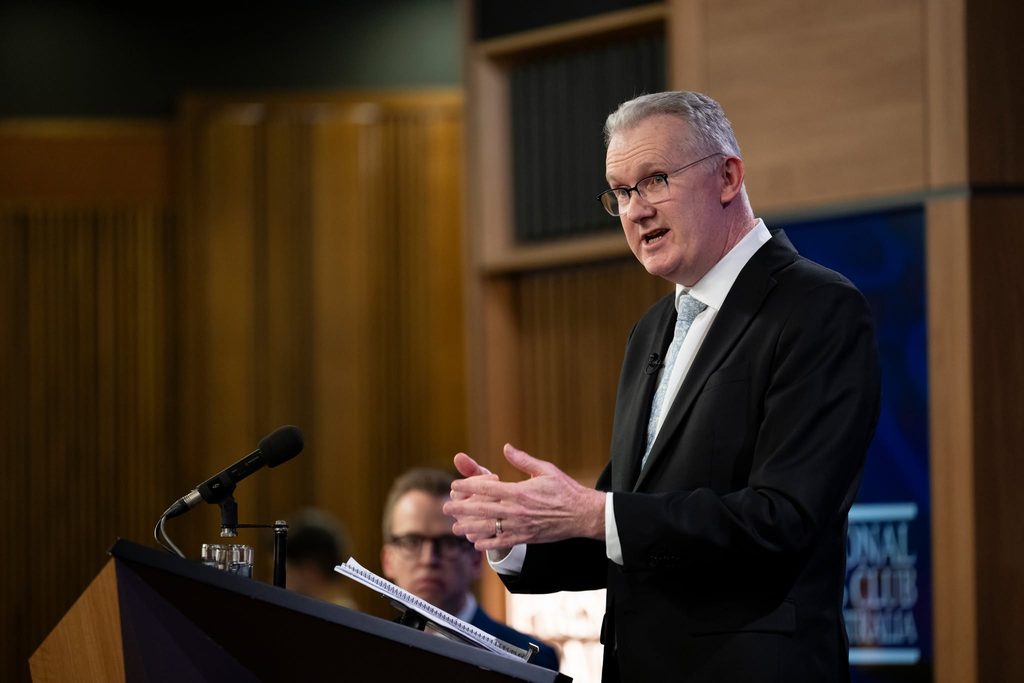
“Not all of the movement from one visa to another is what I would call visa hopping,” said Minister for Home Affairs Tony Burke in a speech to the National Press Club in Canberra on Thursday, 17 September.
“A lot of it is actually the system working as we would want it to.”
Mr Burke said a student who gained a qualification in a skill shortage area, then found work and was sponsored by an employer, was an example of the system working as intended.
“That is not visa hopping; that is the system working at its absolute best,” he said.
The problem, he said, was “individuals who would never, in fact, meet the qualifications to be able to become a permanent resident” moving from visa to visa, and using appeals to stay as long as possible.
“One of the classic areas of visa hopping is people finish a course, hop to the next course, hop to the next,” he said.
Mr Burke said extensions for students who need more time because of circumstances such as serious illness, or because their institution has closed, would stay as they are.
“You do a 12-month extension. That’s unchanged,” he said.
Transfers targeted in visa-hopping crackdown
Students will also still be able to move to a higher-level course, such as from a bachelor’s degree to a master’s, but not sideways or down.
“You can go up the qualification scale, but only up the qualification scale,” Mr Burke said.
Student transfers are a focus of the reforms. International students above school level generally need to complete 12 calendar months of their principal course before they can transfer to another provider without a release from their original provider. A provider may approve a release if the transfer is in the student’s best interests. Other exceptions also apply.
Mr Hill said extending the transfer restriction to 12 months as an interim measure would deliver “immediate action on unacceptably high onshore transfer activity, while preserving transfers for legitimate reasons”.
From Thursday, 1 July 2027, the government plans to introduce a new Student visa transfer stream. Students who want to change providers will need to apply for and receive a new visa before they start studying at their new institution. Mr Burke said this would mean “we’ll be able to test that it’s legitimate”.
Details are still being developed. Under the current rules, the 12-month restriction is set to return to six months at that time.
The Group of Eight (Go8), which represents eight of Australia’s leading research-intensive universities, has warned against treating all international education the same. It said higher education visa applications were down 9 per cent on the previous year, and visa grants were down 17 per cent.
“But not all international education is the same, and policy should reflect that reality,” said Go8 Chief Executive Vicki Thomson.
“The risk of folding international education into the migration debate is that policy becomes driven by headline numbers rather than what Australia actually needs: skills, capability and economic growth.”
For students facing academic setbacks, a failed unit or an unresolved complaint can affect more than their academic record. It can mean paying more in tuition fees, taking longer to finish a degree, and putting plans for work or migration on hold.
Data from the National Student Ombudsman (NSO), which handles complaints from higher education students about their providers, shows international students made up 43 per cent of all contacts to the office in 2025–26. Since the NSO began operating in February 2025, the most common complaints from international students have been about academic performance, Special Consideration, and tuition fee refunds. Between July and September 2026, these made up 24, 10, and 9 per cent of international student complaints respectively.
The NSO said academic performance complaints were prominent because international students must meet visa requirements as well as academic ones.
“Issues with academic performance have serious consequences, given the implications for visa status,” the NSO said.
One assessment, two months of waiting
Special Consideration is designed for students whose performance is affected by circumstances beyond their control, such as illness. Lin said students generally had about two days to apply. An approved application could lead to another chance at the assessment.
She missed that deadline, so she wanted to submit a Late Special Consideration application instead. To do that, she needed to contact the course coordinator, who was on leave.
Lin said she met with another lecturer who was covering the course while the coordinator was away, and explained her situation. According to Lin, the lecturer neither advised her to submit a late application nor explained what she should do next.
“If the person responsible is on leave, is there someone else who can take over?” she said.
“If a student misses the normal deadline, what exactly is the deadline for a late application?”
“I haven’t received an explanation to these questions that I find satisfactory.”
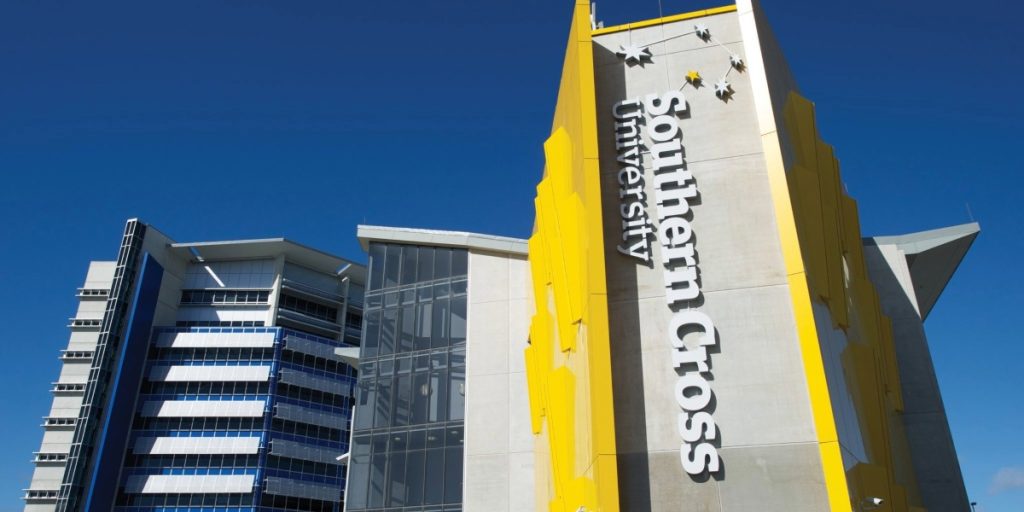
Lin waited about a month for the course coordinator to return. She then spent another month pursuing an appeal and a complaint through the university.
Lin has previously studied law, so she wrote the appeal herself. She included her medical certificate and her emails with teaching staff as evidence. She said her legal training shaped how she approached the problem.
“Because I studied law, I pay close attention to whether a process is fair, whether the rules are clear, and whether a decision is properly justified,” she said.
She also sought advice from the university’s student support team and its international student services.
“They could give me some suggestions, like how to revise my appeal letter or how to present my situation, but they couldn’t change the university’s decision,” she said.
After investigating her appeal and complaint, the university upheld her failing grade.
“I’m not asking the university to simply change my exam result,” Lin said.
“I want it to properly review my Special Consideration application and give a reasonable explanation of the whole process.”
“If, after reviewing it, the university still decides I am not eligible for another assessment, I can accept a decision that is properly justified.”
Lin believes the real problem is that the rules themselves were unclear. The university’s published policy stated that students who missed the standard deadline should apply for Late Special Consideration and contact the relevant staff member. But it did not set a final deadline for late applications. When she later called Student Services, she said she was told it was too late, because late applications could not be made once the unit had ended.
“If staff don’t guide students in time, but students are left to bear all the consequences, I don’t think that’s reasonable,” she said.
A spokesperson for Southern Cross University said they have dedicated support systems for international students.
“International students have access to a dedicated support team which can assist with complex academic and personal matters, including course progression and Confirmation of Enrolment requirements.”
“Where a delay may affect a student’s expected completion date, the University can provide advice on study and enrolment options and refer students to the Department of Home Affairs for advice on their individual visa circumstances.”
Lin has lodged a complaint with the NSO. She hopes the university will reconsider her late application and adjust her future course arrangements.
Making a formal complaint also takes time
The NSO said Special Consideration complaints often involve students who feel their applications have been unfairly rejected. Others feel providers have not clearly explained what evidence they need to provide. International students can face extra hurdles. Some are unsure whether a certificate from a doctor overseas will be accepted, and seeing a doctor in Australia can take time and cost money.
The NSO said providers should explain academic expectations, available support, and the steps students can take to improve their position before the student receives a formal adverse academic outcome, such as a fail.
The NSO said it prioritises complaints with critical timeframes, including enrolment problems that could affect a student’s visa.
The NSO said international students also raised concerns about delays in complaints and support processes, and how those delays affected their visa status, finances, and ongoing enrolment. Lack of transparency and perceived procedural unfairness were recurring issues.
Taking a complaint outside the university can sometimes change the outcome. In September, the NSO published an investigation report, Short-changed: The cost of refund non-compliance, involving two international students at the Melbourne-based private provider Crown Institute of Higher Education (CIHE).
The report found CIHE had wrongly rejected both students’ requests to withdraw from their courses. One student, whose visa had been refused, initially received only half the tuition refund they sought. Another was charged tuition fees they did not owe and could not get their academic transcript.
The NSO found the provider’s practices unfair, unreasonable, and apparently contrary to the law. CIHE accepted all 13 of the report’s recommendations.
The NSO said providers should train staff, give students up-to-date information, keep them informed about the progress of their complaints, make the process “less adversarial”, explain decisions clearly, and take responsibility when things go wrong.
It said 93 per cent of all complaints to the NSO were resolved through early resolution. This includes helping students contact the right team at their university, or asking providers to contact students directly. That does not mean every student received the outcome they wanted.
Help is available
Not every experience ends in disappointment. Another international student’s story shows how differently things can go when a request for help gets a quick, clear answer.
Klara Centento is an international student at the University of New England (UNE), studying a Diploma of Arts part-time. She lived on campus in Armidale for her first two teaching periods, which was about six months.
“My experience has been really good. I think I’ve received a lot of support from the university,” she said.
Because she also works, Ms Centento cannot always attend classes in person, but many of her classes are available online. Once, when she told a lecturer she might not finish an assessment on time, she was given an extra two weeks to complete it. She said questions posted in course forums were answered “usually within a day”.

But she was concerned about the cost of her accommodation. Ms Centento said she understood domestic students paid about $150 a week to live on campus, while she was paying $300.
“This is really for no reason, because I’m living here, eat the same food, drinking the same water, but just because I’m and international student so that I have to pay double,” she said.
UNE said they couldn’t give specifics about an individual student, but domestic and international students pay the same rates for college accommodation.
“Rates vary between colleges depending on what’s included, e.g. meals or access to sporting facilities, and each resident signs a contract that confirms the weekly rate,” the university said.
However, international students are not eligible for UNE’s First Year Accomodation Credit, which halves the fee for eligible students for the first two trimesters. Australian citizenship or permanent residency is required to be eligible for the subsidy.
There is other assistance made available to international students at UNE. At one point, Ms Centento said, she went through a period of serious financial difficulty. She had left her job and was paying her tuition, accommodation, and food costs herself. She had only enough money to last about another week.
She went to the university for help and explained her circumstances.
“The university had a support program that I was able to access. They helped me with my accommodation costs,” she said.
Still waiting for answers amid uncertainty
In policy debates, international students often appear as numbers: visa charges, planning levels, and export earnings. But each change to the rules has consequences for individual students.
Lin has asked for help many times. She spoke to the lecturer covering the course, contacted Student Services, completed the university’s internal complaints process, and eventually turned to the NSO.
She said she emailed the course coordinator again after receiving the complaint outcome, but had not heard back. SCU did not comment on the student’s individual situation.
In his Press Club speech, Mr Burke indicated students who transfer because their course is not working for them should still be able to do so.
“You come, you start your course, and after 12 months the course you’re doing is not the right fit and you want to use your credits to do something slightly different,” he said.
“It makes sure that we’ve got people actually studying things that they’re good at, and in terms of international education, that’s not the visa-hopping problem.”
Time will tell as to how students like Lin will be affected by the changes in reality, and whether the rush to be tough on international students will end up costing us future nurses.
“All I can do is keep waiting,” she said.
Don’t miss any of the important stories from around the region. Subscribe to our email list.