

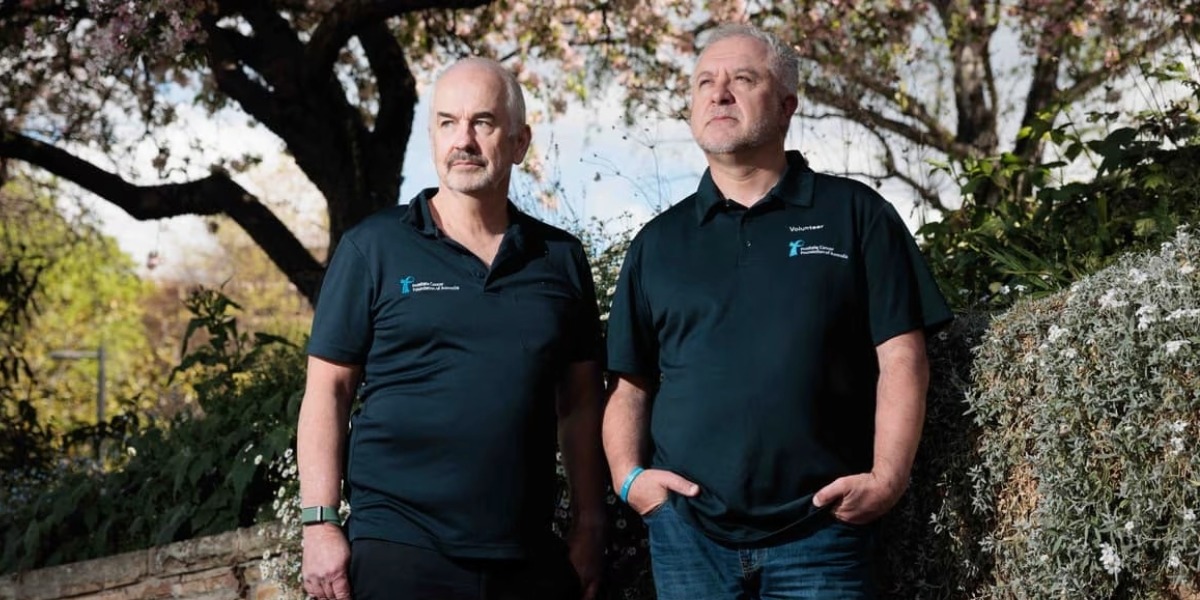
Men with prostate cancer across western NSW could lose access to specialist nursing care when federal funding for the Prostate Cancer Foundation of Australia (PCFA) nursing service ends in June 2027, Federal Member for Parkes Jamie Chaffey says.
The Government announced on 31 August that Commonwealth funding for the service would end on 30 June 2027. It will redirect $46.5 million over five years to the McGrath Foundation for 60.5 full-time-equivalent prostate cancer nursing positions.
The PCFA service funds 96 specialist nurses in hospitals and treatment centres across Australia. They are part of PCFA’s national network of 131 specialist nurses, who deliver around 150,000 patient consultations each year. PCFA says the Government did not consult the nurses and patients most affected before announcing the decision.
“I’ve already had approaches from people who are deeply concerned about the impact this is going to have on specialist prostate cancer care in regional areas including Broken Hill,” he said.
“I’m advised the decision will put hundreds of men in Broken Hill, Tibooburra, White Cliffs, Wilcannia, Ivanhoe and the entire region at risk.”
“It is likely to mean the end of the very successful Cancer Community Support Group and an end to tailored specialist care.”
Mr Chaffey said he had no concerns about the McGrath Foundation.
“They do an amazing job, but the PCFA also provide important care and deserve funding for existing services.”
“Men in regional and remote Australia have a 24 per cent higher risk of dying from prostate cancer than men in metropolitan areas, according to the PCFA, and yet this is where funding is being cut.”
PCFA has asked Health Minister Mark Butler to explain the decision. A voluntary consultation found 96 per cent of the affected specialist nurses oppose it. Six in 10 said they fear prostate cancer expertise would be diluted in an all-cancer model, and one in 10 said they were already looking for other roles.
A separate analysis of 500 messages posted online and sent by email found fewer than one per cent of the community supported the decision. One in three asked the Government to reverse it. Around half were sent by men living with prostate cancer.
“The nurse helped me through the system and I believe is the main reason I am alive now,” wrote one patient in a regional centre.
“Our Specialist Nurses and hundreds of men and families have now told the government, in their own words, what this decision means for them,” said PCFA CEO Anne Savage. “We have called on the Minister to listen.”
PCFA Director of Nursing Adjunct Professor Sally Sara said the service had been built over 15 years with millions of dollars in independent funding from PCFA and the community.
“Specialist expertise isn’t something you can hand over with a contract or replace with a short course,” she said.
“It takes years of training and mentoring to build, and once our nurses lose that support, it can’t be rebuilt overnight.”
Urological Society of Australia and New Zealand President Professor Damien Bolton also called for the decision to be reversed.
“We support further investment in cancer nursing,” he said. “It should not come at the expense of a proven specialist service.”
Mr Chaffey joined Shadow Minister for Regional Health Dr Anne Webster in calling for the Government to release the evidence behind its decision and explain how regional patients would benefit.
“We are seeking a guarantee that no regional community will be left with less access to specialist prostate cancer nursing care because of this decision,” he said.
PCFA planned to launch both reports at Parliament House on Thursday, 15 October, calling for the decision to be reversed and for funding to be guaranteed through to 30 June 2032.
Mr Chaffey’s speech to Parliament is available at https://www.jamiechaffey.com.au/speeches/regional-australians-face-unacceptable-health-challenges/.
People can get involved at www.pcfa.org.au/dayofaction.
Something going on in your part of the New England people should know about? Let us know by emailing newsdesk@netimes.com.au