

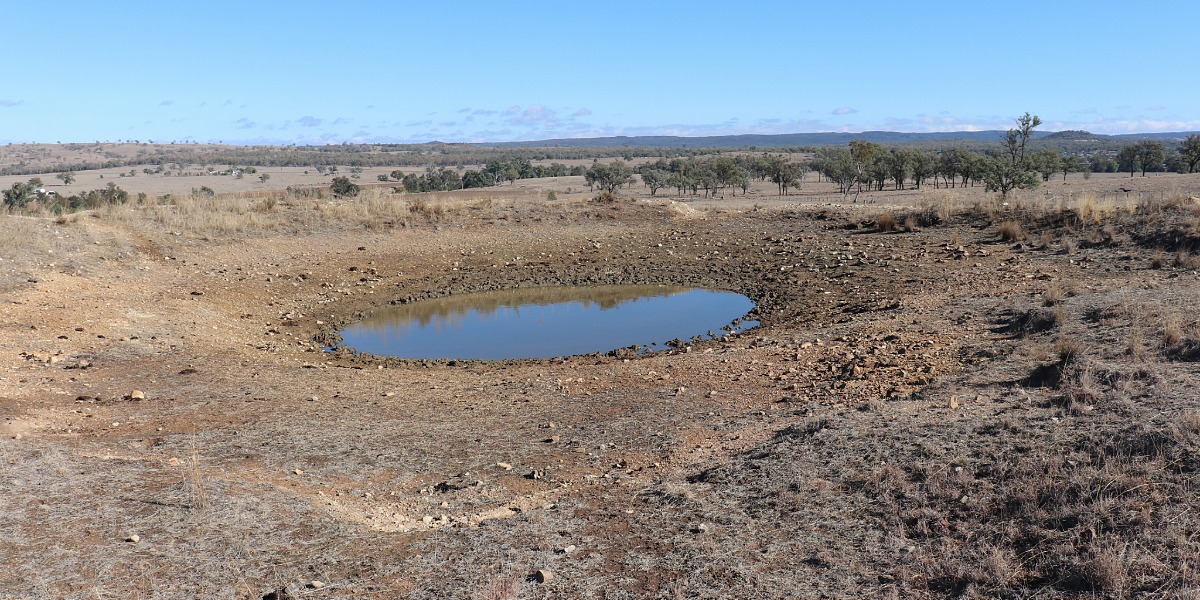
Farmers across the New England and North West are being urged to act early on financial support as seasonal conditions continue to deteriorate across parts of northern and north-eastern New South Wales, along with south-east and central Queensland and south-west Western Australia.
The Regional Investment Corporation (RIC), the Australian Government’s farm business lender, has launched an awareness campaign to ensure eligible farmers understand the low-interest loans available if they are experiencing financial pressure due to drought, natural disasters, biosecurity issues or other market disruption outside their control.
Since 1 July 2018, RIC has approved 3,648 loans nationally, valued at over $3.83 billion as at 31 August 2026. This includes 1,912 loans worth more than $2.05 billion in New South Wales, of which 520 loans have gone to farmers in the New England and North West region.
RIC estimates its loans have saved Australian farmers and farm-related small businesses around $432 million in interest payments since 1 July 2018, including about $34 million in the first half of 2026 alone.
Both the Drought Loan and Farm Investment Loan are available for up to $2 million over a 10-year term, with the first five years interest-only followed by five years of principal and interest repayments. At the end of the loan term, the remaining unpaid balance can be repaid as a lump sum or refinanced back to the farmer’s own bank.
To qualify for either loan, farmers need to show a downturn in their finances from events outside their control over a two-year period. That period can be the last two years, the last year plus the year ahead, or two years ahead. For the Farm Investment Loan, the two-year downturn can stem from a single event or from multiple events in succession, such as a drought followed by a bushfire, a biosecurity incident or a market disruption.
Farmers do not need a drought declaration to apply, but do need an existing bank or commercial loan, sufficient security, and the capacity to make repayments.
RIC chief executive officer John Howard said having some financial breathing space could make a real difference for farm businesses under pressure.
“When drought, natural disasters, biosecurity issues or market disruptions put pressure on a farm business, having some financial breathing space can make a real difference,” Mr Howard said.
“RIC’s low-interest Drought Loan and Farm Investment Loan are designed to help eligible farmers improve cash flow, reduce interest costs and keep their business moving through challenges outside their control.”
“Importantly, farmers do not need a drought declaration to apply. For the Farm Investment Loan, the downturn may result from one event or several events in succession, for example, drought followed by bushfire, or a biosecurity incident followed by a drought.”
“We encourage farmers feeling financial pressure to learn more, get in touch with our team early and check whether a RIC loan could suit their circumstances.”
More information on RIC loans is available at ric.gov.au.
Don’t miss any of the important stories from around the region. Subscribe to our email list.