

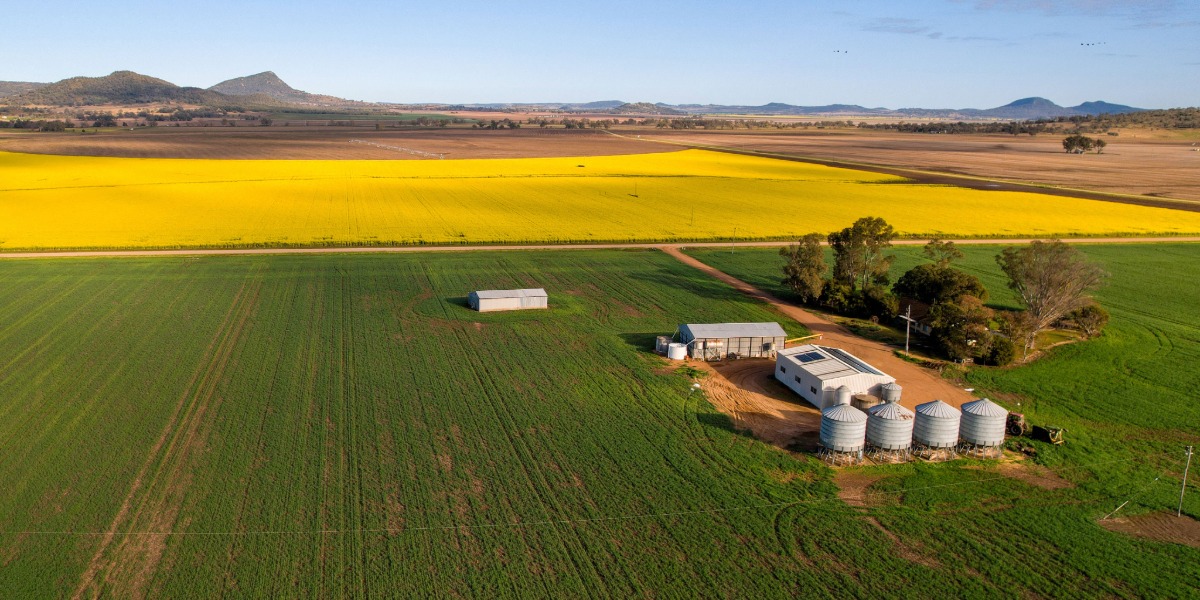
New England farmers looking ahead to the season have reason for cautious optimism, with fresh survey data showing confidence has rebounded sharply. But even as sentiment improves, a fresh wave of cost pressures, from diesel security to visa delays, is threatening to erode that certainty.
Rabobank’s latest quarterly Rural Confidence Survey found NSW farmer sentiment climbed to a net reading of minus 20 per cent, up from minus 55 per cent last quarter, when the state recorded the weakest confidence levels in the country. More than half of NSW farmers surveyed, 52 per cent, now expect business conditions to stay the same over the next 12 months, up from 22 per cent last quarter, while the number expecting conditions to worsen dropped to 31 per cent, down from 64 per cent. The share expecting conditions to improve held steady at 10 per cent.
Rising commodity prices were the biggest driver of the improved outlook, with half of those surveyed positive about prices in the year ahead, 31 per cent expecting a good season and 15 per cent optimistic about overseas markets, up from 10 per cent last quarter.
But the survey found input costs remain the top concern for the state’s farmers, cited by 52 per cent of respondents, while concern about government policy rose to 40 per cent, up from 22 per cent last quarter. Worry about drought eased, dropping to 32 per cent from 47 per cent previously.
Those cost pressures extend to fertiliser. A separate Rabobank report found Australian farmers have moved beyond the most acute fertiliser supply concerns that emerged earlier this year, but high prices and uncertain seasonal conditions are likely to keep weighing on demand through to 2027, with global markets still feeling the effects of shipping disruption through the Strait of Hormuz.
“The Australian fertiliser market has shifted from a period of acute supply concerns towards a more balanced supply situation,” Rabobank senior analyst Vitor Pistoia said.
“However, affordability remains a significant challenge, with fertiliser prices having risen much faster than key agricultural commodity prices.”
Fuel is emerging as another flashpoint. The Livestock, Bulk and Rural Carriers Association has submitted its Regional Fuel Storage Scheme proposal in response to the Federal Government’s consultation on its proposed Australian Fuel Security Reserve, calling for a dedicated regional component that ensures diesel reaches the paddock, not just national stockpiles.
LBRCA President Wade Lewis said the organisation was proposing a five year target of 250 million litres of additional, verified diesel storage capacity in the regions.
“Fuel security, particularly for diesel, cannot be measured only by how many litres Australia holds nationally, because distribution of that diesel is key,” Mr Lewis said.
“The real test for the success of the AFSR will be whether diesel storage in the regions increases, and in the event of disruption, it is available to the people in critical industries such as road transport and agriculture.”
Mr Lewis said the proposal was not a reaction to the crisis in the Middle East, but was focused on building resilience for regional communities and rural supply chains that could be isolated by floods, bushfires, road closures, damaged bridges, power outages or disruption to terminal and distribution networks.
“Fuel sitting at a major coastal terminal is of limited value if it cannot reach a livestock carrier, farmer, processor or one of the many other key industries relying on diesel,” Mr Lewis said.
The LBRCA has proposed that regional carriers, agricultural businesses, fuel distributors, processors, councils, cooperatives and shared depots be able to participate in the scheme, with funding targeted toward areas with high diesel use, limited alternative supply routes and vulnerability to natural disasters.
“Australia does not have genuine diesel fuel security unless it is available in the regions and on the key freight networks when it is needed,” Mr Lewis said.
“There is an opportunity through this consultation to get the settings right, build storage in strategic locations and facilitate the involvement of small, medium and large organisations.”
“This country relies heavily on the movement of goods to keep our economy open, fridges full and getting products from paddock, to plate and port,” he said.
“We are making a very simple and clear ask of government, investing a quarter of the strategic reserve in the regions and you are investing in economic resilience, food security and national preparedness.”
Workforce shortages are adding to the squeeze, with the National Farmers’ Federation warning the Federal Government’s latest migration announcement risks Australia’s food security and regional economies. NFF President Hamish McIntyre said farmers were furious the announcement confirmed a three month processing timeframe for Working Holiday Maker visas, when approvals had previously taken only days.
“This is a low blow for farmers and the businesses that produce Australia’s food and fibre,” Mr McIntyre said.
“The Government’s unilateral slowdown on Working Holiday Maker visas has already caused havoc across agriculture ahead of the busiest time of year for food and fibre production.
“Today’s announcement does not fix the crisis the Government created. A three-month processing target leaves farmers completely stranded with harvest already underway in parts of Queensland and the main season only weeks away.”
Mr McIntyre said farmers were already telling the NFF that workers they had expected to arrive had not turned up.
“Farmers are telling us workers they expected to arrive have not arrived, crops still need to be harvested, cows still need to be milked and the workload is being pushed onto fewer people,” Mr McIntyre said.
“That creates serious health and safety risks and unnecessary liability.”
Working Holiday Makers fill around one in seven farm jobs nationally, making up 44 per cent of the horticulture workforce, 31 per cent of grains, 26 per cent of red meat and 25 per cent of cotton workers, and supplying up to 80 per cent of peak harvest labour in fresh produce.
Mr McIntyre said a Government move to introduce a ballot for second and third year Working Holiday Makers may be a step in the right direction if it protected regional work, but would mean little if the system could not process people in time.
“Farmers need approvals in days, not months. For many farms, three months is the difference between harvesting a crop and losing it,” Mr McIntyre said.
Mr McIntyre said the sector was already facing intense cost pressure, with broadacre cropping profits projected to fall sharply this season, driven partly by rising fuel and fertiliser costs.
“At a time when farm businesses are already staring down a projected 39 per cent reduction in broadacre cropping profits, adding avoidable workforce shortages is disastrous policy,” Mr McIntyre said.
“If this Government is serious about cost of living pressures, it will turn the tap back on the Working Holiday Maker program and consult genuinely with the industry that produces Australia’s food and fibre.”
Read all the way through to the end of the story? So did lots of other people. Advertise with New England Times to reach New England locals who are interested and engaged. Find out more here.