

In the continuing fallout from the ABC’s Four Corners investigation Duped, more highly experienced food industry professionals have come out and criticised the program, warning that a knee-jerk reaction from government could make food more expensive.
In our earlier investigation, New England Times found much of the program’s central evidence did not stack up, there were credibility problems with some of those interviewed, and the ABC ignored evidence from the companies that the claims made in the program were wrong.
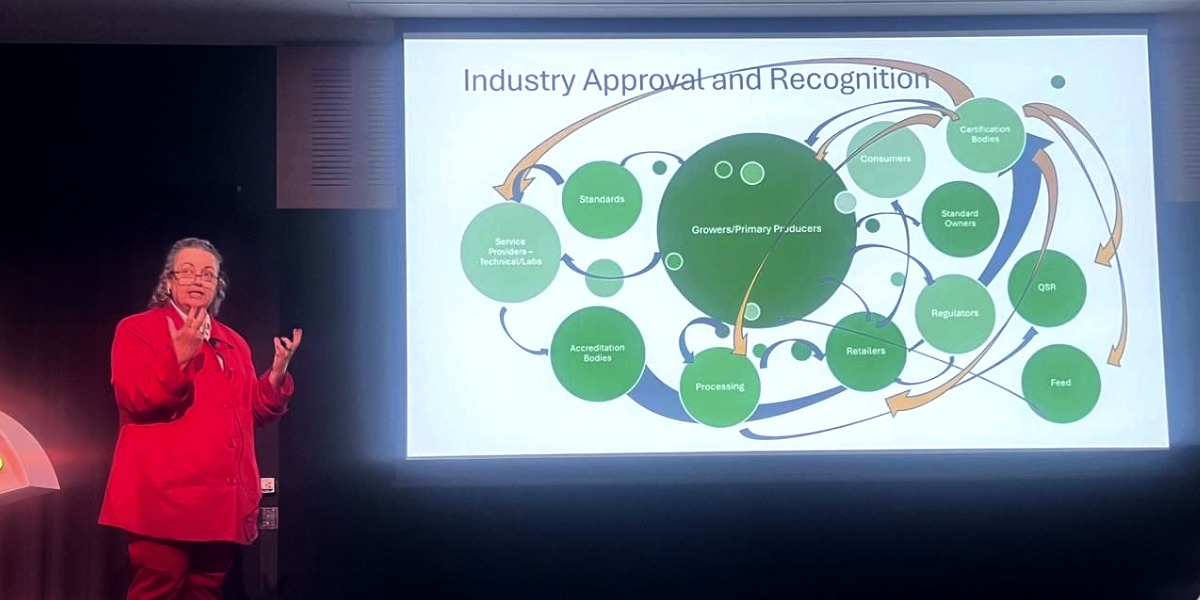
Margaret Balfour, principal consultant at food industry compliance firm Diligence, who has worked in food fraud and compliance for some 40 years, said the reaction from the sector to the program had been intense.
“The food industry, frankly, is really ticked off, and I’ll tell you why,” Ms Balfour said. “The story indicates that the food industry is not aware of food fraud. It also indicates it does not give any credit or reference to the level of risk management that the food industry, generally speaking, puts into what they do every day.”
She said the program painted an unfair picture of an industry, and the program had not spoke to the right people.
“I don’t believe that the ABC has spoken to the right people,” she said. “A lot of the people that were interviewed or referenced in that episode, they don’t work at the coalface of industry.”
“[The program] kind of makes the industry look like cowboys, and that everybody in the industry is out to deceive, and it’s so far from the truth,” Ms Balfour said.
Martin Stone, Executive Director of Sydney based food safety consultancy HACCP Australia, who is a food scientist and has been working in food safety for over 30 years, was similarly critical, describing some of the program’s claims as “a bit strange and not based on the facts associated with the wider food industry.”
“You don’t want to knee-jerk over this Four Corners program, for sure,” Mr Stone said.
Read our original investigation

Duped by the ABC: Food fraud investigation may be rotten
The ABC’s food fraud special ‘Duped’ made Australians afraid of what’s in their fridge. A closer look at the evidence, the lab behind it, and the sources it relied on tells a very different story.
Australia’s food industry already heavily regulated
Both Ms Balfour and food scientist and nutritionist Dr Anneline Padaychyee, previously interviewed for New England Times’ investigation into the program, described Australia’s food industry as one of the most regulated in the world, but said much of that oversight came from industry itself rather than government regulators.
At the centre of that oversight is the Hazard Analysis and Critical Control Point system, or HACCP, the minimum food safety requirement for any product to reach the shelves of a major Australian supermarket.
“HACCP is a methodology which is used all around the world to assure safe food,” Mr Stone said.
“In order to supply the retail market, you’ll need to have some sort of food safety management program, and different retailers have different requirements, but all of their requirements include HACCP as a fundamental.”
Mr Stone said HACCP dealt with three categories of food safety hazard – microbiological, chemical, and physical hazards – and the process identifies all of the possible hazards for a product at each step of production.
“HACCP looks at each step in the process and determines what what hazards could potentially be of significance, and then sets up systems to deal with those specific risks.”
Dr Padaychyee said the system, which was originally designed by NASA, was “the most amazing system,” describing it using a peanut butter factory as an example.
“You’ve actually got to create the whole flowchart of where do I source the peanuts from,” Dr Padaychyee said. “What could go wrong on the peanut farm? Maybe they have a drought. Maybe they have a flood. They don’t have a sufficient supply of peanuts, so that means I have to find another farmer.”
She said the same requirement to plan for everything that might go wrong applied all the way through the supply chain, down to where the jars themselves were stored.
“The whole entire process into a truck right up until it’s delivered to the supermarket,” Dr Padaychyee said.
Dr Padaychyee said HACCP was often paired with ISO 9001, another quality management standard, which ensures consistency of the process.
“If I make a batch of peanut butter today, and I make a batch of peanut butter in six months’ time… it should meet the bacteria requirements, the chemical requirements, the nutritional profile, the ingredient requirements, and I have to prove scientifically that it does,” Dr Padaychyee said.
She said the scale of the documentation required indicated the claims made by the ABC did not add up.
“You’ve got to show proof of that all the time, for every single day, in order to maintain that certification,” Dr Padaychyee said.
While noting that quality controls are not as good in other countries, Mr Stone said that HACCP and other food safety and quality systems should give consumers confidence in the food they buy.
“They should be extremely confident in Australian food,” he said.

Food fraud is a crime, not a compliance gap
Mr Stone said most food fraud came down to criminal conduct rather than a failure of the systems already in place.
“Most food fraud is based on criminal activity associated with making money,” Mr Stone said.
He said sharp swings in commodity prices can create the conditions for that kind of crime.
“Over the last couple of years, we’ve had shortages in things like vanilla and cocoa on a worldwide basis,” Mr Stone said. “There have been opportunities, and a cause for criminals to get involved and do some substitution with these types of products.”
“These are also high value ingredients which makes potential substitution even more attractive to the criminal element,” he said.
Mr Stone said the industry aims to get ahead of that risk by assessing suppliers before problems emerged.
“Now, in the food industry, what we try to do is we try to look forward,” Mr Stone said. “We first try to manage our suppliers and understand who our suppliers are and where they’re getting their materials from.”
He said the risk category of a supplier came down to what they were supplying.
“If it’s something which is very highly valued and is easily substituted and is maybe in short supply, then those factors can push up the risk level,” Mr Stone said.
But Mr Stone was doubtful that tomato paste, the product at the centre of Duped‘s central claims, fit that pattern.
“It’s hard to imagine tomato paste as anything but a commodity item,” Mr Stone said. “It’s not highly valuable.”
Mr Stone said if a genuine substitution had taken place, it needed to be properly investigated, and that there are ways to share information to identify issues. In particular, information systems for both regulators and industry to improve transparency and make it easier to be aware of what’s going on.
“Europe has a very good one in place, which is a collaboration between all of the European nations, all their import and food agencies, any testing they do goes up on a digital database,” he said.
The Rapid Alert System for Food and Feed (RASFF) was established by the EU to ensure the exchange of information between member countries to support swift reaction by food safety authorities in case of risks to public health, but it can also be used to identify patterns of food fraud.
“It would be good to have something like that here covering Asia, the South Pacific and the US,” he said.
Repeated audits adds to cost of food
The ACCC has announced they’re looking into the claims and the Albanese Government is declaring they “will not stand by while consumers are taken for a ride” raising fears of knee-jerk reaction and additional regulation. The experts warned that more unnecessary regulation to the already heavily regulated and risk-averse industry would only add cost, but there is opportunity to improve efficiency and reduce duplication of auditing to help reduce the cost of food.
“Regulation is not the answer to [concerns around food fraud]. It’s certainly not more auditing,” Mr Stone said.
Both Mr Stone and Ms Balfour said the same business can be audited repeatedly against near identical standards, with each major retail chain requiring their own audit or standard on top of internationally recognised standards.
“Ultimately, it’s the big retailers, a small group of buyers in the big retailers, that make the food consumption decisions for the whole country,” Mr Stone said.
“I know some food companies which are audited seven or eight times per year,” Mr Stone said. “You find that there is little harmonisation between the various standards that people are certified to. So it’ll be certified for Woolworths’ [Supplier Excellence Program], but Coles won’t accept it, for example.”
“They’re being audited by the retailers and they’re being audited by people like me,” Ms Balfour said.
“There’s absolutely nothing that that auditor is looking at that hasn’t already been covered two months ago by something else.”
Ms Balfour said the cost of repeated auditing and other regulatory burdens lands on shoppers at a difficult time.
“Everybody’s hurting at the moment financially, and one of the biggest costs we’ve seen increase is the cost of food.”
“The cost of that has to be paid somewhere along the supply chain, and it lands on the consumer when they buy the product,” she said.
Like what you’re reading? Support New England Times by making a small contribution today and help us keep delivering local news paywall-free. Donate now