

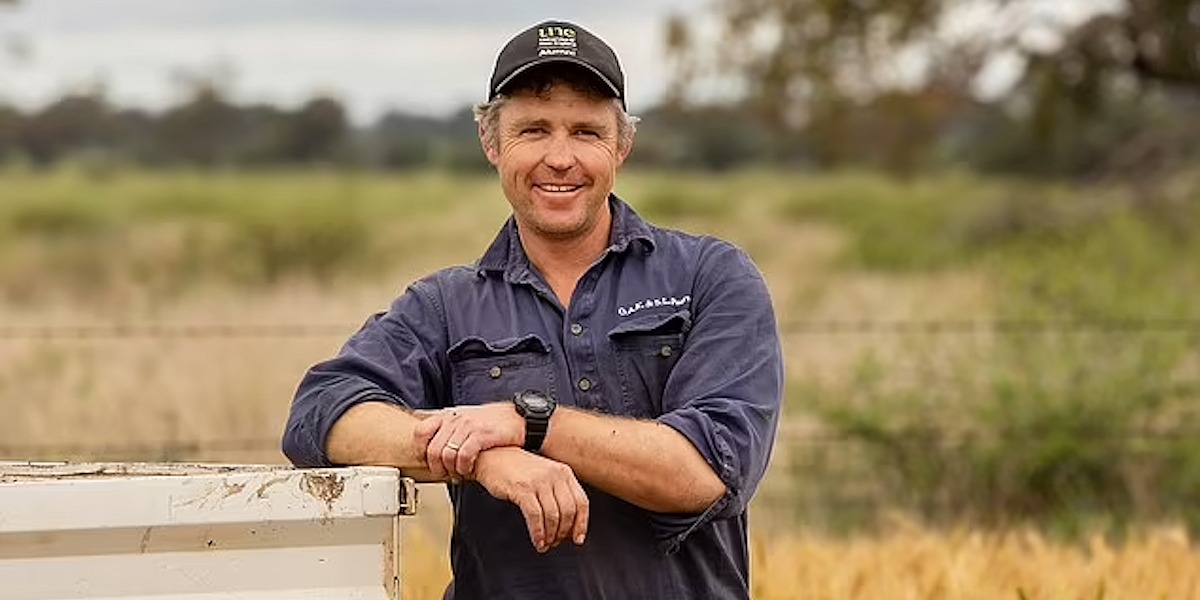
Artificial intelligence can turn the flood of data pouring off farms into profit, Moree farmer and policy consultant Oscar Pearse says, but the water hungry data centres behind it have no place in regions where water is running short.
Speaking to ABC News ahead of this week’s NSW Farmers annual conference in Sydney, Mr Pearse said the big issue in agriculture over the past 30 years had been the adoption of measurement and digitisation technology, and farm data was “now an $800 million and rising rapidly industry”.
“We’ve got data coming out of our ears in a lot of cases,” Mr Pearse said.
“The question is for farmers: How can AI help us turn that data into farm profits and productivity, and ways for us to change what we do on farm to be more efficient?”
Much of that data sits in silos that do not talk to each other, and farmers do not even control all of it.
“As a farmer, we don’t have full rights to our farm data or full access to it all,” he said.
He said AI could bring non-compatible data sets together, from competing ag machinery brands to weather stations and satellite analysis, then run the lot past a farm’s financials to show why one paddock, or even one square metre, was more profitable than another.
“That’s where AI is fantastic – making it cheap and easy for farmers to interrogate the data, run it past their financials, and find those correlations,” he said.
But the data centres that power AI need vast amounts of water to keep cool, and Mr Pearse said that put them on a collision course with farmers and regional communities.
“One of our top policy issues is Murray Darling Basin and the 450 gigalitres of buyback that the Commonwealth is proposing,” he said.
“That’s adding a huge strain onto the productive water use in agriculture.”
He said even larger regional centres like Tamworth were “running out of water and that’s stopping their growth”, and in zones with existing water scarcity, adding a huge new water user like a data centre was “a terrible idea, as far as most farmers are concerned”.
“Every resource is precious, and to farmers, nothing more than water,” he said.
The issue lands on the conference floor this week, where delegates will debate nine separate water motions, from calls for more water for irrigated agriculture and opposition to Murray Darling Basin buybacks, to a push from the Wellington District branch to prohibit the use of underground water at renewable energy sites.
Technology runs right through the rest of the motions paper too. The Garah Weemelah branch wants regulatory barriers removed so drones can apply products such as Graslan pellets to control invasive woody weeds, while the Wellington District branch is seeking user friendly drone software for farm mapping.
The Guyra branch wants drought declarations triggered by objective rainfall and seasonal data, arguing conditions can now be accurately measured using modern climatic and satellite data. The Glen Innes and Monaro Branches both want the organisation to campaign for the CSIRO and DPI to maintain current ag research stations and retain staff, including upgrading to the latest technology, to ensure the essential science that empowers the industry’s progress to continue.
Delegates will also hear a presentation on Tuesday afternoon from Zetifi, a Wagga Wagga based company that uses long range Wi-Fi to extend phone and internet coverage across farms, and a workforce and productivity panel featuring Marni Williams, Senior Research Project Manager with CSIRO’s Ag2050 program, which is mapping what Australian farming systems could look like by 2050.
The technology push comes as global conflict hammers farm margins, a pressure Mr Pearse said the industry could overcome.
“This conflict has absolutely shattered margins in a lot of industries,” he said of the Iran-Israel-US war, pointing to fertiliser and diesel costs.
That pain is on the conference agenda as well, with the Tamworth and District branch calling for 90 days of onshore fuel supply, at least 30 per cent of it held in regional areas, and other branches seeking stronger domestic fuel and fertiliser production capacity.
Asked whether the pace of change risked the loss of old farming skills, Mr Pearse said his grandfather planted crops with a machine pulled by a horse, while his neighbours now run fully autonomous machinery.
“We’re an old industry, but in Australia we’re extremely efficient, and we do what we’ve got to do to survive,” he said.
“I have neighbours who are now using fully autonomous farm bot systems in spraying and planting.”
“And if you’ve got a new tool that can save you money, time, make life easier for you and your staff, well, then that’s exactly what we’ll do.”
He said traditional skills like manual fencing would survive alongside GPS virtual fencing programs that let farmers manage where their cattle go from the office.
“You can do both things at once,” he said.
“You don’t have to lose your heritage or your skills in the uptaking of this pretty cool new tech, and it is really cutting edge, which is pretty exciting for a lot of younger people in the industry.”
Got something you want to say about this story? Have your say on our opinion and comment hub, New England Times Engage