

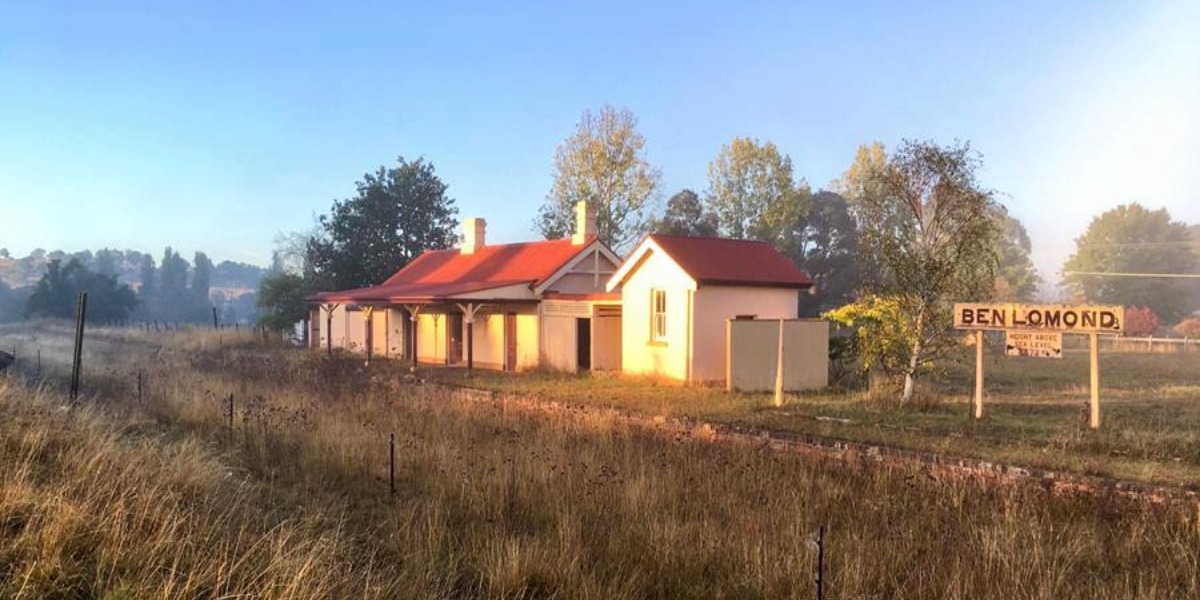
The Great Northern Railway has long occupied a symbolic place in Australia’s political story. It was beside this line at Tenterfield in 1889 that Henry Parkes delivered his Federation Speech, urging the colonies to unite. And while some regret that trains no longer travel to that historic platform, the modern political drama about the train line shows no sign of ending, with neither side interested in uniting.
Nearly two decades after the first feasibility studies were undertaken into the New England Rail Trail, the argument over whether the line should be preserved for a possible return of rail services or converted into a cycling and walking trail is again escalating.
At Armidale Regional Council, the issue has been politically corrosive. Council meetings over the past two years have seen heated exchanges, motions rescinded, and councillors publicly accusing one another of bullying and procedural gamesmanship. In one meeting last year, an attempt to revive the project was described as “a condescendingly pretentious, disgusting attempt to bully councillors”.
The most recent turning point came in October 2025, when councillors voted to allocate $500,000 to undertake the preliminary studies required under the NSW Rail Trail Framework. That decision followed – and ignored – an earlier resolution not to spend money progressing the project.
Council says that process is now underway.
In an announcement issued last week, Council said residents “may soon notice increased activity along the rail corridor as Council progresses the next stage of work required under the NSW Rail Trail Framework”.
“Over the coming weeks, specialists will be on the rail line conducting environmental assessments, Aboriginal heritage impact studies, and a range of other investigations essential to meeting state requirements.”
“These studies are a routine and necessary step, and there is no need for concern. People may simply notice more movement along the corridor than usual.”
The works have triggered a flurry of activity amongst those opposed to the rail trail development. Emails seen by New England Times indicate a sense of urgency among some train advocates, with calls for new leadership within Trains North and discussion about escalating campaigning tactics.
A number of train campaigners reject the suggestion that the works are merely procedural, and see this as their last chance to prevent the destruction of the rail line.
In one email and social post disseminated by former Trains North leader Dr Siri Gamage, under the headline “SAVE THE GREAT NORTHERN RAILWAY FROM DEMOLITION”, he claimed that council was “pushing ahead with preliminary works for a rail trail north of Armidale”.
“This is happening despite strong community opposition and without seriously examining alternatives that could deliver a bike trail without ripping up the rail line,” he wrote.
“Removing the tracks will set back any return of train services by another generation. Once the rails are gone, the cost of rebuilding will skyrocket.”
He called for those opposed to the rail trail to contact him directly, indicating a separate pro-train or anti-rail trail body may be in the offing following the departure of Dr Gamage from the leadership of Trains North last year. A meeting at a private home is apparently planned for this Thursday.
Council does not have the authority to remove or dismantle any part of the tracks, which still belong to the State Government. The current works are compliance studies required to satisfy the NSW Rail Trail Framework before.
Further north, rather than focusing solely on the rail trail question, Glen Innes Severn Council has used its submission to the New England and North West Strategic Regional Integrated Transport Plan to seek clarity from the state government about the long-term future of the non-operational Great Northern Railway corridor.
In a media release dated 27 February, Mayor Margot Davis said Council’s message to the state government was that transport planning must address long-term growth and certainty.
“We cannot plan in a vacuum for the next 20 years,” Mayor Davis said.
“The State Government needs to put a clear stake in the ground about whether there is any intention to reinstate rail services along the Great Northern Railway corridor within the life of its strategic planning horizon.”
Council has requested that the regional plan articulate “whether the corridor will be preserved for a long-term strategic rail need” and “how appropriate interim uses, such as rail trail activation, can proceed without prejudicing any future transport case.”
“This is about certainty,” Mayor Davis said.
“Communities need clarity so they can plan responsibly for the medium and long-term use of the Great Northern Railway Line.
“Without a clear State position, councils and communities are left navigating uncertainty that affects investment, land use planning and strategic development.”
“If the Government has zero intention of reinstating trains over the next 20 years, that creates one planning context. If it determines that rail services will be reinstated within the next five years, that creates a very different one,” she said .
Glen Innes Severn Council confirmed it will continue to deliver survey and planning work resolved by the previous council to meet the NSW Rail Trail Framework. It has spent approximately $40,000 of the $170,000 allocated in the previous council term on progressing design and environmental review.
It is not clear why Armidale Regional Council required a figure of more than double that of Glen Innes Severn’s expenditure to comply with the same framework.
Consultation on the Strategic Regional Integrated Transport Plan remains open and locals are encouraged to lodge submissions with Transport for NSW. Over 500 New Englanders have already had their say.
Got something you want to say about this story? Have your say on our opinion and comment hub, New England Times Engage
Correction, March 1, 2026 9:22 am: An early version of this story said Dr Gamage was removed from the leadership of Trains North, rather than departed. Dr Gamage did not stand for a leadership role at the last AGM.