

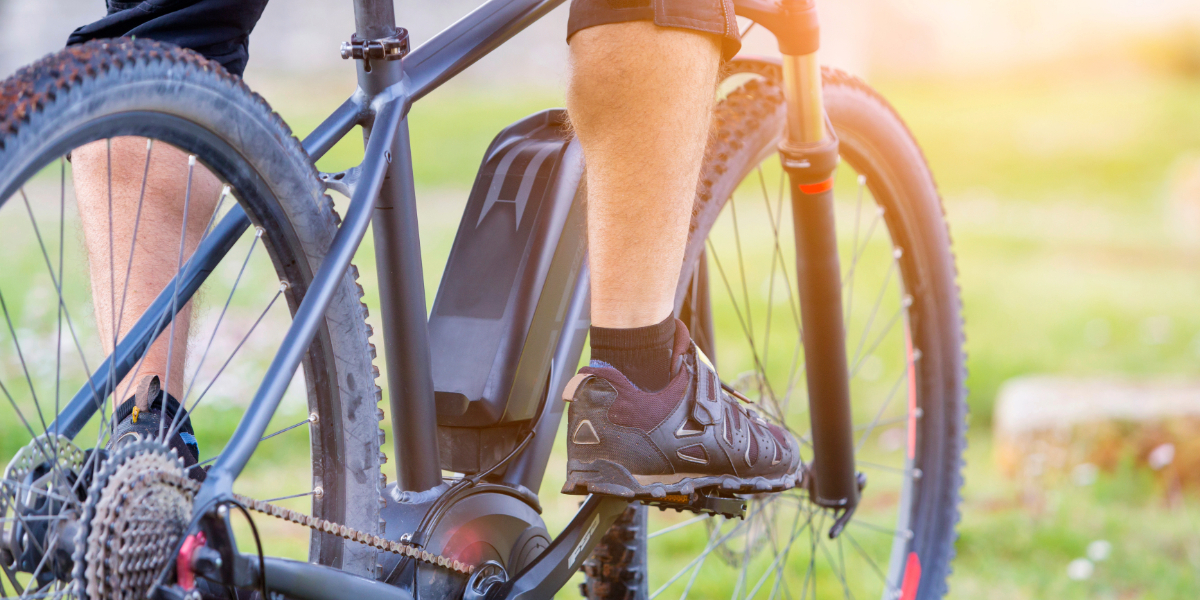
A minimum age for riding e-bikes in NSW is set to be introduced under the State Government’s staged reforms, a move expected to have significant implications for regional communities, including the New England.
The proposed changes are designed to improve safety for riders, pedestrians, and the wider community as the popularity of e-bikes continues to surge across the state – from metropolitan Sydney to regional centres such as Armidale, Tamworth, and Inverell.
There are an estimated 760,000 e-bikes in NSW. While their rapid growth has opened up new transport options and encouraged more people to stay active, it has also exposed gaps in regulation – particularly in regional areas where road infrastructure and enforcement resources can be stretched.
The government will commission an expert review led by Transport for NSW to recommend a legal minimum riding age of between 12 and 16. The review will also examine whether children and teenagers have the skills and maturity to safely carry passengers.
Under current NSW road rules, children of any age can ride an e-bike, and bicycle riders of any age can carry passengers if the bike is designed for it.
E-bikes are generally heavier and faster than traditional bicycles, increasing crash force and the risk of serious injury – a concern for families in regional communities where hospital access can be more limited.
Minister for Transport John Graham said safety concerns were driving the review.
“We want children outdoors and active, but keeping them safe is paramount,” Mr Graham said.
“I am concerned that we have primary school-aged children trying to control e-bikes that in some cases are heavier than them.
“I acknowledge the concern in the community about groups of teens piling on to fatbikes – often three to a bike – and sometimes breaking simple road rules. This review has been tasked with investigating whether teens have the ability to safely double their friends and how young is too young to be in the saddle of an electric bike.”
The review will consult child development and road safety experts, including the NSW Office for Youth and Young People, and seek input from parents and young people. Findings will be provided to the Minister for Transport and the Minister for Roads by June, with the government to then determine the final age threshold and passenger rules.
Minister for Roads Jenny Aitchison said age restrictions were under serious consideration despite some opposition.
“While there may be some people who would prefer no age restrictions on riders, we believe the safety risks are significant enough that restrictions need to be rolled out,” Ms Aitchison said.
“We want to make sure riders are physically and cognitively capable to handle e-bikes so they can be ridden safely within the road rules.
“Age restrictions for young riders will help ensure this can be done and reduce the risk of injury for not just young people but also other road users too.
“We think the risks are significant enough to warrant a change, and now we want to draw on the best evidence and expert advice available to make a call on what the limits could be. As a result, we will make a decision on the age limits after the findings of Transport for NSW’s review and recommendations are handed down.”
EU safety standard to apply
Alongside the age review, NSW will adopt the European safety standard (EN15194) from March, bringing the state into line with Western Australia.
Under the standard, e-bikes must have a maximum power output of 250 watts, with motor assistance cutting out at 25km/h. Power assistance cannot be delivered beyond 6km/h unless the rider is pedalling.
The standard also includes strict battery, electrical, and fire safety requirements, as well as anti-tampering protections – an issue that has become increasingly prominent in both urban and regional communities.
The State Government has criticised the former Liberal-National government for increasing the allowable power from 250 watts to 500 watts in 2023 without introducing a broader regulatory framework. It argues that the decision led to high-powered, illegal motorbikes masquerading as e-bikes appearing on roads and footpaths.
“The community has spoken against souped-up motorbikes masquerading as e-bikes, and this new standard makes clear that e-bikes must perform like bicycles, not motorbikes,” Mr Graham said.
“Make no mistake, with more than 750,000 e-bikes on NSW roads, this is a huge challenge to solve, especially after the former Liberal government opened the door to 500-watt e-bikes.”
From 1 March 2029, only e-bikes meeting the European standard will be road legal in NSW. A three-year transition period will apply, reflecting the typical lifespan of an e-bike and giving households, retailers, and manufacturers time to adjust.
Retailers will be required to clearly state whether a bike meets the EU standard and is road legal in NSW.
The reforms also build on previously announced measures, including new powers for NSW Police to seize and crush illegal e-bikes, roadside speed testing using portable “dyno units”, and new lithium-ion battery standards to reduce fire risks.
Minister for Police and Counter-terrorism Yasmin Catley said police were already dealing with the consequences of misuse.
“Police see firsthand the consequences when powerful e-bikes are misused,” Ms Catley said.
“By introducing sensible age settings and cracking down on illegal, high-powered bikes, we are helping police prevent dangerous behaviour before more people are seriously hurt.
“The vast majority of people do the right thing, and these laws are designed to support them.
“This is about getting the balance right so e-bikes remain a useful transport option without putting the public at risk.”
For New England communities, where e-bikes are increasingly used by school students and for short-distance travel in regional centres, the coming months will determine how the new age limits and standards reshape the way residents use this fast-growing mode of transport.
Don’t miss any of the important stories from around the region. Subscribe to our email list.