

As governments focus on boosting supply and accelerating approvals, uncertainty remains over the future of the Narrabri Gas Project, the only approved development in NSW capable of delivering significant new gas in the near term.
The project, which received its final regulatory approval last year after more than a decade of assessment, legal challenge and community opposition, has yet to begin construction, with no public confirmation of a final investment decision or timeline – and little mention of it in the broader intense debate about energy supply.
Santos has previously said the Narrabri project could supply up to half of NSW’s gas needs, with the company committing its production to the domestic market, and that a final investment decision would be made ‘soon’.
In the context of a global crisis on liquid fuel supply including gas, the lack of a final green light for the project, and no apparent discussion of fast-tracking the start of it to bring immediate relief and confidence to the energy supply market, leaves a Narrabri-sized hole in the national gas debate.
PM rules out gas tax amid budget campaign
Anthony Albanese confirmed this week the federal government will not impose a new tax on existing gas export contracts in the upcoming federal budget, despite sustained lobbying for a 25 per cent tax on exports of the commodity.
The proposal had been championed by crossbenchers including Senator David Pocock, alongside unions and advocacy groups, who argued gas companies were set to benefit from elevated global prices linked to conflict in the Middle East.
Albanese denied there was profiteering in the gas market, saying prices were stable despite large gas fields in the Middle East being bombed by Iran.
“There have been no windfall profits. Gas prices remain the same as they’ve been,” he said.
“The only thing I am concentrating on when it comes to fuel is supply.”
Mr Albanese said the government’s priority was maintaining supply and reliability, particularly amid ongoing global uncertainty and fuel market volatility.
“The budget will not undermine existing contracts on gas exports,” the Prime Minister said, while indicating future projects could still be subject to different settings.
He also announced more than $45 million over four years to progress environmental approval agreements with states and territories, aimed at reducing duplication and speeding up decisions on major projects.
“This will fast-track new energy, housing and resources projects by combining federal and state approvals,” he said.
NSW opens new areas for exploration
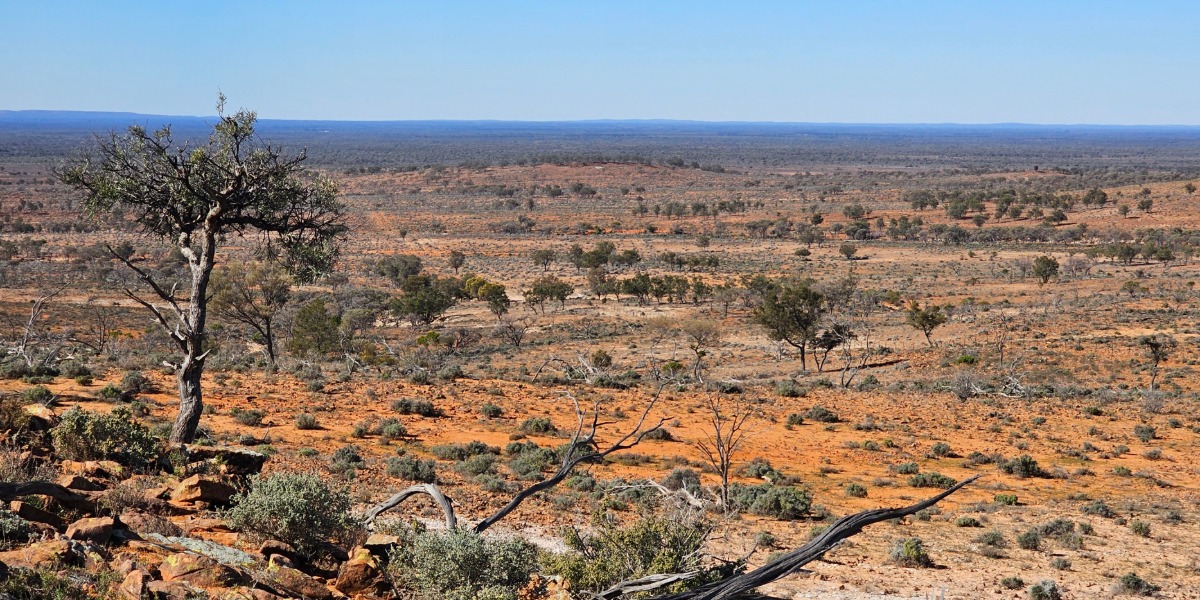
At a state level, the Chris Minns government has announced the release of two large areas in far west NSW for gas exploration, marking the first such move in more than a decade.
The Bancannia and Pondie Range troughs, north of Broken Hill, will be opened for exploration applications, with the application fee reduced from $50,000 to $1000 in an effort to attract investment. The government says these opportunities for new gas supply will complement the Narrabri Gas Project.
“We’re doing an enormous amount of heavy lifting when it comes to renewable energy,” Mr Minns said.
The areas had previously been identified for potential exploration in 2021 but were not released at the time, with concerns about land use conflict cited as the reason by the then Coalition Government.
Minns said the decision was aimed at addressing these forecast gas shortages on the east coast, with gas expected to play an ongoing role in supporting the electricity grid alongside renewable energy generation.
NSW is forecast to face gas shortfalls in the years ahead, with the Australian Energy Market
Operator warning of supply gaps across the east coast. Gas is not only used in homes – around 40
per cent of NSW’s gas goes directly to industry, where it is used to generate the high-temperature
heat needed to manufacture products like glass, bricks, paper, chemicals and processed foods.
“However … we will need gas in the system when the wind isn’t blowing and the sun isn’t shining.”
Environmental groups outraged
The move has drawn strong criticism from environmental organisations and some regional stakeholders, who argue new exploration will not deliver supply in the short term and risks long-term impacts on land, water and emissions.
Greenpeace Australia Pacific described the decision as a reversal of a long-standing pause on gas exploration in NSW. Spokesperson Solaye Snider said opening new areas for drilling during a period of global energy instability would not address underlying issues in the domestic market.
“This decision won’t solve any problems for Australians – in fact it will create them,” she said.
“Any new gas coming from the far west would take decades to come online and would be more expensive than renewable energy.”
Lock the Gate Alliance said the decision to open new areas for gas exploration represented a shift away from calls for a broader reduction in gas use across the economy.
Clean industry coordinator Harriet Kater said recent research indicated a large proportion of gas use in NSW could be replaced with commercially available technology, including electrification and heat pumps.
“A broad coalition of unions and community organisations called on the NSW Government to commit to an economy-wide gas reduction plan,” she said.
“Today’s announcement takes us in the opposite direction.”
Farmers still resistant, but legal action loses steam
Liverpool Plains farmer Margaret Fleck, also speaking with the Lock the Gate alliance, said communities had previously raised concerns about the impact of gas extraction on prime agricultural land and water resources.
“Farmers in NSW’s northwest have been fighting the Narrabri gas project for over a decade,” she said.
“We refuse to see prime farmland and water sacrificed for short-term gas extraction.”
NSW Farmers were also quick to issue a release condemning the decision to allow new gas exploration.
NSW Farmers President Xavier Martin said farmers recognised the need for reliable energy but warned hasty exploration without strong safeguards could create unmanageable risks for rural and remote communities.
“The government must explain how it will prevent a flood of speculators and ‘$1000 cowboys’ arriving on farms with inadequate resourcing, poor behaviour and little regard for biosecurity or water risk,” Mr Martin said.
“Farmers and communities deserve certainty about their water, their land, and their livelihoods. Until the government can demonstrate safeguards, enforcement and accountability, there will continue to be more questions than answers.”
However, a legal challenge announced by NSW Farmers late last year to the Narrabri Gas Project has not proceeded as initially indicated, after the organisation’s board sought formal legal advice on its prospects of success.
The proposed action was announced by then acting chief executive Mike Guerin (now CEO of NFF) with much fanfare late last year, but the NSW Farmers Board insisted on normal due diligence and formal advice on prospects of success before committing to spend at least $1m of member’s money in the court case.
Subsequent internal disagreement saw an extraordinary general meeting called, apparently by Martin, in an attempt to over-rule the board’s 6-3 majority decision to seek advice. The motion was soundly defeated, and the organisation has not yet determined whether the announced legal action will be pursued.
Last steps
A final appeal from the Gomeroi people which was heard before the Federal Court in March after being deferred from a scheduled hearing last November due to a conflict of interest is awaiting judgement. However, Santos advised in their quarterly report this week that the native title holders have authorised a Voluntary Indigenous Land Use Agreement for the Hunter Gas Pipeline and Narrabri Lateral Pipeline, supporting progress towards development of the Narrabri Gas Project.
The pipeline, and the appeal decision, are understood to be the only questions to be resolved before a final investment decision from Santos.
Got something you want to say about this story? Have your say on our opinion and comment hub, New England Times Engage