

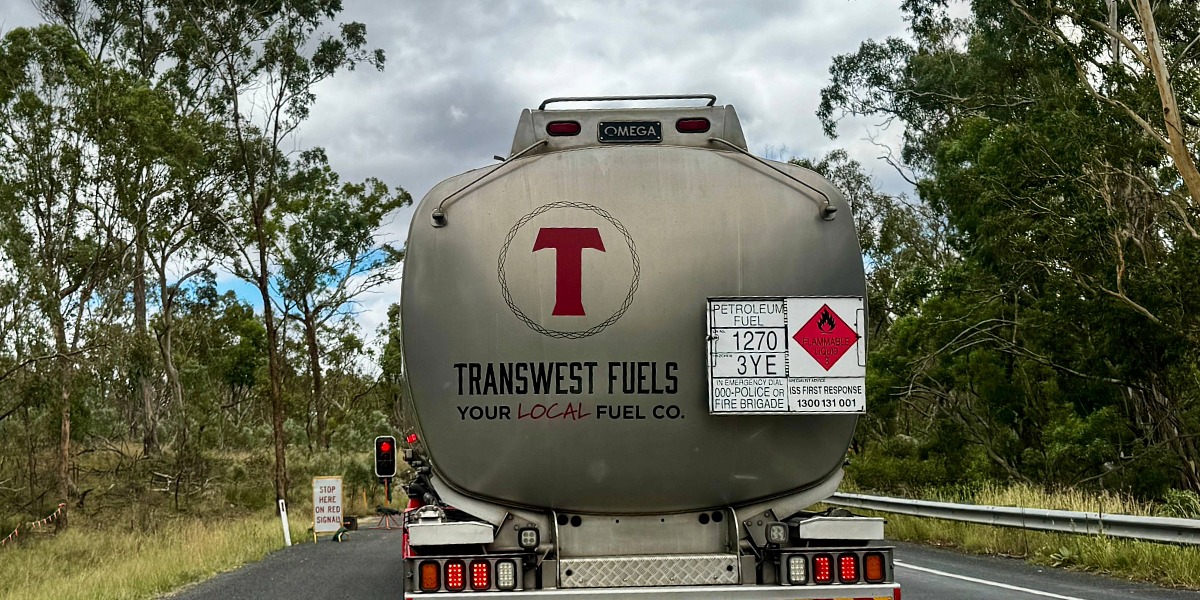
The sight of a Transwest Fuels truck is common on our roads, particularly in the lead up to to harvest and sowing as a critical supplier of fuel to our region’s farmers.
But if you see a Transwest truck on the road in the next couple of days, it’s likely to be empty.
Transwest, the largest fuel distributor in the region, says it will have no access to any fuel from tomorrow.
Warnings shortages are already biting farmers and threatening freight, planting and local businesses across inland NSW are reverberating through the halls of both state and federal parliaments. But the federal government is denying there’s a problem, blaming panic buying and hoarding for any supply chain issues.
Sam Clifton from Transwest Fuels said the company had been cut off from supply out of major terminals.
“We have no access to any fuel from tomorrow,” Clifton said.
“Zero. None out of Brisbane, none out of Newcastle. Zero.”
He said the company had received a small amount of fuel today (Tuesday March 10), but had been told there may be nothing further until next week, crushing the major local employer.
“We’ve got over 100 staff on our books and we have no access to any fuel,” he said.
Clifton said the situation had immediate consequences not just for their own business, but for the farmers, transport operators and service stations that rely on independent regional distributors.
“We obviously do a lot of farmers and transport guys. Obviously they’re all stressed in town here because they’re thinking, well shit, if Transwest can’t get fuel, we can’t get fuel.”
“And the little bit of fuel we can get access to is exorbitantly priced.”
Government blames panic, Barnaby blames climate
The dire situation comes as multiple federal government ministers insist there is no national fuel shortage and urge consumers not to panic buy.
In question time today, Minister for Energy and Climate Change Chris Bowen blamed the rapid increase in demand at the retail level for the widespread shortages being reported in regional areas.
“The biggest risk to fuel availability in Australia right now is panic buying,” Bowen said.
He then chose to lecture farmers on the dangers of stockpiling fuel on their properties.
“We need to be very honest with people,” he told the parliament, “stockpiling fuel on a property is not an undertaking without risk.”
His comments were reiterated by the Minister for Agriculture Julie Collins, and echoed those of Employment Minister Amanda Rishworth and Environment Minister Tanya Plibersek on their morning television appearances.
“We have had the biggest fuel stocks that we’ve had any time in 15 years,” Plibersek said on her usual appearance with Member for New England Barnaby Joyce on Sunrise.
“We’ve still got three billion litres of diesel. We’ve got one and a half billion litres of petrol.”
Plibersek said the government had brought emergency fuel reserves onto Australian soil and ensured the nation’s remaining refineries stayed open.
“There are still ships on the way,” she said.
“The last thing we want to see is panic buying.”
Barnaby Joyce, as is his custom, blamed climate change policies for the situation.
“What we have is in towns, such as in my area, Mungindi, Walcha, will run out of fuel.”
“Transwest is finding it nearly impossible to get fuel. United Petroleum said they can’t get access to it.”
“This is part of your climate policy,” he said, “and what we’re going to have is a massive problem.”
Big fuel companies withholding fuel from distributors
Clifton flatly rejected the government’s repeated assertion that there was no problem, and that regional supply problems were being caused by consumers stockpiling fuel.
“They keep saying it’s all fine. It’s not fine on the ground,” he said.
“I don’t know what the problem is at the top. The guys are just not releasing the fuel. The fuel is there,” he said.
“They’ve got the fuel. They don’t want to release the fuel to guys like us.”
Clifton said the big fuel companies had largely withdrawn from inland distribution years ago, leaving independent operators to service farmers and regional towns. But it also leaves our communities vulnerable to the whims of big companies like Shell and Ampol who can withhold their supplies from independent distributors to the benefit of their own service stations.
“That’s why there’s so many independent distributors in regional areas, because we’ve moved into that vacuum that they’ve left to support those farmers,” he said.
“And they’re choking out the whole supply chain because their service stations in the city have been smashed and they want their service stations done first.”
“So now we’re getting absolutely crushed.”
“From our point of view, it just feels like the big guys are just trying to crush all the independents,” he said.
Federal Member for Parkes Jamie Chaffey warned that restricted fuel access could quickly turn into a major crisis for agriculture, which will quickly become a crisis in the city.
Mr Chaffey said farmers and independent suppliers were already reporting deliveries being halted, and raised the case of Transwest specifically in Question Time today.
“There is fuel, but it is being kept for the city, a short-sighted approach that will have huge flow-on effects throughout regional areas and right back into the city,” he said.
“Planting is about to start across the electorate of Parkes and elsewhere but without diesel, it won’t happen. And how do farmers get their livestock to market?”
“No diesel equals no crops and livestock. No crops equals no food, no income and no jobs. And when that supply drops, prices will of course surge, even in the city.”
Mr Chaffey said the federal government needed to act quickly to guarantee fuel access for key industries including agriculture, transport and manufacturing.
“Farmers should not be facing this level of impact so early in this conflict,” he said.
The Nationals are calling on the Government to provide farmers with guaranteed access to necessary fuel supplies so they can keep producing the food that our country needs.
“This is a national food security crisis, and if it is not resolved urgently, all Australians will feel the consequences.”
Getting through it by supporting each other
For farmers across the New England, diesel shortages pose an immediate operational risk. Tractors, irrigation pumps, road freight and livestock transport all rely on reliable fuel supplies, and disruptions during planting season can quickly cascade through our local economies.
Member for Northern Tablelands and Shadow Agriculture Minister Brendan Moylan say they have also been contacted by independent distributors and regional businesses worried about both shortages and rising prices.
“Deliveries have been cut back or cancelled entirely, with indications that supply is being prioritised to large metropolitan operators,” Mr Moylan said.
“Any disruption to their supply risks shortages, price spikes and significant impacts on farming, freight and local economies,” he said.
Locals are already supporting locals, with conversations on social media across the region focused on which outlets still have fuel – particularly diesel.
Clifton urged the government to get out here and see what is going on, rather than denying there was a problem.
“Someone from the ACCC and the government needs to come out here.”
“It’s all well and good for the treasurer to come out and say ‘you servos stop price gouging’, but none of us are price gouging.”
“It’s got nothing to do with the servos at all – the service station is trying to keep the lights on until next week. It’s the top end of town that are charging us exorbitant prices.”
Despite the pressure, he urged regional businesses not to turn on each other as the shortages tighten.
“We’ve just got to support each other,” he said.
“We can’t get angry at each other about pricing or anything, we’ve just got to support each other and just stick by the companies that are in our area that are trying to do their best.”
“The worst thing we can do now is turn on each other.”
Got something you want to say about this story? Have your say on our opinion and comment hub, New England Times Engage