

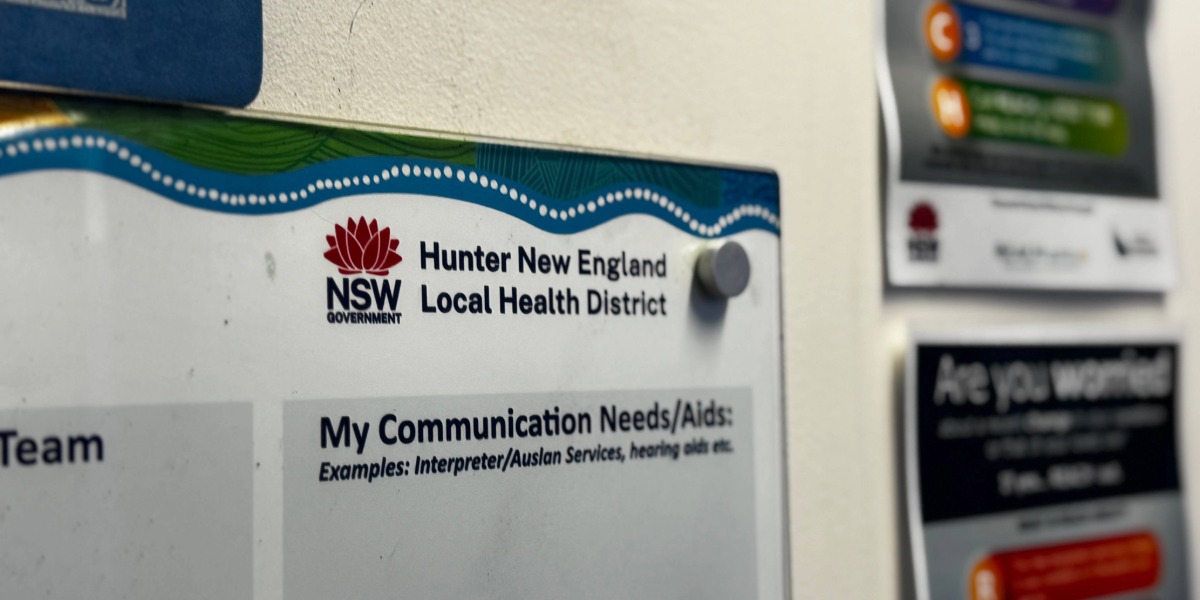
Hunter New England Health is refusing to release data on how often major New England hospitals are operating with no doctor on site, as scrutiny intensifies over patient deaths, transfers and ongoing reliance on virtual care.
The issue has come into sharp focus following repeated periods where emergency departments have functioned without a doctor physically present, including a nine day period at Moree Hospital from 3 February to the evening of 12 February. The number of lengthy stretches where our region’s hospitals do not have adequate staffing has been notably increasing, and has been attributed to a number of deaths.
“Wholly preventable” loss of life linked to lack of doctors
Concerns about hospitals with no doctor were brought into focus in March last year when a coroner found the death of 46-year-old David Freeman at Tenterfield Hospital was “wholly preventable”.
Mr Freeman died from an acute bronchial asthma exacerbation triggered by a non-allergic hypersensitivity reaction to aspirin after a telehealth GP prescribed the medication without knowing of his NSAID hypersensitivity.
Deputy NSW coroner Joan Baptie described the hospital’s staffing as “untenable” after nurse numbers had been reduced from three to two per shift.
Then in August, Moree was without a doctor for “a lengthy period of time” after a booked locum doctor became unavailable, and multiple reports of people
Just before Christmas, 76-year-old Steven Jackson and 64-year-old Margaret Wing died after seeking emergency treatment for influenza A on Friday November 14, and being told there was no doctor on site at Inverell Hospital until Monday November 17.
Daughter Amanda Wing told media that her 18-year-old son found her parents’ bodies at home on November 16. She said they were not told that they could still go to Emergency, or that being transferred to Armidale was an option.
A spokesperson for Hunter New England Local Health District confirmed there was not a doctor physically present at Inverell Hospital on November 14.
Lack of policy makes it worse
A staff member at one of the most affected hospitals, speaking on condition of anonymity, said not having doctors on site was no longer unusual, but there was no clear framework for managing it.
“It’s not like having no doctor on site is a new thing, it’s been happening for some time,” the staff member said.
“But there is no training, no guide, no policy of what we are supposed to be doing. Who gets notified, which patients do we transfer, none of that is in a document anywhere.”
The staff member said the lack of written procedure created uncertainty when hospitals were left with no doctor on site.
“Of course, if it was in a document then someone higher up the chain in the city would probably ask the more fundamental question: why are you planning for a hospital not to have a doctor?”
In a statement, Executive Director of Operations Susan Heyman said emergency departments “continue to deliver safe, high-quality care, 24 hours a day, seven days a week”.
“A doctor is always available in all our EDs, either in person or via virtual care services,” the statement said.
The statement said doctors available virtually in emergency departments are Fellows of the Australian College of Emergency Medicine and described the District as having “well developed workforce and demand management plans in place”.
Transfers and telehealth not helpful
It also stated that the District’s “highly networked hospital system ensures patients can be transferred or redirected to other hospitals where necessary” and that hospitals are in “continuous communication” with NSW Ambulance and the District’s patient flow unit to ensure patients are directed to the most appropriate facility.
The staff member who spoke to New England Times said references to telehealth did not address the realities of hospitals with no doctor on site.
“The line that there is always telehealth available is really not helpful,” they said.
“Telehealth is great when you need specialist input, it doesn’t help when you need a doctor to push where it hurts.”
They said nurses and support staff were frequently left to manage complex situations without a doctor physically present.
“We have great nurses and support staff – simply amazing people who do their best – but they get punished internally for suggesting that telehealth is not sufficient. We need a doctor on site as much as the patients do.”
Beyond emergency presentations, New England Times has received repeated reports over the past year of patients being directed to travel to other towns for basic diagnostic services, including X-rays and scans, when hospitals have no doctor on site or lack radiology staff.
Other accounts describe patients being transferred to larger regional or metropolitan hospitals for treatment and later discharged without assistance to return home.
“It’s the same with transfers – there’s no piece of paper saying after we send a patient on for care that they will have to make their own way home,” the staff member said.
“We get told it’s policy, we tell patients it’s policy… but there is no policy that I’ve ever seen that says NSW Health has no duty of care to patients to make sure they get home.”
Institutional abandonment of country patients
Nationals Member for Northern Tablelands Brendan Moylan said the number of occasions where hospitals are left with no doctor on site was unacceptable.
“This is a disgrace and it’s happening far too often,” Mr Moylan said.
“If this happened in Sydney for nine days, the Minister would be on every TV channel within the hour.
“When it happens in Moree or Inverell, the state government goes missing.”
“Leaving emergency departments unstaffed is not ‘managing a workforce issue;’ it’s abandoning country patients.”
Moree Plains Shire Mayor Susannah Pearse agreed, saying it’s time for us to all call for basic minimum staffing standards, including for doctors.
“No doctor at the only hospital for a 100km radius is not a standard we – or any other rural community – should accept.”
“‘Virtual care” is fine for your follow up specialist appointments, your repeat scripts. It is not fine for managing emergencies,” she said.
Knowingly hiding the numbers
As part of an ongoing investigation, New England Times sought data on how many days in calendar year 2025, and so far in 2026, Moree, Inverell, Glen Innes, Narrabri and Gunnedah hospitals operated with no doctor on site.
During a phone call from the Hunter New England Health media unit, this masthead was advised that figures had been received. However, because doctor coverage is recorded in 12-hour shifts, 7am to 7pm and 7pm to 7am, the shifts did not “equate into days”.
New England Times requested that any available figures be provided, whether in shifts or another format. Hunter New England Health’s media unit refused.
The refusal to provide numbers on how often local hospitals are without a doctor on site follows more than 12 months of attempts by this masthead to obtain information about patient transfers from New England hospitals.
In February last year, New England Times began asking questions after reports that patients were being directed to travel to other towns for care, including for diagnostic imaging. A subsequent request for data on patient transfers under the Government Information Public Access Act made in August was refused on the basis that the information was not held in one system or was not available.
Local Upper House member Aileen MacDonald MLC also sought patient transfer figures through a parliamentary question on notice and received a three line answer to her 8 part question, dismissing the inquiry as unanswerable because “the information requested is not held in a single dataset”.
Like what you’re reading? Support New England Times by making a small contribution today and help us keep delivering local news paywall-free. Donate now