
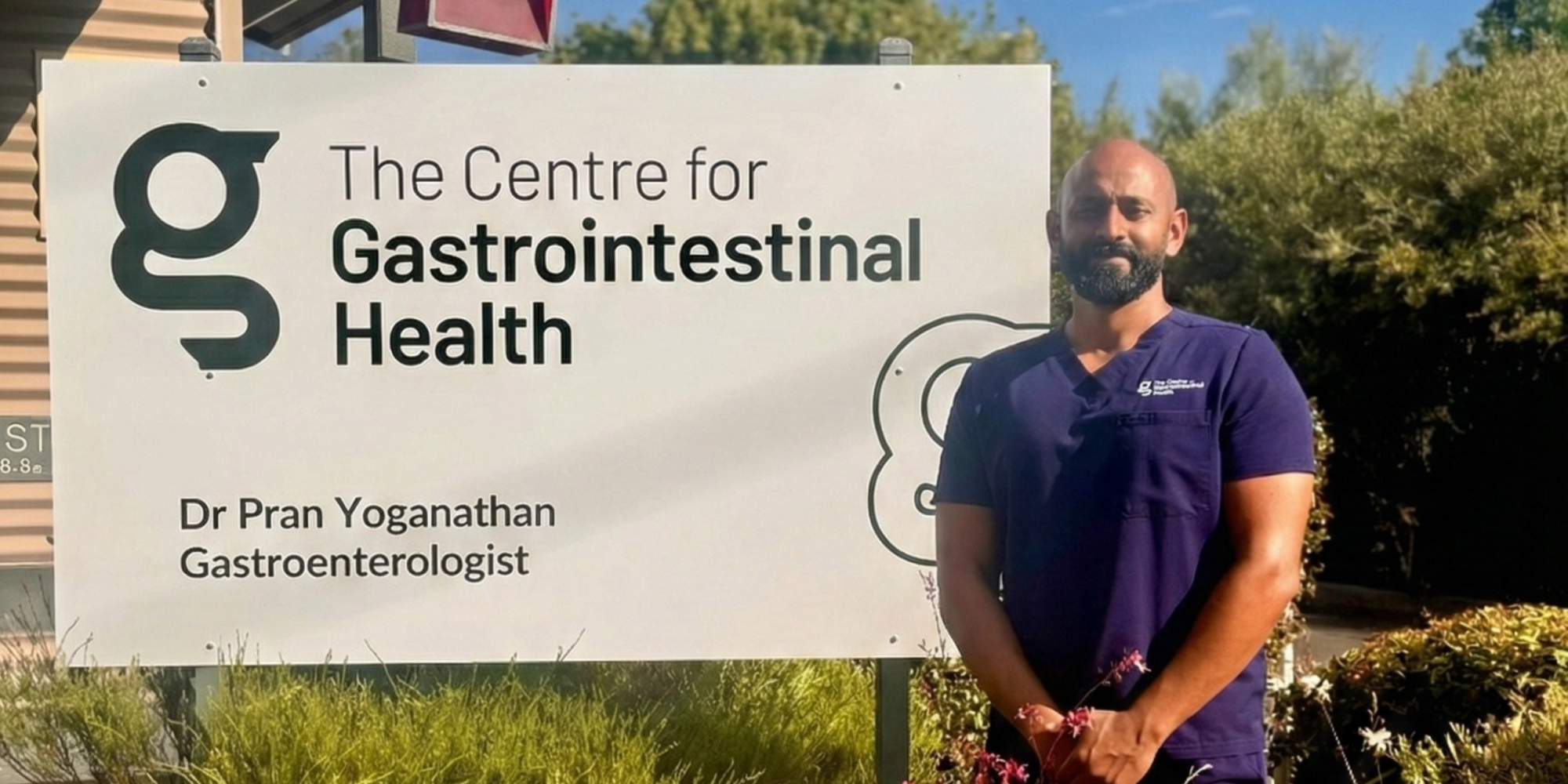
For local gastroenterologist Dr Pran Yoganathan, specialist at The Centre for Gastrointestinal Health in Tamworth and Armidale, better health is at the intersection of clinical science, lived experience, and a deep curiosity about the systems shaping modern health.
“Science is one of humanity’s most powerful tools because it is fundamentally the study of reality, and reality is synonymous with the truth, and is it not a wise saying that the truth sets you free?” Dr Yoganathan said.
“But it is also a process. It evolves. It refines itself. That is its strength.”
Rather than viewing scientific consensus as immovable, he sees it as part of an ongoing conversation.
“I have always resisted rigid thinking,” he said. “Science expands our understanding of reality. It does not close it down.”
This perspective has shaped both his clinical practice and his broader philosophy of care. For Dr Yoganathan, science is not doctrine but method, a disciplined way of approaching truth that remains open to refinement.
“It is not a monument,” he said. “It is a living, adaptive system. That is why it works.”
Despite unprecedented technological and pharmaceutical advancement, Dr Yoganathan believes medicine must also confront an uncomfortable question: why are chronic diseases continuing to rise?
“As a doctor, I felt a tension,” he said.
“The diseases we were trained to manage were not retreating. Autoimmune conditions, metabolic illness, and cancers were becoming more common. The burden on communities is significant.”
Rather than rejecting modern medicine, he began examining the broader context in which illness develops.
“My work as a gastroenterologist showed me that the gut is not just a digestive tube. It is an immune organ and a critical interface between the external environment and the body.”
He describes the gut as the place “where ecology meets biology”, where food, water, and environmental exposures directly shape immune and metabolic function.
This line of inquiry led him to consider larger systems: food production, soil health, processing methods, and dietary patterns. Perhaps we may have to accept that medicine and farming are inexorably intertwined; they have now collided.
“Health should be the default state of the human organism,” he said. “We need to look beyond individual blame and examine the environments we have created.”
Now based in regional New South Wales, near his cattle station outside Tingha, he reflects often on the contrast between agricultural abundance and modern consumption patterns. The contrast between food production and food consumption is impossible to ignore.
“Each time I drive into Tamworth or Armidale … I am struck by the density of predatory fast-food outlets embedded in some of the richest farming land in the country. These foods destroy our health through the obvious hijacking of the dopaminergic system, but also through more invisible ways.
“The disconnect between how food is produced and how it is consumed is striking,” he said. “It raises important questions about long term health.”
Dr Yoganathan is clear that his work is not an attack on institutions, farmers, or colleagues. It is an expansion of perspective.
“Medicine and agriculture are deeply connected,” he said. “If we care about health outcomes, we must care about the systems that influence them.”
At The Centre for Gastrointestinal Health, patients encounter a clinician grounded in evidence-based practice, while also attentive to the broader ecological and lifestyle factors shaping disease.
“People deserve health,” Dr Yoganathan said. “And we should continually refine the systems that support it.”
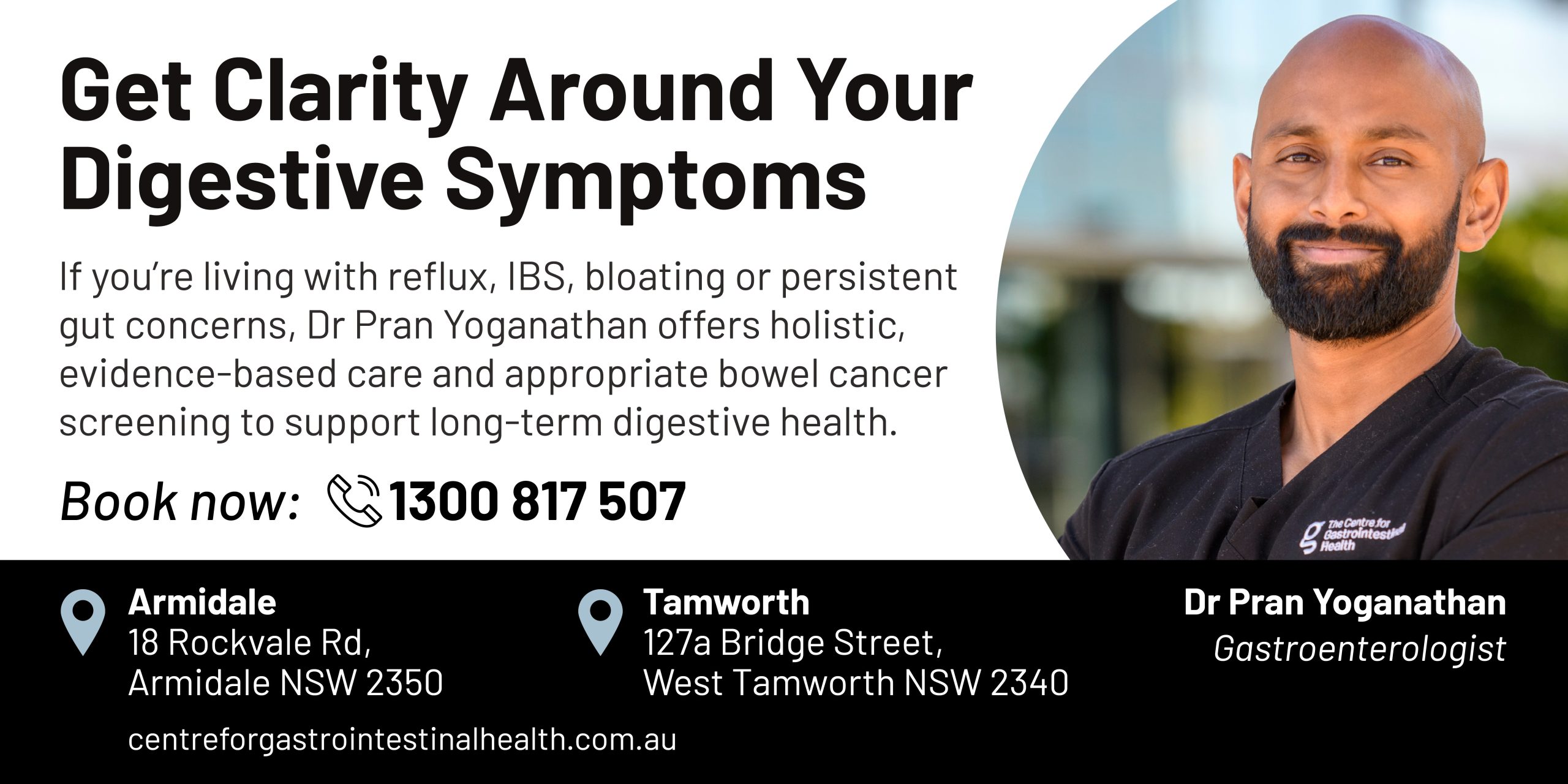
This story is a paid advertorial. Find out how advertising with New England Times is a cost effective and reliable way to reach New England locals who are interested and engaged. Find out more here.