

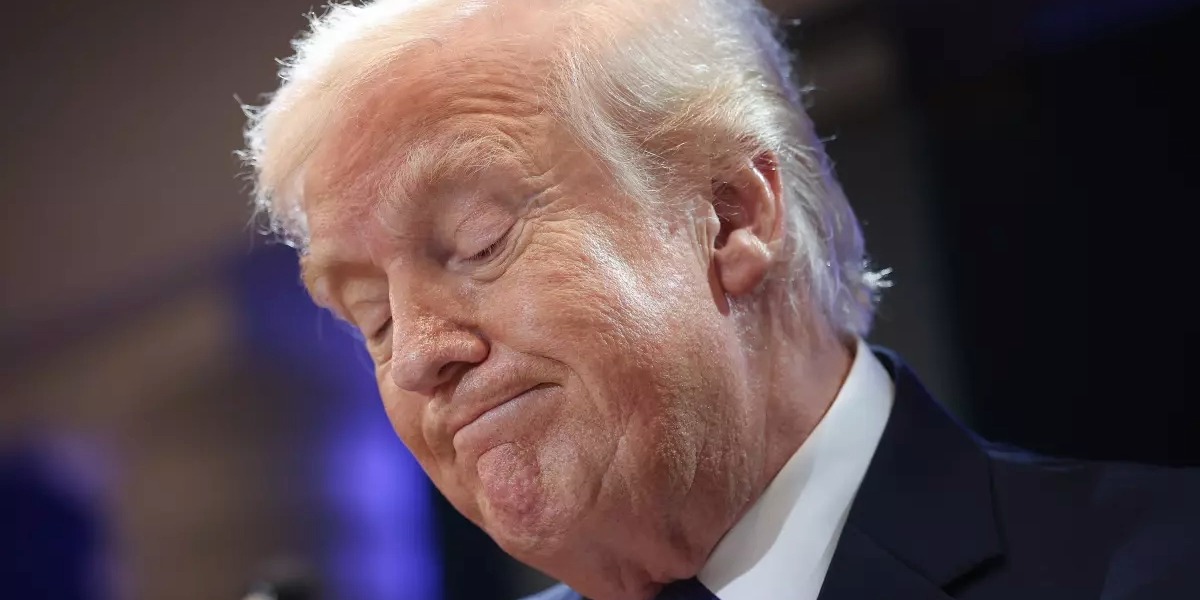
Australian beef exports appear set to dodge the latest twist in United States President Donald Trump’s escalating tariff saga, with industry leaders confirming reports that local producers will retain zero tariff access to their most valuable overseas market.
Over the weekend, President Trump flagged a lift in global import tariffs to 15 per cent, after the US Supreme Court found his existing 10 per cent tariff measures unlawful. The President has vowed to use different powers to push ahead with his global trade agenda, with the new baseline tariff due to take effect from Tuesday.
But for Australia’s beef sector, including many local producers who rely heavily on the US export market, early indications suggest a reprieve.
Cattle Australia Chief Executive Will Evans said confirmation was being sought through the Australian Government and industry channels, but reports from the United States indicated Australian beef would remain exempt.
“The Australian Government reached an agreement with the United States in November for Australian beef to be supplied tariff-free, and we strongly believe that this should continue to be the case,” Mr Evans said.
For producers across the New England and North West, where cattle underpin local economies from paddock to processing plant, the exemption is significant.
“The US remained Australia’s largest beef export market, with our lean beef complementary to American supplies,” Mr Evans said.
“The US is a long-standing and valued trading partner, and the continuation of the agreed zero-tariff position would provide confidence to both Australian grass-fed beef producers and consumers in the US.
“US demand for Australian beef has never been stronger, which reflects the benefits to all parties of opening international markets and the removal of trade barriers.”
Mr Evans said Cattle Australia would continue to work closely with the Australian Government, Meat & Livestock Australia, and other peak industry bodies to advocate for the removal of trade barriers globally.
Meat & Livestock Australia Managing Director Michael Crowley confirmed the sector’s understanding that beef would remain at a zero per cent tariff following the November 2025 announcement.
MLA said it was aware of the US Government’s decision to introduce a 15 per cent baseline tariff on all imports, but stressed Australian beef would remain exempt.
However, the news was not entirely positive for the broader red meat sector. Australian sheepmeat and goatmeat will see tariffs increase from 10 per cent to 15 per cent under the new arrangements.
MLA said it would work with industry and the Australian Government to navigate the challenges the tariff hike would impose.
The United States was Australia’s number one export market for beef, lamb, and goatmeat in 2025, underlining just how critical the trading relationship remains for producers and the wider supply chain.
MLA maintains a dedicated office in Washington, D.C., and said it continues to liaise closely with government, industry partners, and stakeholders to ensure Australian red meat remains highly valued, competitive, and trusted in the US market.
The tariff upheaval follows a landmark 6–3 ruling by the Supreme Court of the United States, which found President Trump did not have the authority to unilaterally impose certain tariffs. The decision has cast uncertainty over trade measures negotiated in recent months under the threat of higher duties.
President Trump responded angrily to the ruling, criticising individual justices and vowing to rely on a different law to continue his trade measures.
Trade Minister Don Farrell is set to return to the US to press Australia’s case for the removal of American tariffs more broadly.
“Our argument is the correct argument. We believe in free and fair trade,” Senator Farrell said.
Opposition trade spokesman and Member for Page Kevin Hogan said the United States needed to honour its obligations.
“The strength of our economic partnership has been built on trust and mutual benefit. Any deviation from this agreement undermines the principles of free trade and the rules-based order,” he said.
“Unilateral tariff hikes undermine confidence and disrupt global supply chains. They also increase the risk of retaliation and economic instability.”
For now, at least, beef producers can breathe a cautious sigh of relief. In a global environment marked by uncertainty and political brinkmanship, maintaining tariff-free access to the US market provides a rare measure of stability for one of regional Australia’s most important export industries.
Got something you want to say about this story? Have your say on our opinion and comment hub, New England Times Engage