
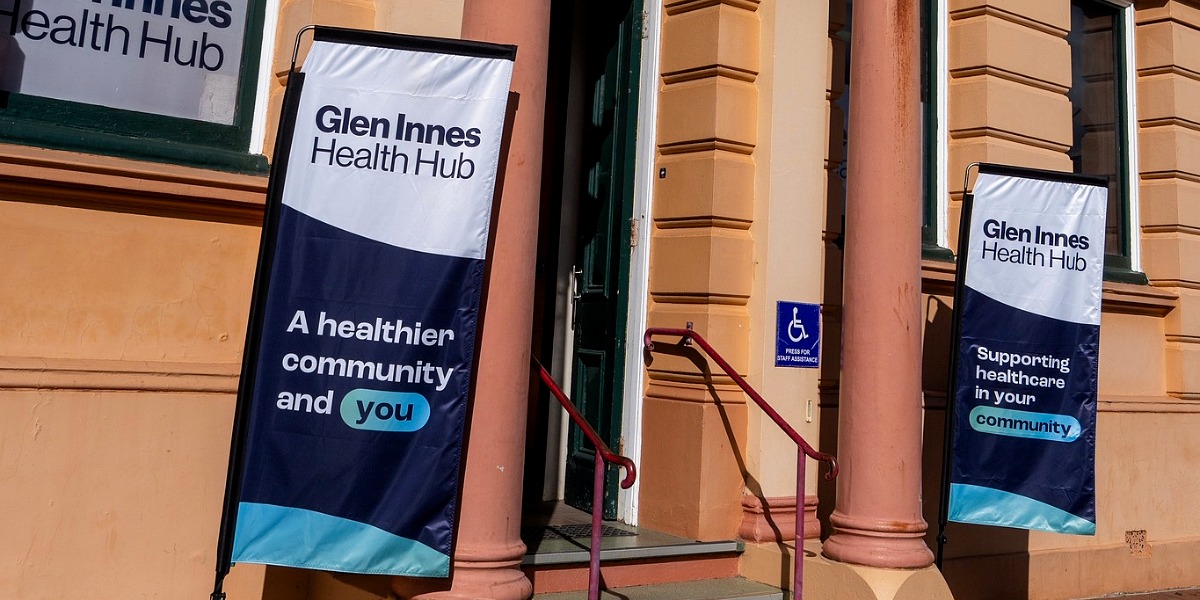
The Glen Innes Health Hub has transitioned from face-to-face GP appointments to a telehealth model following a review of its in-person pilot service.
Launched earlier last year, patients were informed prior to Christmas that the face-to-face GP offering would move to telehealth, with the change made after a review found telehealth to be the most financially sustainable option.
Glen Innes Health Hub General Manager Paula Murphy said the face-to-face GP service was introduced as a trial and reviewed as it progressed.
“The face-to-face GP Service was a pilot service, one of many health services offered in person and online at the Glen Innes Health Hub, and the service was evaluated as the pilot progressed.”
A review conducted late in 2025 identified telehealth as the most financially sustainable GP model for the Health Hub.
Ms Murphy said the Health Hub continues to provide telehealth GP services, available since opening in April 2025, with no current plans or funding to resume face-to-face GP appointments.
“Our service navigation service is available in person. This enables the community member to talk about what services are available through the hub for their current health needs,” she said.
Ms Murphy said the Health Hub remains a pilot model using technology and digitally enhanced solutions to support healthcare in regional and rural Australia.
“The majority of patients seen face-to-face by the GP at the Hub in 2025 can also be serviced by a telehealth GP.”
Hunter New England and Central Coast Primary Health Network CEO Richard Nankervis said the pilot had provided valuable insights into long-term access to primary care for Glen Innes.
“The pilot has provided valuable insights into how best to support reliable, long-term access to primary care for the Glen Innes community.”
Following a review of service data, patient demand, and financial sustainability, he said telehealth was determined to be “the most viable option for the longer term”.
Mr Nankervis said the PHN is working closely with service operator Rural Fit to support the transition.
Patients have been advised of the process for collecting their medical records.
“At this stage, a face-to-face GP service has not proven sustainable. In contrast, a telehealth GP service offers a model through which rural communities can continue to access timely, high-quality primary care.”
Local resident Hanna Little said she was disappointed by the change.
“I can’t get in to see a GP in town because I’m a newcomer and the GPs are all fully booked up.”
She said the Health Hub’s telehealth service is “not offering any great new service to the community that wasn’t already accessible through other online providers.”
Ms Little, a regular user of the in-person service, said she does not believe the telehealth model will benefit the wider community.
“Apart from residents who don’t have a device with a camera at home, or older residents who aren’t comfortable with technology, who is really going to use the facility? Most people will probably just stay at home and use other online services like Doctors Online or Instant Scripts, which are already available to everyone,” she said.
She said the loss of face-to-face care was particularly disappointing.
“What people really wanted was another doctor they could see in person, and that’s now gone. I used the service regularly, but now it doesn’t offer anything I can’t already get online.”
Ms Little is advocating for a return of the face-to-face service. She said, “I’d like to see the face-to-face service brought back. Country people deserve the same quality of care as is available in the cities.”
Streamlining the Health Hub model is intended to help identify what works and what needs refinement, with the aim of informing a sustainable and potentially replicable approach to primary healthcare in rural communities.
Got something you want to say about this story? Have your say on our opinion and comment hub, New England Times Engage