

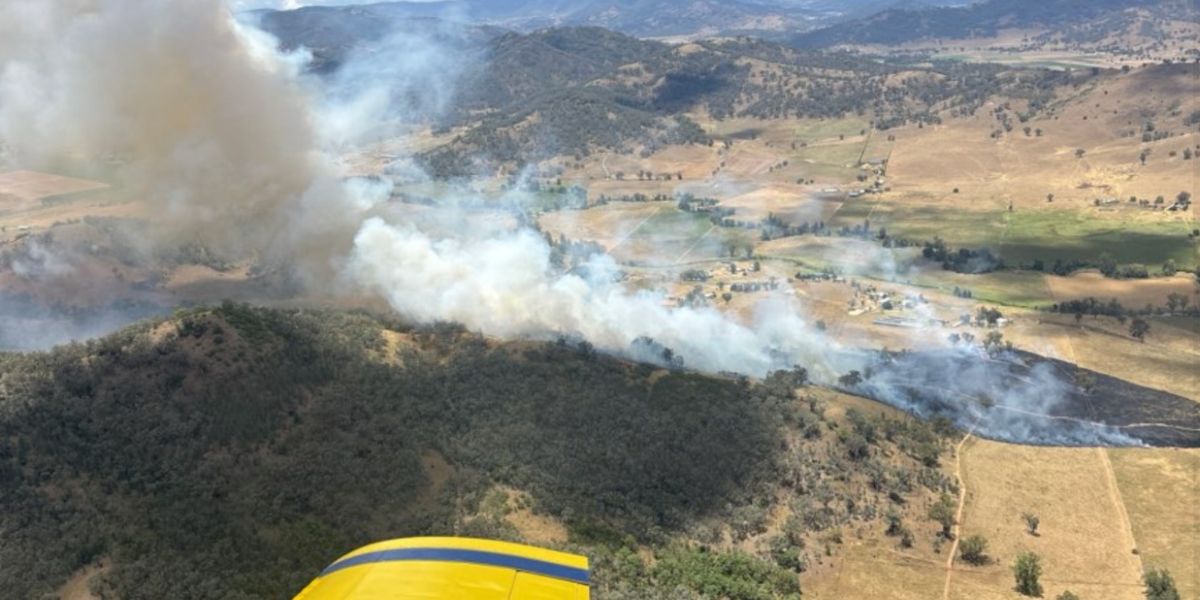
Work is underway to strengthen bushfire preparedness across regional NSW, with 28 new or upgraded Rural Fire Service (RFS) facilities in the pipeline – including major projects serving communities in the New England.
The State Government has committed more than $34.5 million this year to progress RFS infrastructure, including six new combined Fire Control and Emergency Operations Centres and 18 new rural fire stations.
For the New England region, construction of a new Fire Control and Emergency Operations Centre at Namoi-Gwydir is well advanced. The facility is expected to bolster coordination across the New England and North West, particularly during major bushfire events, storms, and floods. Similar centres are also under construction at Cooma and Clarence Valley, with planning underway for additional facilities at Eurobodalla, Tumut, and the Hawkesbury.
A new RFS office complex is also being planned at Brewarrina, providing a station, mitigation crew base, and office facilities to support remote brigades in the state’s far west.
The Fire Control and Emergency Operations Centres are designed to coordinate responses to bushfires and other emergencies, improving communication and strategic oversight during high-risk periods.
Alongside the control centres, work is underway on 18 new rural fire brigade stations and upgrades to four others. While none of the new stations are slated specifically for New England at this stage, the Namoi-Gwydir centre will play a critical regional role. Other station projects include Wilberforce in the Hawkesbury, Surf Beach on the South Coast, Dunmore at Shellharbour, Mooney Mooney on the Central Coast, and Carabost in the Riverina.
The projects are at various stages, from early planning to active construction, and will be delivered progressively as approvals, tenders, and building works are finalised.
The government said the expansion builds on ongoing investment in new firefighting trucks, improved fireground communication technology, aviation support, and upgraded equipment for brigades.
Minister for Emergency Services Jihad Dib said the investment reflected the growing demands on volunteer firefighters.
“This summer has already served as a reminder of our reliance on our volunteer firefighters, who have tirelessly responded to bush fire emergencies in both NSW, Victoria, and beyond,” Mr Dib said.
“The Minns Labor Government is ensuring our volunteers have what they need to do their job; our focus on the state’s firefighting capability reflects our deep respect for the people who step up when it matters most.
“We are planning for the future and investing in firefighting facilities so they have the infrastructure they need, both on the fireground and to coordinate effective emergency response operations.
“Rural firefighting response has been a partnership with local government for one hundred years, and I thank councils for their shared contribution in keeping communities safe.”
RFS Commissioner Trent Curtin said the upgrades would directly support frontline volunteers.
“These investments make a real difference to our members on the ground. Better stations, new Fire Control Centres, and modern trucks all contribute to safer, more effective firefighting operations,” Commissioner Curtin said.
“Our volunteers deserve our support, and this funding helps ensure they have it. We’re grateful for the continued partnership between government and councils in delivering these vital projects.”
RFS station locations are delivered in partnership with local government to meet community needs, with Fire Control and Emergency Operations Centres strategically placed to support disaster planning across fire districts.
Don’t miss any of the important stories from around the region. Subscribe to our email list.