

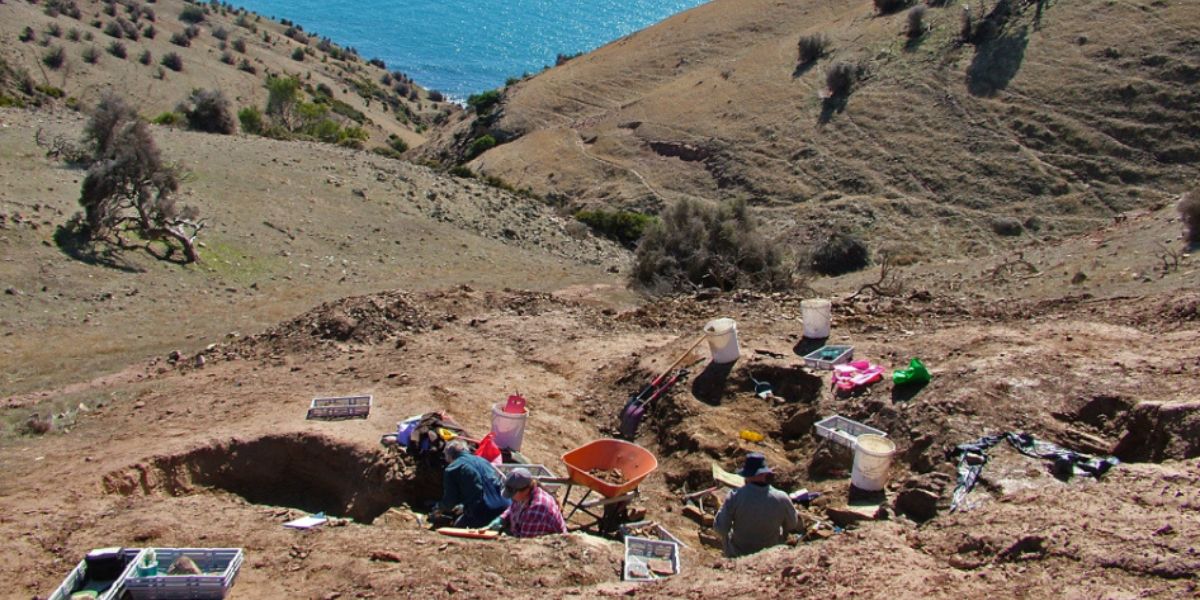
Almost two decades of UNE research into a deposit of ancient fossils found at Emu Bay on South Australia’s Kangaroo Island has become the subject of a new limited edition stamp collection released today by Australia Post.
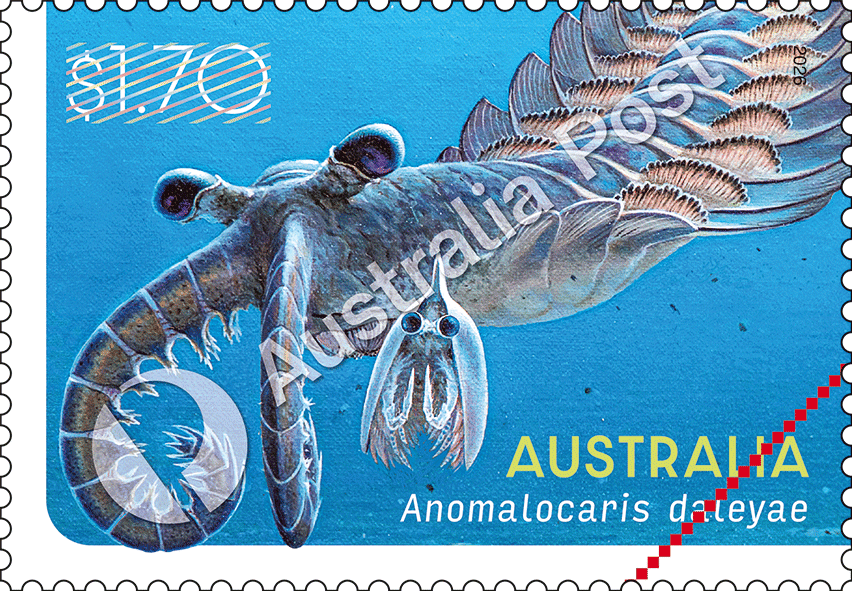
Featuring full colour artistic reconstructions of the fossils, the stamps paint a clear picture of the spectacular diversity of marine animals found at the site.
“These amazing artworks are the culmination of nearly 20 years of intensive scientific research on one of Australia’s most important fossil sites,” said UNE palaeontologist Professor John Paterson, who has co-led the research alongside colleagues from the South Australian Museum and Adelaide University.
“The artist, Peter Trusler, has done a superb job of bringing these amazing extinct sea creatures back to life.
“He was very interested to learn every aspect of the anatomy and possible lifestyles of these unusual beasts.”
The 512-million-year-old fossils found at the Emu Bay Shale site provide a unique window into Australia’s ancient past.
“These fossils are from a time called the Cambrian Period, which was a phase in Earth’s history when complex life first evolved in the oceans,” said Professor Paterson.
A highlight of the stamp series is the depiction of a giant arthropod called Anomalocaris daleyae.
This bizarre animal was the apex predator of the time, reaching lengths of up to 60 cm and armed with large spiny head appendages used for grabbing its prey.
Perhaps the most impressive feature of Anomalocaris daleyae is its pair of stalked eyes that possess over 24,000 lenses in each eye, rivalling that of modern dragonflies.
“These sophisticated eyes gave Anomalocaris extremely powerful vision for seeking out its prey,” said Professor Paterson.
“The discovery of exquisitely preserved specimens from the Emu Bay Shale shows that some of the first marine animals were already well-equipped killers.”
Professor Paterson says the new stamps are a great way to emphasise the critical role that these remarkable discoveries have played in telling us about our distant past.
“I hope these stamps will highlight the importance of these ancient animals and inform the general public on the global significance of Australia’s spectacular palaeontological heritage,” he said.
“This milestone reflects UNE’s commitment to advancing palaeontological research and sharing Australia’s natural heritage with the world.”
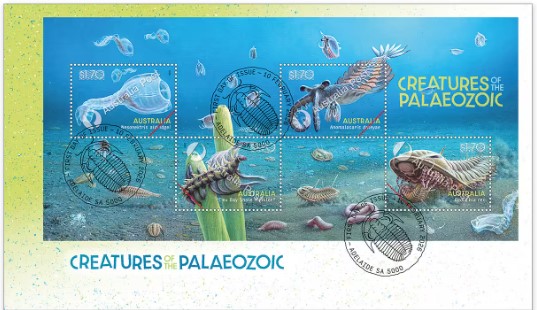
Find out more about the stamps and their significance via the Australia Post website.
Don’t miss any of the important stories from around the region. Subscribe to our email list.