

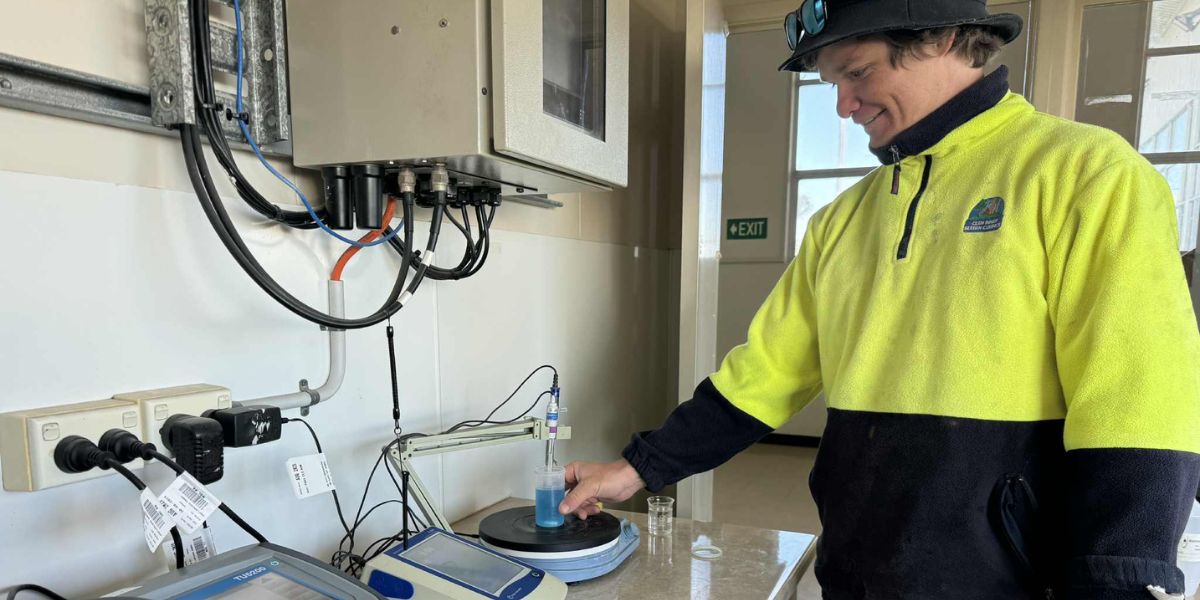
Glen Innes Severn Council has joined Local Government NSW (LGNSW) in urging the NSW Government to commit to long-term, fit-for-purpose funding for regional water infrastructure, following the NSW Auditor-General’s stark warning that water security in rural and regional communities is at dire risk without at least $1 billion in urgent investment.
Over recent years, the State has imposed increasingly stringent regulatory, treatment, monitoring, and infrastructure standards on local water authorities.
“While these increasing standards are critical for public health and environmental protection, they require significant capital investment, advanced treatment technology, and highly specialised operational capability – all of which come at substantial and escalating cost,” Mayor Margot Davis said.
“Local councils carry the legislative responsibility for owning, operating, and maintaining local water utilities and have the ability to price accordingly. However, current State funding programs, including those intended to support water security, treatment upgrades, and long-term infrastructure renewal, are appreciated but insufficient to meet the scale of need in rural and regional NSW,” Cr said.
Glen Innes Severn Council has a water network comprising 108 km of water mains, 2 water treatment plants, and 3 reservoirs, and is not immune to the associated financial burden. Council is exploring innovative ways and new technology to lengthen the life of the network and maintain the necessary quality, but external regulatory impositions continue to mount.
As part of this work, Council is trialling high-pressure water jetting to clean sections of its 100-year-old water pipes, which have demonstrated strong structural integrity despite their age.
While this technology is commonly used in wastewater systems, its application in pressurised drinking water networks presents additional operational and public-health challenges.
Early off-line trials have returned positive results, with a live network trial planned in the coming weeks. If successful, Council would develop a targeted program to prioritise deep cleaning in the most affected areas, supported by ongoing maintenance using ice pigging technology to manage future mineral build-up. Council would also consider detailed condition scanning of high-priority pipe sections to better inform long-term infrastructure planning.
Council noted the Auditor-General’s findings that many regional and rural councils are already struggling to meet the increasing costs of providing safe drinking water and wastewater services, with several water utilities operating at a loss and unable to guarantee essential infrastructure upgrades due to insufficient funding support.
“Access to safe drinking water is not negotiable. Rural and regional communities should never be placed in a position where the delivery of safe, reliable water 24/7 becomes a continual struggle,” Cr Davis said.
While Glen Innes Severn Council maintains forward planning and is committed to meeting all regulatory and public-health obligations, rising standards, specialised treatment requirements, ageing assets, and escalating operational costs are placing increasing pressure on small councils with limited rate bases. These pressures mirror long-standing concerns raised by LGNSW regarding the widening gap between mandated regulatory requirements and the inadequate funding available to meet them.
Council strongly supports LGNSW’s call for the NSW Government to renew or replace the fully allocated $1.1 billion Safe and Secure Water Program to provide ongoing, sustainable, and non-competitive funding for regional water security, treatment upgrades, and long-term infrastructure renewal.
“Rural and remote communities deserve the same certainty and safety in their water supply as metropolitan areas,” Cr Davis said.
“The upcoming NSW Budget is an opportunity for the State Government to act decisively and provide the recurrent, equitable funding needed to secure safe drinking water for all regional NSW.”
Like what you’re reading? Support New England Times by making a small contribution today and help us keep delivering local news paywall-free. Donate now