

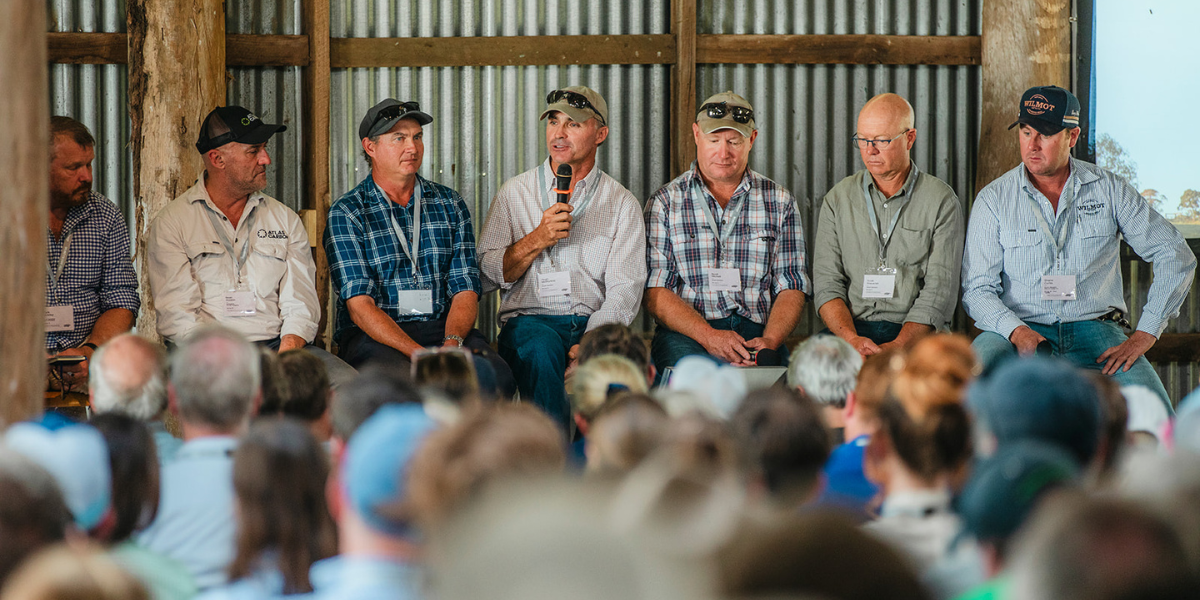
Wilmot Field Day has become a fixture on the agricultural calendar for producers looking for practical insight, honest conversation, and a deeper understanding of how farming systems are evolving. Returning to Wilmot Farm at Hernani on 4–5 March, the two-day event brings together producers, researchers, advisors, and industry leaders for an on-the-ground look at regenerative and responsible agriculture in action.
Now in its eighth year, Wilmot Field Day has grown steadily from its beginnings in 2018, with attendance typically drawing between 250 and 400 people from across New South Wales and beyond. Unlike large-scale trade field days, the event remains intentionally grounded, hosted on a single property where ideas discussed indoors can be seen and tested outdoors.
Wilmot Field Day fills a vital role for the region by staying closely connected to the realities facing local producers.
“Wilmot Field Day reflects the lived reality of farming in our region,” said a spokesperson for the event.
“It is one of the few regional events where producers, researchers, and market players are in the paddock together, talking openly about what is changing and what still needs to.
“For a regional audience, the stories are close to home: how neighbours are managing risk, what new income streams are realistic, and whether the next generation can see a future on the land.”
Held at Wilmot Station, a property managed by Impact Ag Australia and deeply embedded in regenerative practices, the event is delivered by Macdoch Australia in partnership with Impact Ag Australia. The setting allows participants to move seamlessly between presentations, panel discussions, and paddock walks, reinforcing the event’s emphasis on practical application rather than theory alone.
“Wilmot Field Day isn’t the kind of event that drops in with big ideas and then disappears again. It’s a working farm opening its gates for a genuine, on-the-ground conversation about how producers across the New England and North Coast are dealing with tighter margins, tougher seasons, and increasing expectations around how food is grown,” said the spokesperson.
The program has been carefully curated over more than a year, with organisers targeting speakers who can address agriculture at a systems level while still delivering clear, actionable insights for producers. International and Australian speakers will explore soil health, grazing systems, climate resilience, biodiversity, and emerging market opportunities, alongside case studies from producers already applying these principles in their own operations.
This year’s lineup includes respected international voices alongside Australian farmers and practitioners who can translate global research into locally relevant outcomes. Sessions are designed to appeal to a wide cross-section of the industry, from family-run grazing enterprises to larger-scale operations interested in long-term sustainability and responsible agriculture at scale.
Beyond the formal program, Wilmot Field Day places strong emphasis on connection and conversation. Networking is built into the event through shared meals, paddock discussions, and informal gatherings, with many attendees citing the conversations between sessions as some of the most valuable takeaways.
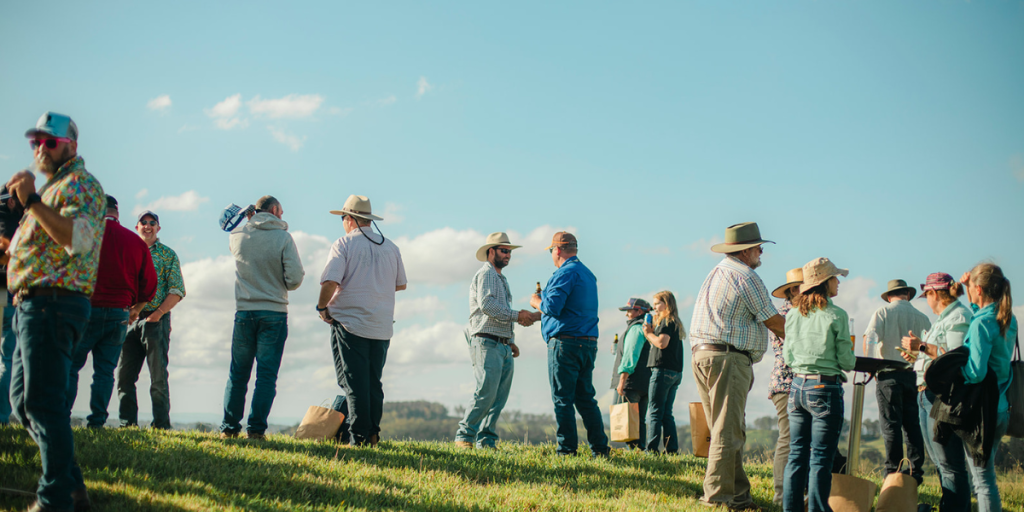
A sunset drinks event on the farm will showcase local music, followed by a dinner featuring beef grown on Wilmot Station itself, a fitting extension of the event’s paddock-to-plate ethos. The event also partners with rural charity Motherland, highlighting the social dimensions of farming and the importance of community support for regional families.
While regenerative agriculture is a central theme, organisers are clear that Wilmot Field Day is not limited to one farming philosophy or scale of operation. Instead, it is designed for anyone with an interest in improving land condition, business resilience, and long-term productivity.
Family farms remain a core audience, particularly in the New England and North Coast regions, but the concepts explored are relevant across a wide range of enterprises. Soil health, risk management, and system efficiency remain universal challenges, regardless of farm size or production type.
As the event approaches, ticket sales typically surge in the final weeks, reflecting the seasonal realities of farming and the busy post-holiday period. Organisers encourage interested producers and industry participants to review the program and secure tickets early to ensure access.
By staying firmly rooted in the paddock, Wilmot Field Day continues to offer a rare opportunity for meaningful, regionally relevant conversation about the future of agriculture – one shaped not by abstract ideas, but by the lived experience of those working the land.
Tickets are available now via https://wilmotfieldday.com.au/
Advertising with New England Times is a cost effective and reliable way to reach New England locals who are interested and engaged. Find out more here.