

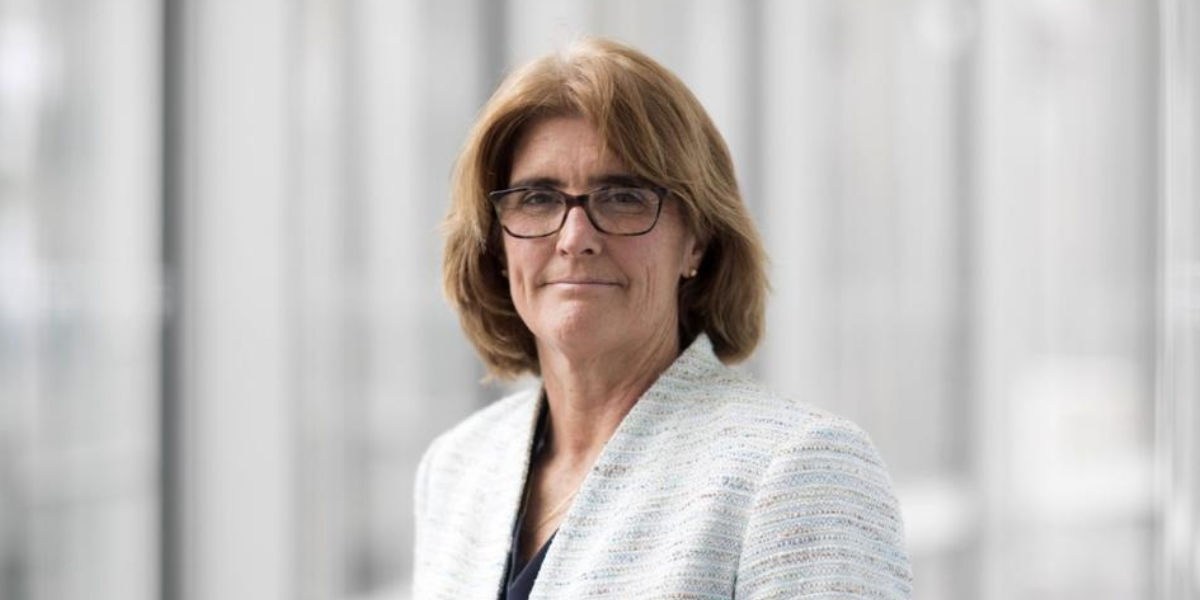
Australia’s next Reserve Bank governor, Michelle Bullock – the first woman in the job – will take office in September at a time when much of the bank’s work in fighting inflation will be done, and its focus will be on changing the way it operates.
She’s already the deputy governor, having been appointed to that post by the previous treasurer, Josh Frydneberg, in April last year.
Both Treasurer Jim Chalmers and Prime Minister Anthony Albanese say she’s the right person to implement recommendations of the independent review of the bank intended to make it less insular and more open to outside perspectives.
Yet, as a 38-year veteran of the bank, having joined in 1985, she could be seen as perhaps another insider.
But in another way she’s an outsider, having been in positions outside of the core economic policy group since 1998, and only being on the RBA’s board for the past year.
In those 25 years, Bullock has worked as either assistant governor or head of the parts of the bank that deal with the payments system, the financial system, business services, and the issuing of currency.
Not being part of the group that helped make the interest rate decisions for which the bank has come under scrutiny makes her well-placed to do things differently.
Michele Bullock was raised in Armidale, and studied economics at Armidale High School and the University of New England, graduating with honours.
She inherits an organisation criticised in this year’s independent review for being “insular” and vulnerable to “group think”, and for encouraging mortgage holders to believe it would not be increasing rates shortly before it began a series of 12 near-consecutive rate increases in May 2022.
Why was Phil Lowe passed over?
Chalmers was keen to point out that the decision not to reappoint Governor Philip Lowe at the end of his seven-year term was in no day a personal reflection of Lowe’s work, thanking him…
“… for more than four decades of dedication and commitment and service, not just to the Reserve Bank and not just to the economy, but to our country as well; Phil Lowe goes with our respect, he goes with our gratitude, and he goes with dignity.”
Lowe’s work during the early years of the COVID crisis was indeed top-notch. He worked around the clock to keep the economy afloat during myriad lockdowns and shortages.
However, the government clearly thought he was not the best person to lead the bank from here on, even though he had said he was prepared to serve. Why not?
Here are three reasons:
- One is the mistake he made as governor trying to keep the unemployment rate high to rein in home prices prior to the pandemic.
- Under Lowe, the bank adopted a deliberate policy of keeping interest rates higher than were needed to restrain inflation, leading to higher-than-needed unemployment.
- An estimate by myself and Andrew Leigh, calculated using the Reserve Bank’s own economic model, published in the Economic Record, finds this cost the economy more than 270,000 jobs.
Another reason to deny Lowe a second term is the bank’s mistaken approach to forward guidance, which effectively promised Australian households that interest rates would stay near zero until 2024. This turned out not to happen, hurt many home buyers, and damaged the bank’s credibility.
And yet another reason is that the review of the bank found a hierarchical work environment in which decisions were not questioned, staff were not listened to, and agreement with those at the top was encouraged.
Lowe rejected several of these findings, which is why changing the culture at the top of the bank would have been difficult had he remained.
What’s next?
The big question facing the bank at the moment is how high to lift interest rates to rein in inflation and bring it back towards the RBA’s 2-3% target band.
Bullock and her replacement as deputy (to be announced by Chalmers shortly) take office in September.
By then it’s unlikely there will be much to do differently. Inflation is on the way down throughout the world. This week, US inflation fell to just below 3%, the least since March 2022. Australia gets its next quarterly update this month.
Recently, the ANZ bank changed its view of the future course of interest rates, saying it expected no further hikes from here on.
It stressed this change of view was unrelated to the change of governor.
In its view, consumer spending was deteriorating, and much of the damage from the 12 interest rate rises to date was yet to be felt.
Whether or not Bullock faces fewer challenges than Lowe did, she’s well-placed to lead one of Australia’s most important institutions into the 21st century.
This article was first published on Monash Lens. Read the original article
Like what you’re reading? Support New England Times by making a small contribution today and help us keep delivering local news paywall-free. Donate now