

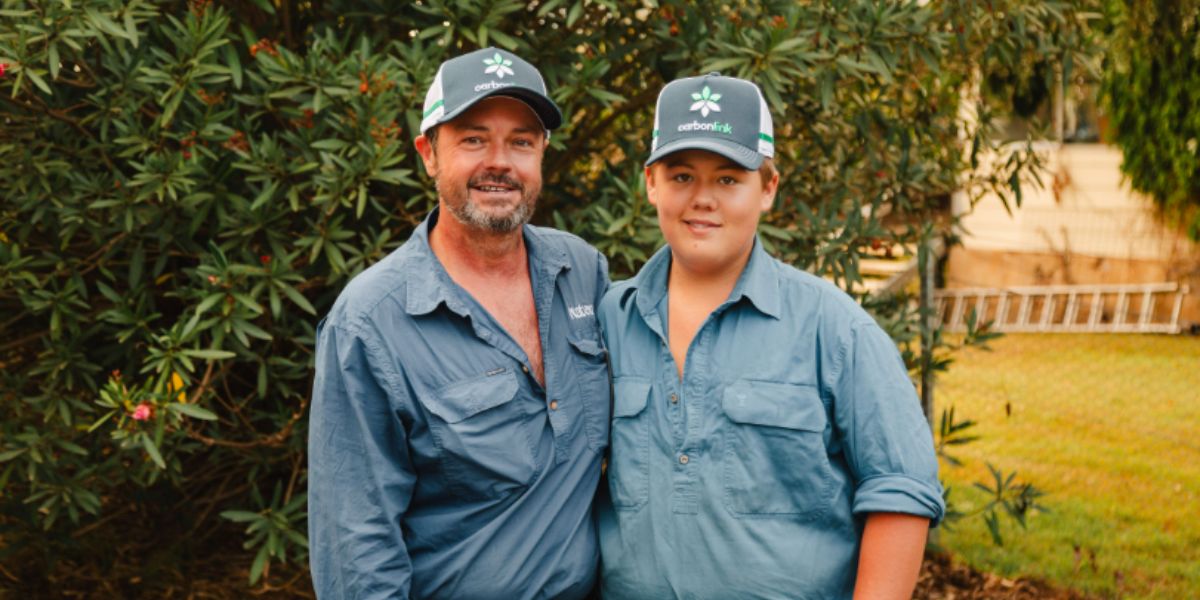
A grazing property near Walcha has secured more than 28,000 Australian Carbon Credit Units (ACCUs) through a soil carbon project, highlighting the growing role regional producers are playing in Australia’s carbon economy.
Cheyenne Pastoral, a 759-hectare beef cattle operation near Walcha, has partnered with carbon farming service provider CarbonLink to generate 28,859 ACCUs through improved land management and soil carbon sequestration.
The latest issuance of 16,373 ACCUs from the Clean Energy Regulator marks the project’s second credit release. Combined with the first issuance of 12,486 ACCUs following soil sampling in 2021, the project has now generated a total of 28,859 carbon credits.
Property owner Nick Blomfield said soil carbon farming had become an important part of the Walcha district enterprise, helping the business remain viable during challenging seasons.
“For me, carbon farming is a must for maintaining the viability of my property,” Mr Blomfield said.
“This soil carbon project has taken pressure off operating Cheyenne during tough conditions, and we’ve been able to withstand extreme weather events, including three major droughts.”
Since beginning in 2016, the Walcha project has implemented several regenerative grazing practices aimed at improving soil health and increasing carbon storage. These include subdividing paddocks, installing additional water points, time-controlled grazing, and the use of biological soil amendments.
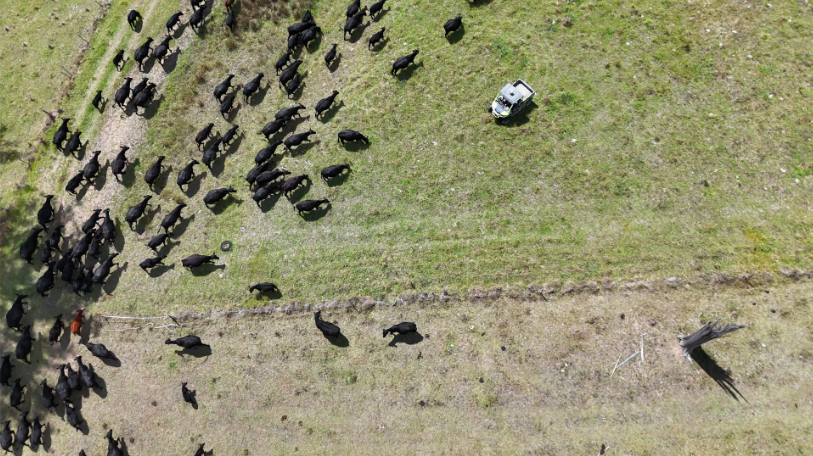
Together, these changes have contributed to carbon sequestration equivalent to a 10,494-tonne increase in soil organic carbon.
Biological inputs, including chicken manure, rock phosphate, and liquid plant nutrients, have also been used to support soil health across the property.
CarbonLink supports the project through a proprietary measurement platform built on more than 15 years of soil science research. The system combines high-resolution soil sampling with predictive modelling designed for Australian conditions.
Professor Jason Rowntree, director of the MSU Centre for Regenerative Agriculture, conducted an independent review of the most recent sampling round at Cheyenne Pastoral and said early results indicated measurable improvements in soil carbon stocks.
“This appears consistent with the property’s strong grazing management and ecological condition,” Professor Rowntree said.
“Particularly intriguing are the measured increases below the 30-centimetre depth, as few long-term studies have examined soil carbon change at that scale.”
CarbonLink chief executive officer Chris McCosker said the Walcha project demonstrated the real-world potential of soil carbon farming for regional producers.
“Cheyenne’s success shows soil carbon farming can be both scientifically robust and economically viable,” McCosker said.
“By combining rigorous testing with producer-focused innovation, this project shows soil carbon can be a practical and profitable solution for Australian agriculture.”
The project also marks CarbonLink’s first successful use of the ACCU Scheme’s model-assisted measurement method for soil carbon. Approved under federal legislation, the method combines physical soil sampling with advanced modelling to measure carbon levels while reducing testing costs for producers.
For Blomfield, the project has also helped secure the long-term future of the family’s Walcha property.
“My motivation is to leave the farm in better condition for the next generation,” he said.
“A few years ago, I sat down with my son Hugo and explained that unless we committed to soil carbon farming and the project succeeded, the viability of the farm could be at risk.”
“We agreed to give it a go, and today we’re seeing the results.”
Blomfield said soil carbon projects were technically complex and required disciplined management, but working with a specialist provider had been key to the project’s success.
“CarbonLink has provided a structured, science-led framework that guides how we manage, measure, and monetise our soil carbon,” he said.
“From baseline sampling to reporting and verification, their team has brought clarity to what is otherwise a highly technical process.”
For more information about the Cheyenne Pastoral soil carbon project, visit the CarbonLink website.
Something going on in your part of the New England people should know about? Let us know by emailing newsdesk@netimes.com.au