

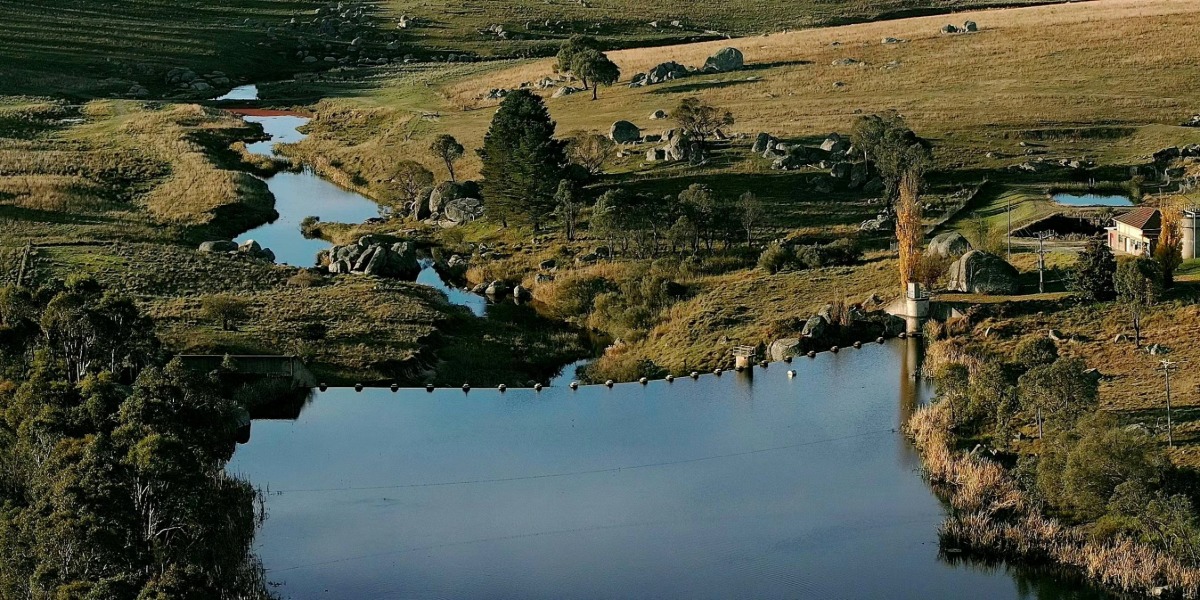
Uralla Shire’s long-term water security is set to receive a major boost, with the NSW Government injecting nearly $1 million to fund comprehensive planning aimed at strengthening the community’s resilience to drought and climate change.
The funding, delivered through the NSW Government’s Safe and Secure Water Program, will enable NSW Public Works to undertake a detailed water security study, due to be completed by the end of this year. The study will assess future risks and explore options including the development of new bores to supplement supply from Kentucky Dam.
The new investment builds on $1.5 million previously committed by the State Government following the last drought, which initiated groundwater investigations across the shire.
Using the latest climate change modelling, the upcoming study will assess impacts on secure yield and quantify water security risks for Uralla and the surrounding Northern Tablelands. The findings are expected to guide Council’s long-term infrastructure planning and resource allocation.
DCCEEW Director Grants Programs Kirsty Fenton said the work was critical in a region known for climate variability.
“It’s no secret this part of the state is very susceptible to drought, which is why we’re doing our homework to understand the risks and opportunities down the track,” Ms Fenton said.
“We’re delighted to be partnering with Council to get this work done to put Uralla Shire in a better position to manage water for generations to come.”
Uralla Shire Council Director of Infrastructure and Development Mick Raby said the funding would provide clarity for future decision-making.
“This funding is vital for the future of Uralla Shire’s water supply, giving us a clear picture of where we will need to target our resources in a more variable climate, while also working with locals directly so we’re all on the same page,” Mr Raby said.
“We’re very grateful to the NSW Government for coming on board and we’re looking forward to seeing the results of this work so we can make well-informed water management decisions.”
As part of the project, Council will implement a Community Engagement Program to keep residents, landowners, and businesses informed about current water challenges and proposed solutions, including the potential development of additional bores.
The announcement comes at a challenging time for local water users.
On Saturday, Council issued a discoloured water alert affecting Uralla and Bundarra. The issue is caused by iron and manganese oxides that naturally accumulate in the water supply network. While visually concerning, Council has confirmed the low levels present do not pose a health risk.
Residents experiencing discoloured water are advised to run a household tap for several minutes to see if it clears. If the issue persists, Council staff can flush mains pipework in affected areas. After street flushing, residents should run all internal taps until the water runs clear.
Council has advised that businesses requiring higher quality water for operations such as dentistry, food processing, brewing, or laundering should consider installing commercially available in-line filtration systems. Council cannot install treatment processes within private premises and is unable to reimburse residents or businesses for stained clothing or linen. Citric acid is recommended for removing iron and manganese stains, and bleach should not be used.
At the same time, dam storage levels have fallen below 62 per cent, prompting Council to move Uralla Township to Level 2 water restrictions.
Under Level 2 restrictions, outdoor watering is limited to between 6.00pm and 8.00pm on alternate days using a hand-held hose fitted with a trigger nozzle. Even-numbered houses may water on Tuesdays, Thursdays and Saturdays, while odd-numbered houses may water on Wednesdays, Fridays and Sundays. No watering is permitted on Mondays.
Got something you want to say about this story? Have your say on our opinion and comment hub, New England Times Engage