

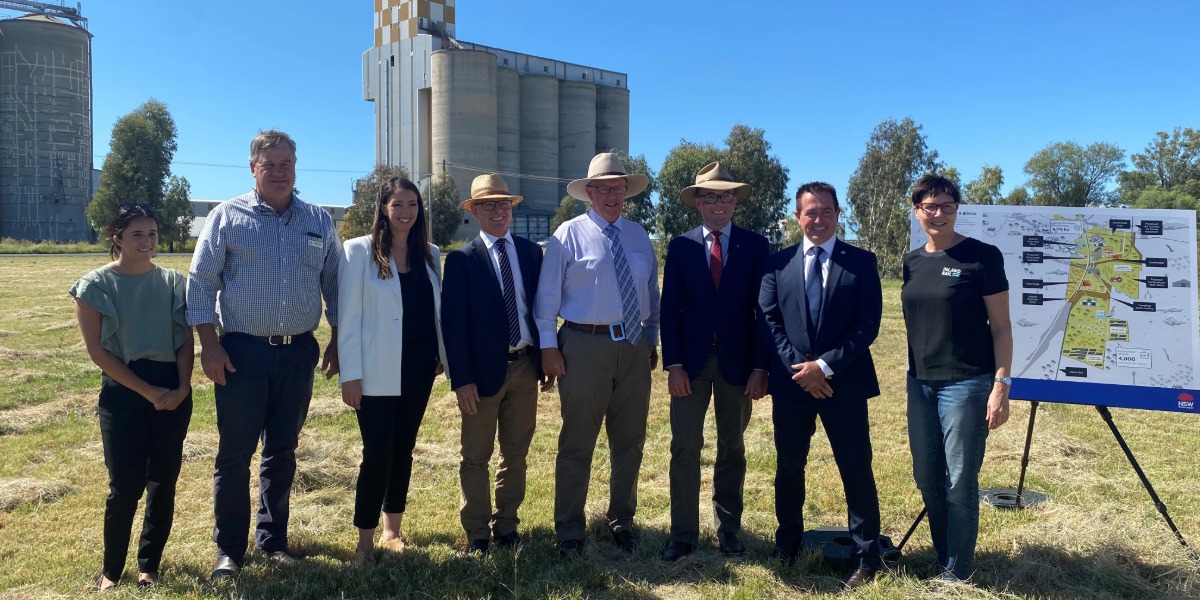
Moree Plains Shire Council is taking a cautious, staged approach as it moves toward the next phase of the Moree Special Activation Precinct, seeking to balance the long-term economic promise of the project with the financial realities facing the council and its ratepayers.
With physical works on the precinct slated to commence this year, Council is preparing to sign an agreement with the NSW Government that will see key road, water, and sewer infrastructure transferred to council ownership once completed. The proposed handover was considered at an Extraordinary Council Meeting on Thursday, 5 February, where councillors resolved to ask the NSW Government to deliver the $79 million in infrastructure works in stages to reduce the immediate impact on Council’s budget.
“The SAP has the potential to transform the Moree Plains Shire over the next 40 years, attracting not just new businesses to town, but also an anticipated 4,000 jobs to go with them,” Mayor Susannah Pearse said.
“We need industry diversification if we are to sustain and grow our population.”
“But we have to balance that opportunity with ensuring we are also looking after our existing ratepayers, and a staged approach provides a way of doing that.”
Special Activation Precincts were introduced under the former Coalition government as a way to fast-track regional economic development by creating large, master-planned hubs designed to attract private investment at scale.
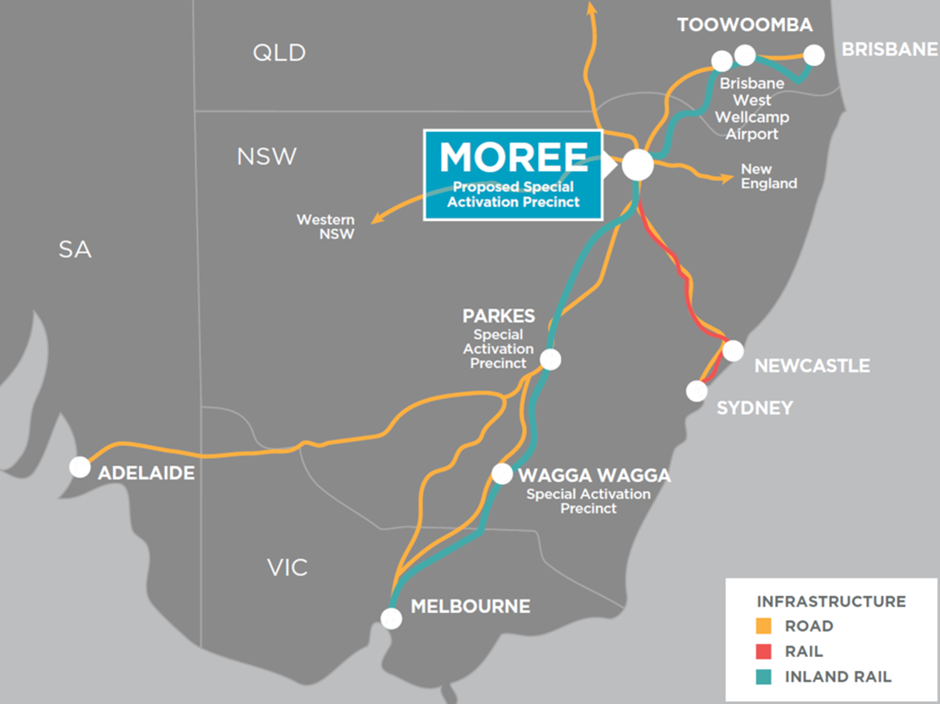
The Moree Special Activation Precinct covers 4,716 hectares south of the township, adjoining the Inland Rail corridor, and has been earmarked for future business and industrial development. It is a NSW Government project with a total investment of $224.8 million over its duration, tipped to deliver thousands of jobs over several decades.
“Council has, at all turns over the last five years, maintained support for this project. It is rare to get this level of state government investment, and we are genuinely grateful and excited by what is to come,” Mayor Pearse said.
The SAP model was built around intensive upfront government investment and streamlined planning approvals, with the aim of significantly reducing development assessment timeframes. By conducting environmental and technical studies in advance, the government sought to remove common barriers faced by major projects and provide businesses with a “one-stop-shop” to establish operations quickly.
In 2022, $194 million was committed to deliver the first stage of the Moree precinct, positioning it as a major logistics and industrial hub linked to Inland Rail and capable of supporting a wide range of industries.
However, following the election of the Minns Government, the SAP policy was reviewed. Several proposed precincts were scrapped, including the Narrabri SAP, which had been closely centred around the Narrabri Gas Project. That precinct was abandoned as part of a broader shift away from SAPs anchored to a single, contentious project, particularly where long-term certainty was tied to one industry or approval pathway.
A similar fate befell a proposed SAP linked to aerospace development around Williamtown RAAF Base and Newcastle Airport.
As a result of the review, only four SAPs remain: Moree, Parkes, Wagga Wagga, and the Snowy Mountains. The Snowy Mountains precinct is largely tourism-focused and remains the only SAP anchored to a specific project or proposal, saved by the tourism sector already being well established there. The three others survived the policy reset because they function as logistics hubs with the flexibility to support a diversity of industries and growth across multiple sectors rather than relying on a single development.
General Manager Natalia Cowley said Council remained supportive of the project but needed to ensure it could sustainably fund the operation, maintenance, and renewal of the infrastructure that would ultimately become Council assets.
The report presented to councillors showed that the $79 million worth of infrastructure would result in approximately $1.4 million in additional annual depreciation for council. That cost would need to be met either through service reductions or rate increases until new businesses operating within the precinct begin generating sufficient rates and charges revenue.
“While some of this will eventually be offset by the rates and charges revenue from new businesses operating in the SAP, it will take some time to see this revenue come in,” Ms Cowley said.
Under the resolution, Council will continue working with the NSW Government while seeking to limit the initial asset transfer value to $40 million, allowing development to proceed without placing excessive pressure on council finances.
Mayor Pearse said the staged approach is designed to ensure Council’s financial sustainability while still supporting the long-term objectives of the SAP, allowing the development to proceed in a manner that does not require a rate rise.
“Council has asked for the NSW Government to work with us on a balanced approach that supports the SAP but also looks after our existing businesses and ratepayers.”
“Many councils within the region have increased rates significantly – 58.8% at Armidale, 38.88% at Gunnedah – that is not a path we want to be heading down,” she said.
Read all the way through to the end of the story? So did lots of other people. Advertise with New England Times to reach New England locals who are interested and engaged. Find out more here.