

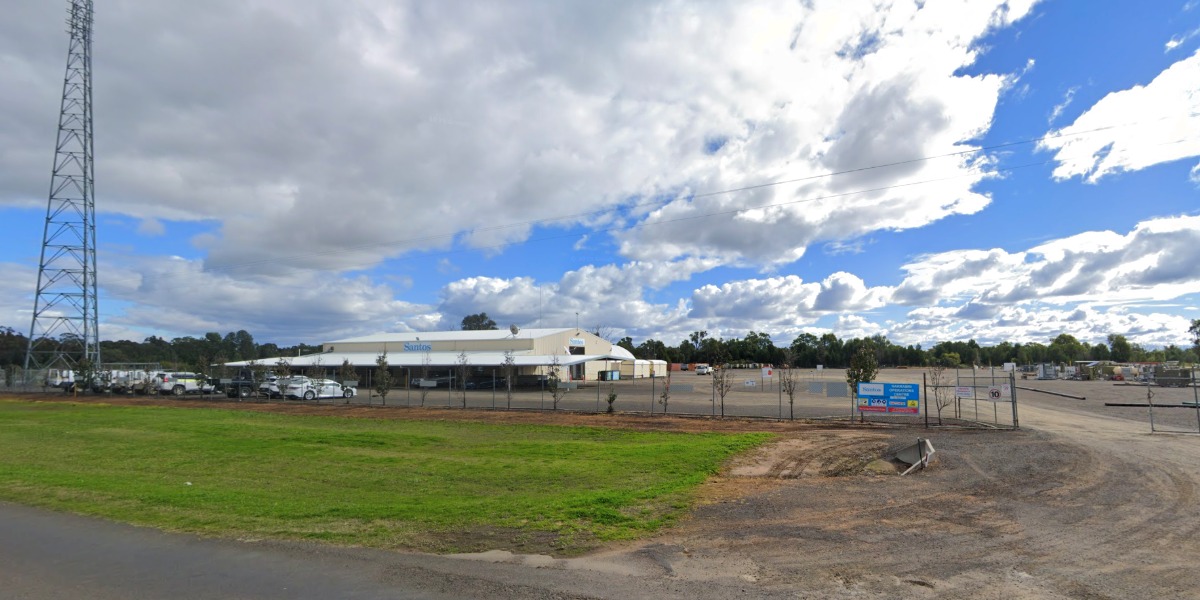
Santos says it hopes to make a final investment decision on the proposed Narrabri Gas Project soon, pending further government approvals.
A Santos spokesperson said the multi-billion-dollar project would generate about 1,300 construction jobs and around 200 ongoing local positions.
“The region will also benefit from a Gas Community Benefit Fund of up to $120 million to support community programs and initiatives,” the spokesperson said.
Santos has committed to supplying 100 per cent of Narrabri gas to the domestic market, saying the project could meet up to half of the gas demand for NSW.
What is the Narrabri Gas Project?
- The A$3.6bn Narrabri gas project in northern New South Wales is emerging as a key part of the Australian government’s gas-driven economic recovery plan (according to the New South Wales Government).
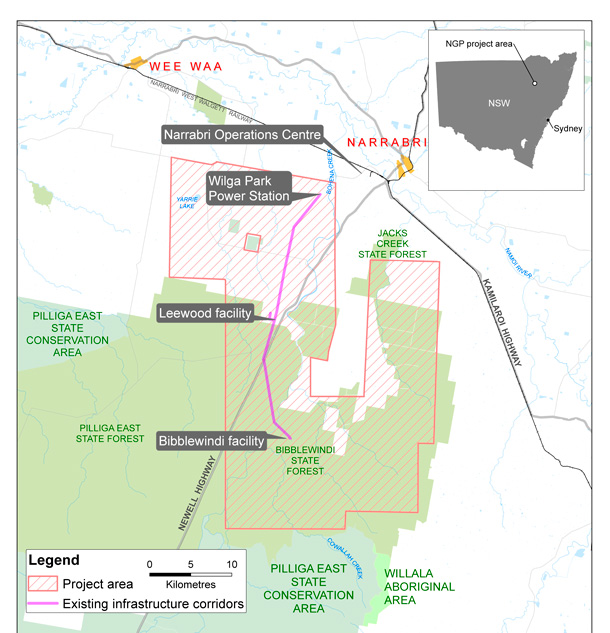
- The Santos project would see a new coal seam gas field developed over 95,000 hectares at Narrabri.
- The project involves the progressive development of a coal seam gas field over 20–25 years with up to 850 gas wells and ancillary infrastructure, including gas processing and water treatment facilities.
- NSW’s Independent Planning Commission has given conditional approval for the project, leaving the way clear for Santos to commit to a Final Investment Decision on its development.
Since 2012, Santos has spent more than $1.5 billion advancing the project, which proposes up to 850 gas wells across 95,000 hectares in north-west NSW as part of a $3.6 billion development.
The project received state planning approval in 2020. In May last year, the Native Title Tribunal approved the granting of land leases, citing significant public interest if gas is supplied to the domestic market.
NSW Premier Chris Minns has reiterated the government’s support, saying compulsory acquisition and other measures would be considered if necessary to ensure the project proceeds.
Project forges ahead with continued opposition
Progress towards bringing the project online has defeated every government and legal hurdle despite mixed views from local people, including sustained opposition from Traditional Owners and community groups across the region.
Timeline of the Narrabri Gas Project
Late 1990s–2010: Exploration began in the Pilliga scrub (Gunnedah Basin) by Eastern Star Gas.
Nov 2011: Santos acquired 100% of Eastern Star Gas, taking over the project.
2011–2014: Environmental issues, including a 2011 toxic wastewater leak and a 2014 fine for Santos regarding the spill.
July 2013: The Narrabri Gas Project was formally announced.
2015–2019: Extensive environmental assessments, community consultation, and planning processes occurred.
Aug 2020: The NSW Independent Planning Commission (IPC) approved the project, followed by federal environmental approval.
2022–2023: Legal challenges from the Gomeroi people over Native Title, with the National Native Title Tribunal ultimately ruling in favour of the project. (Appeal ongoing.)
2023–2024: Santos progressed with pipeline planning, including the purchase of the Hunter Gas Pipeline.
February 2025: The Australian Government deemed the NLP a “controlled action” under the EPBC Act, requiring further assessment regarding impacts on threatened species.
2025 Public release of the Environmental Impact Statement (EIS) for the pipeline occurred in late 2025, with submissions closing in December last year.
Expected 2026: Final Investment Decision (FID)
A proposed pipeline would connect Narrabri to the Hunter Gas Pipeline, crossing farmland, public land, and sections of the Pilliga Forest.
The project area sits on land governed by a native title agreement with the Gomeroi people, and concerns have been raised about impacts on groundwater, the Namoi River, and the Murray–Darling Basin.
Gomeroi spokeswoman Polly Cutmore said Traditional Owners have consistently opposed the project, arguing they were not properly consulted.
“Consultation never happened in the first place with my people,” Ms Cutmore said.
She said Santos and the State Government consulted the Narrabri Aboriginal Land Council rather than Gomeroi Traditional Owners.
“There has been no real consideration of the Namoi River system, groundwater, or the cultural significance of this country,” she said.
Ms Cutmore also cited past fish kills linked to mining in the region and said environmental, cultural, and social impacts were being ignored.
“We do not want this project, yet our voices keep being dismissed,” she said.
People for the Plains president and Project Community Consultation Committee representative Stuart Murray said opposition in Narrabri remained overwhelming.
“Surveys show more than 95 per cent of people are against it, and landholders are deeply concerned about contamination risks from coal seam gas,” Mr Murray said.
He questioned Santos’ estimates of available gas and community benefits, saying promised benefits had steadily declined.
“They exaggerate the positives and downplay the negatives,” he said.
“We believe decisions have already been made regardless of community opposition,” he said.
No fracking and lots of benefits
NSW Farmers Acting Chief Executive Officer Mike Guerin said farming organisations would continue to oppose the project due to risks to groundwater and food security.
“When our water is threatened, we will fight,” Mr Guerin said, pointing to past legal action that blocked fracking proposals affecting the Great Artesian Basin.
Mr Guerin, who has recently been announced as the new CEO of the National Farmers Federation, has claimed a number of times, without basis, that the Narrabri Gas Project will use fracking. Fracking is a process of pushing water down into the coal seam to force the gas out more efficiently and is generally not supported in the industry any more because of the risks.
Santos rejected claims that the project involves fracking, stating the Narrabri Gas Project does not include the practice. Scientific assessments of the site indicate that fracking would not be suitable.
The company said the project has been subject to extensive scientific assessment and has withstood multiple legal challenges, including one late last year relating to water contamination.
What does it mean for Narrabri?
- Santos said its current support for a wide range of community events and organisations will be expanded with the establishment of a community benefit fund that will deliver up to $120 million over the life of the project. This will be used to fund projects, infrastructure, and initiatives in the Narrabri area.
- Santos said there will be more than $10M a year in local supply contracts for the region and this could vary each year.
- The project is estimated to increase economic output by between $9 billion and $12 billion.
- Over its 20–25-year life, the Narrabri Gas Project could generate up to $3 billion in direct revenue for the NSW and Commonwealth Governments through royalties and taxes.
Former Mayor of Narrabri Ron Campbell said he believes the local community is well educated about coal seam gas.
“We’ve gone through an emotional roller coaster over the years as Santos has come and gone with this project and due to those who are negative about the proposal being louder than people who support it,” Mr Campbell said.
“This is frustrating for the community as the gas project not only presents great opportunities for jobs, local business, and bringing in more money, but that kind of opportunity doesn’t come around for a small town very often.
“In my view, Santos is a good operator that abides by strict regulations in a state that is highly regulated. That is a good thing and, as a community, we should grab this opportunity. Santos is now a part of the fabric of this town, and they’ve made a commitment to enable local businesses in the community and get on board with them or via local contractors.
“Environmentally, this proposal is safe, with no threat to water quality or supply, and there has been a lot of consultation with local people over the years.”
Business excited about the development
Meanwhile, Jamie Condon, Managing Director of SierraTek Global, an electrical company in Narrabri, said he’s excited about the Narrabri Gas Project.
“A business like ours thrives on that kind of work,” Mr Condon said.
“We service the mining sector and have a lot to gain from a gas business on our doorstep, providing mechanical and servicing work on the wells.
“The project would mean we could hire more people in communications, engineering, hydraulics, and mechanics, and it would be huge for our region.
Anna Dugdale is vice-chair for the Country Education Foundation of the Namoi and volunteers for other local charities in the region. She is also communications manager for Ryner Pty Ltd, an electrical contracting business in Narrabri.
“My family and I have lived in Narrabri for more than 30 years, and I am actively involved in various volunteer committees that benefit from the generous sponsorship from Santos.
“We see the benefits of the gas industry in general as far reaching. From a business perspective we see the gas industry as being the best place for our skills and expertise to thrive.”
Ms Dugdale said she felt personal benefits from relationships enjoyed with Santos staff in Narrabri.
“They’re friendly and provide a lot of sponsorship to local charities and community groups, organise major sports events and the ongoing support of local business.”
How many jobs?
- The project will result in about 1,300 construction jobs, around 200 ongoing local positions, and over 250 jobs in the surrounding NSW region.
- After the State and Federal Governments approved the Narrabri gas project, Santos has also begun local traineeship programs for the first time since 2021.
- Santos said there will be jobs for the whole length of the supply chain.
- Jobs are likely to include roles for mechanics, mechanical engineers, health and safety officers, administration, logistics, heavy machinery operators, and site managers.
Both Condon and Dugdale believed the jobs and economic activity generated by the project would provide significant benefit, and not just for those working on the project.
“From a family perspective, we see the industry as creating an exciting region that families want to live in and remain a part of, rather than our children leaving due to limited job opportunities,” Ms Dugdale said.
“If this project goes ahead, we can create more meaningful jobs for our qualified electricians and their families. For example, the wife of one of our electricians is a nurse at the local hospital, while another is an Aboriginal education officer here.”
“The region relies so heavily on agriculture, which is an important part of our history, but the gas industry would provide great diversity for the area and create opportunities for locals, not only in terms of jobs but bringing money and investment into our towns,” Mr Condon said.
Mr Condon said Santos had a strong history of investing in community projects and businesses and small towns in the region would feel a very positive ripple effect from the gas project.
“I’m local and love the environment here. The outdoors is my backyard and if I believed for a second that this project would harm the environment, I couldn’t support it,” he said.
“I feel confident it is a safe project and see a lot of benefits for the future.”
“As locals, of course we care about the environment, and I’m confident this proposal can proceed safely and hugely benefit the New England region,” Ms Dugdale said.
Got something you want to say about this story? Have your say on our opinion and comment hub, New England Times Engage