

It is a subject that many New England Mayors – most notably Glen Innes Severn Mayor Margot Davis and former Gunnedah Mayor now Member for Parkes Jamie Chaffey – have campaigned hard for: restoration of the FAGs.
It has an unfortunate acronym, but Federal Assistant Grants (FAGs) are one of the main ways that the Federal Government supports the work of local councils. And, a bit like the Medicare rebate that was frozen until it no longer covered basic costs, the real level of FAG funding has been steadily decreasing to the point that Councils can no longer provide basic services without increasing rates.
Now, a new campaign to almost double the amount of money that councils receive from federal government will launch early next year, the chairman of Country Mayors Association (CMA) of NSW Rick Firman said.
Firman told the New England Times that the “status quo” of councils receiving 0.53 per cent of total Commonwealth revenue “cannot continue”.
The focus of the campaign being run by CMA NSW and Local Government (LG) NSW, called “Invest in us so we invest in them”, aims to restore the level of funding to each council to one per cent of total revenue – which was the percentage when Gough Whitlam introduced the system in 1974, according to Firman.
“We will strongly encourage and advocate that our Federal Government restore (the original level) of Financial Assistance Grants (FAGs) – even if over a few budgets,” Firman said.
“Then we can have a discussion about special considerations for rural, remote and regional councils and how the carving up of the funds occur after that.”
The new campaign is being launched amid federal parliament having opened submissions to a second inquiry into local government funding.
The inquiry’s terms of reference seek to evaluate the effectiveness of current funding arrangements and “explore opportunities to improve productivity and coordination of local government”, among other objectives.
A spokesperson for Fiona Philips MP, the chair of the parliamentary committee holding the inquiry, said the terms “have a sharper focus on the financial sustainability of local governments”.
“Councils touch everyone’s life almost every day,” Firman said.
“Our responsibilities stretch from providing lifesavers at local pools and beaches to the delivery of public infrastructure, including roads and bridges, water and waste services, to cultural and community services.”
“Councils are pivotal in planning for housing and commercial and industrial development. [They] make daily investments in creating and delivering positive outcomes for their communities through the infrastructure and services we provide.”
“We want to see that recognised and would like the federal government to consider investing more in us so we can, in turn, invest more into our communities.”
In June this year, Mayor Davis wrote an open letter to the Prime Minister about the damage being done to communities through SRV debates, saying the system “structurally underfunds local government while demanding more of it every year”.
“What we need is practical and immediate support,” Davis said.
“That begins with restoring the Federal Assistance Grants to local government to 1% share of taxation revenue – not as a favour, but as a matter of fairness.”
However, the spokesperson for Philips claims the Federal Government increased funding to councils, highlighting the bringing forward of $1.7 billion in untied or core funding, doubling the funding of the Roads to Recovery program, “significantly” increasing Black Spot program funding to $150 million per year and creating a $200 million Safer Local Roads and Infrastructure program.
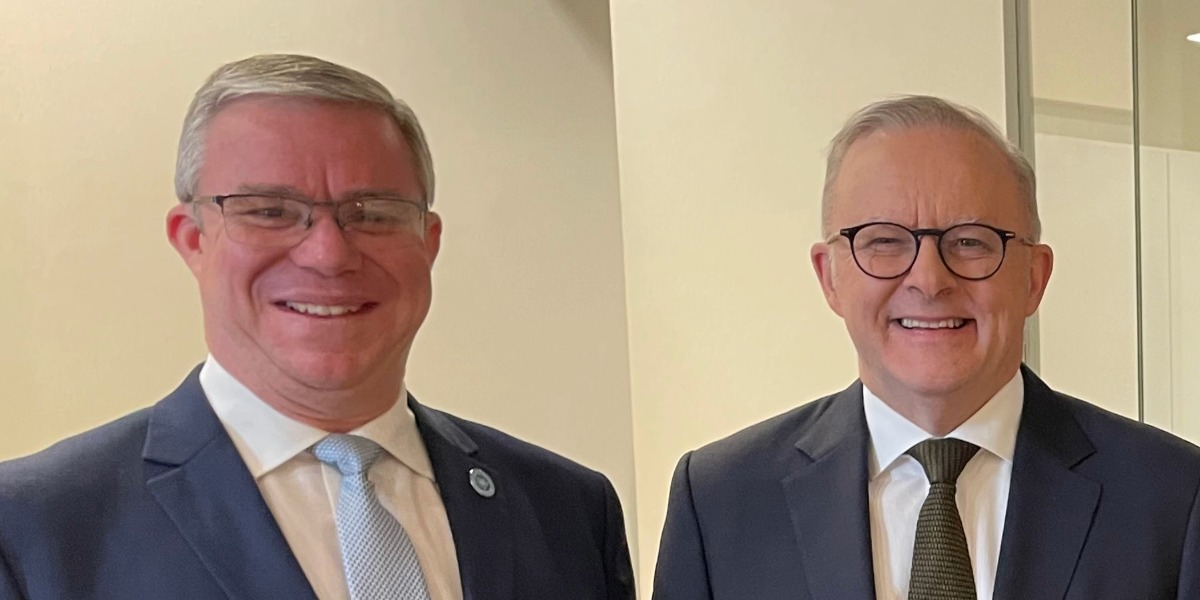
Mayor Firman was part of a CMA NSW group, which recently signed a memorandum of understanding with LGNSW to co-operate on the development of policy and advocacy efforts, that recently met with Prime Minister Anthony Albanese to talk about this topic.
“CMA will continue to work with LGNSW, our prime minister and our ministers for local government in the Hon Catherine King MP and the Hon Kristy McBain MP to ensure there can be real solutions to address financial sustainability,” Firman said.
“For our NSW rural and remote communities – it’s about keeping the doors open. It’s that serious, and we will continue advocating and lobbying to that end.”
Got something you want to say about this story? Have your say on our opinion and comment hub, New England Times Engage