

The evidence is in, and Armidale should take a bow for its part in the successful settlement of over 650 Ezidi refugees into the community and paving the way for future settlement programs.
Landmark research emerging from the University of New England (UNE) found residents’ concerns about refugees decreased over time, while positive attitudes towards and contact with their newest neighbours have increased.
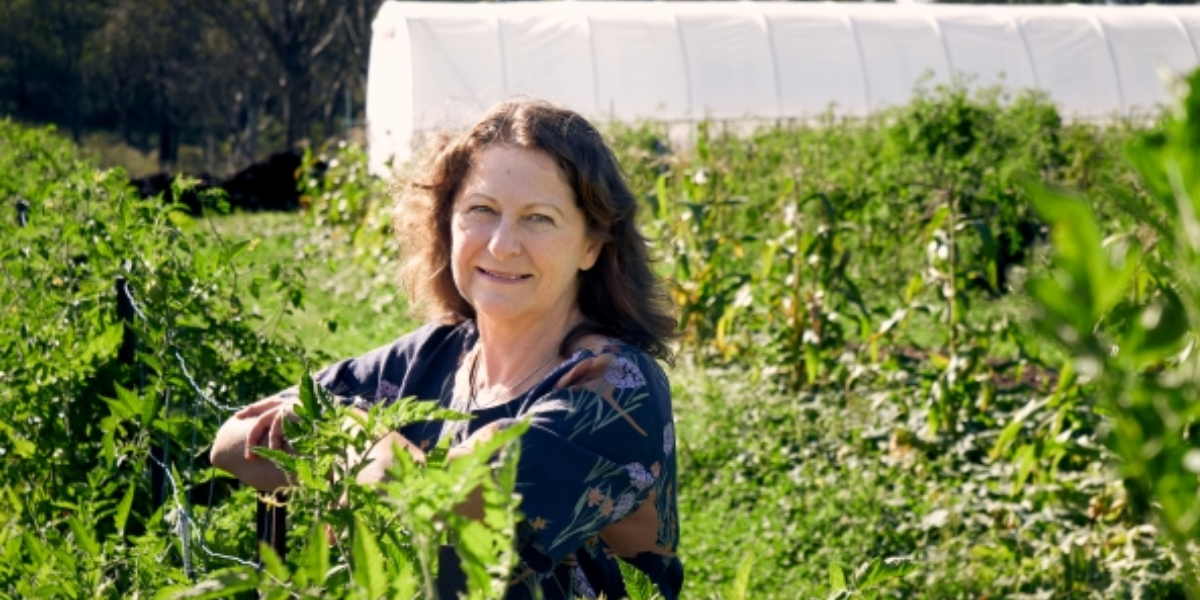
Associate Professor in Psychology Sue Watt lead the research for UNE which she expects the findings will inform future approaches to regional settlement services and policy in other parts of Australia.
“The purpose of the research was to monitor what was happening so if a problem arose in community response to the refugee program, we could feed that information through, and action could be taken,” said Dr Watt.
The University of New England (UNE), in partnership with the Settlement Services International (SSI), conducted several research surveys to measure community attitudes towards refugees in Armidale.
“What we found over six surveys was clusters of community attitudes on a spectrum from positive to negative.”
“Over time the clusters of positive attitudes expanded, and negative clusters reduced,” said Dr Watt.
“Our report challenges the stereotype of inner regional Australia as somewhat close-minded and resistant to change.”
Why did Armidale Work
Dr Watt says there is no one aspect of Armidale’s success, but a combination of moving parts.
Armidale’s long history of strong lobbying set the backbone for their campaign and meant Armidale was a reasonably prepared community.
In 2006, Armidale Sanctuary wanted to sponsor refugees to come into Armidale and became prominent campaigners, with two individuals, Robin Jones and Jeff Siegel, leading the charge.
More support came through the community with the local Rotary Club, church groups, Council and Rural Australians for Refugees all making appeals.
“During our history council has twice voted unanimously for Armidale to push to have refugees come.” said Dr Watt.
In 2018, Armidale became the first new regional settlement location under the Australian Government’s Humanitarian Settlement Program.
“The reasons why Armidale was a suitable place was many. One of those was job opportunities,” said Dr Watt.
“The Ezidis came from a rural background, so a regional city like Armidale was a good move.”
“Armidale had good facilities with education and housing, and it was quite possible to bring in the support they need. But it doesn’t mean we haven’t had our challenges.”
Resident’s raised concerns as to whether the city’s services were adequate enough, especially the health sector.
“Ezidis have been arriving with their very large families and then wanting to take the entire family to the doctor surgery and get all of the various assessments. That has put on some load,” said Dr Watt.
“We needed to increase the number of services in town to provide those services and in that way, refugee settlement is bringing more services to a town.”
Promoting the social and economic benefits soon played a part into Armidale’s acceptance.
“The positive media coverage and a number of informative articles were a great way of communicating with the public in general, what the Ezidis are all about and when they would be coming.”
“SSI had a very good community engagement program. They had a local community engagement officer and those people worked very hard to speak with people, like employers.”
“The Department of Premier and Cabinet developed an interagency for the first few years to coordinate services.”
The Findings and Methodology
“The results show that the Armidale community was reasonably positive about the refugee resettlement program, on average.”
“And as the four years of our study went by the attitudes became significantly more positive,” said Dr Watts
From 2018-2021, the research team conducted six waves of surveys to gauge Armidale’s attitudes to the refugee settlement, and to track any threats or benefits of the 2.8 per cent population boost.
Some of the early concerns raised were the impact on employment prospects, local services, and the ability to cope with the influx. In response, SSI established the Humanitarian Settlement Program Network, an interagency network of local services and charities which meets regularly to enhance service provision for the refugees.
“Concerns about the refugee settlement program and the impact of refugees on Armidale reduced, and that is our strongest finding,” said Dr Watt.
“There is evidence that people were having contact with the refugees, they were engaging with them, and this was more so over time.”
Every survey conducted consisted of 200 residents, grabbing a new sample each time. Over 300 residents were also re-interviewed to see if individuals’ attitudes were changing.
“For every one negative comment about the Ezidis there were 11 positive comments.” Said Dr Watt.
“The most common ones were friendly, nice, grateful and generous.”
The Ezidi People
Dr Watt praises the Ezidis for the part they play in making Armidale their home.
“The really remarkable part is the Ezidis themselves. They have done a lot of community outreach,” said Dr Watt.
“When they had been here for a year they held a public event to commemorate the genocide attack on the Ezidi people in 2014. They wanted to educate and reach out.”
Until COVID, they also held monthly picnics in the park, to which the whole Armidale community was invited.
Ezidis are a religious minority mostly from Northern Iraq, Syria, and Turkey and all but a few of the original families remain in Armidale almost five years later.
“For Ezidi new year this year, they invited community members to come and enjoy their food, songs, dance and celebrate with them.”
Before COVID, 650 refugees had relocated to Armidale before the intake was placed in hold. In 2023, the intake recommenced with more people to be relocated.
“These are people who had been put on hold and waiting to arrive,” she said.
Is Armidale Special?
So, the big question, is Armidale special?
“I think what has occurred in Armidale is special, but when we compare Armidale with other towns in Inner Regional Australia, it is not all that different,” said Dr Watt.
“In comparison with annual Australia-wide surveys, we are not on average more highly educated, were not more multicultural, we are not younger. We are slightly financially better off.”
“But when it comes to attitudes at the baseline, when refugees were first arriving, Armidale similar attitudes towards multiculturalism to other inner regional cities. And when it came to social cohesion, we were a little worse.”
“We have had this wonderful successful refugee settlement program and I think that speaks to the hard work and the good judgement of a lot of people along the way.”
Armidale shares similar characteristics with many other communities around the country and would be a good benchmark for future refugee settlement regional hubs.
“I don’t see why this special thing that happened here, with the correct management, couldn’t happen in another inner regional cities,” said Dr Watt.
“At present, the government is pushing towards resettling refugees in regional areas, and this push is coming from the regions themselves.”
“The previous government picked up on that and said they would like to settle 50 per cent of refugees in the regions.”
“So, what we have done is provide pretty solid quantitative evidence, at least from Armidale, in what has happened from the community’s perspective when that settlement occurred.”
“We have been able to feed those results back to government agencies with the hope it will facilitate any policy formation,” she said.
Dr Watt is seeking to continue her research in Armidale and pass on her findings for future projects.
“I want to continue to conduct these surveys with one at the end of this year and then on a two-yearly basis,” said Dr Watt.
“I think it is really important that we continue to monitor what happens. Things have gone really well so far but that can change, and I would like to keep an eye on things so if anything went in a negative direction, we could identify that.”
Like what you’re reading? Support New England Times by making a small contribution today and help us keep delivering local news paywall-free. Donate now