

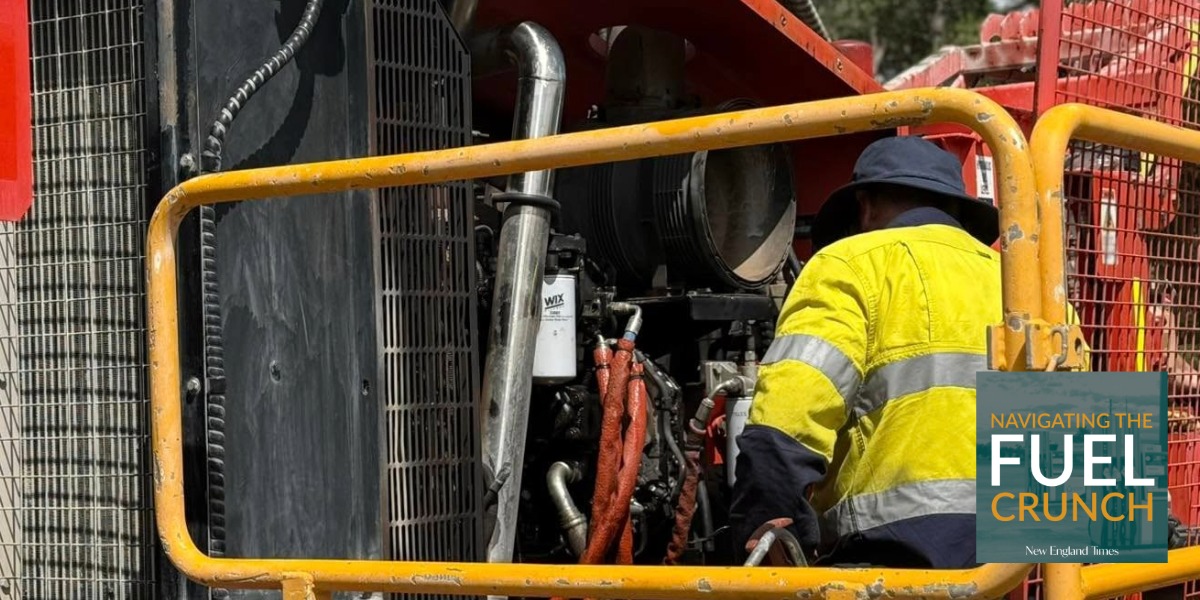
For many businesses and farm operators across the New England, diesel isn’t discretionary, it’s essential.
From agriculture, manufacturing, and transport to construction, mining, and infrastructure, diesel powers much of the region’s day-to-day activity. And when prices rise, the impact is felt quickly and often unevenly. Not just in cars, but in all the essential equipment that needs fuel so we can do what we do.
Longer supply chains, limited alternatives, and a higher reliance on machinery mean cost increases can flow through more directly to local businesses, and the New England is particularly vulnerable to the price shock.
However, the team at New England Hydraulics and Diesel say the issue isn’t just the inflated cost of fuel. Fuel efficiency can also be a major factor in your costs rising – and unlike the price at the bowser, it’s one part of the puzzle you can do something about.
No obvious fault but room to improve
According to Aran Toovey, Director of New England Hydraulics & Diesel, it’s not uncommon to see machinery using more fuel than expected, even when there’s no obvious fault.
“The machine’s still running, the job’s still getting done.”
“But the cost per hour can creep up without anyone realising why.”
That increase is rarely caused by a single issue. Instead, it tends to build over time, through small inefficiencies across systems.
Aran says there several common contributors to fuel inefficiency in machinery, including:
- Hydraulic systems operating outside optimal pressure
- Partially blocked filters restricting performance
- Minor wear increasing engine load
- Heat build-up reducing system efficiency
Individually, these issues may not stop a machine. But together, they can increase fuel consumption, sometimes significantly over time.
And of course, if you can’t figure out why your equipment is using more fuel, call New England Hydraulics and Diesel and they’ll do what they can to help.
Five practical ways to reduce diesel use
According to the team at New England Hydraulics & Diesel, while fuel prices are outside local control, there are still practical steps operators can take to improve efficiency and reduce unnecessary fuel use in your machinery.
- Keep up with regular maintenance
Routine servicing helps ensure machinery is operating efficiently — not just running. Clean filters, correct fluids and scheduled checks can reduce unnecessary strain on engines. - Monitor hydraulic system performance
Hydraulic inefficiencies can increase the load on engines, leading to higher fuel consumption. Ensuring systems are operating at the correct pressure can make a measurable difference. - Address small issues early
Minor leaks, pressure inconsistencies or early signs of wear may not stop a machine, but they can reduce efficiency over time. Addressing these early can prevent higher fuel use later. - Match equipment to the task
Using larger machinery than required for a job can result in unnecessary fuel burn. Where possible, aligning equipment size to the task can improve efficiency. - Support efficient operation
Operator habits — including reducing idle time and maintaining smooth operation — can have a direct impact on fuel consumption across the day.
Fuel price will remain a key concern for some time. But increasingly, attention is also turning to how efficiently that fuel is being used and where costs may be accumulating unnoticed. Taking a bit of time and effort to make sure your machines are running efficiently can make a substantial difference.

What do you need to know to get through the fuel crunch?
Tell us what information you need to make it through the fuel shortage crisis. Suggest a story!
Read other fuel crunch stories here.
Put your business in a story like this – find out more here.