

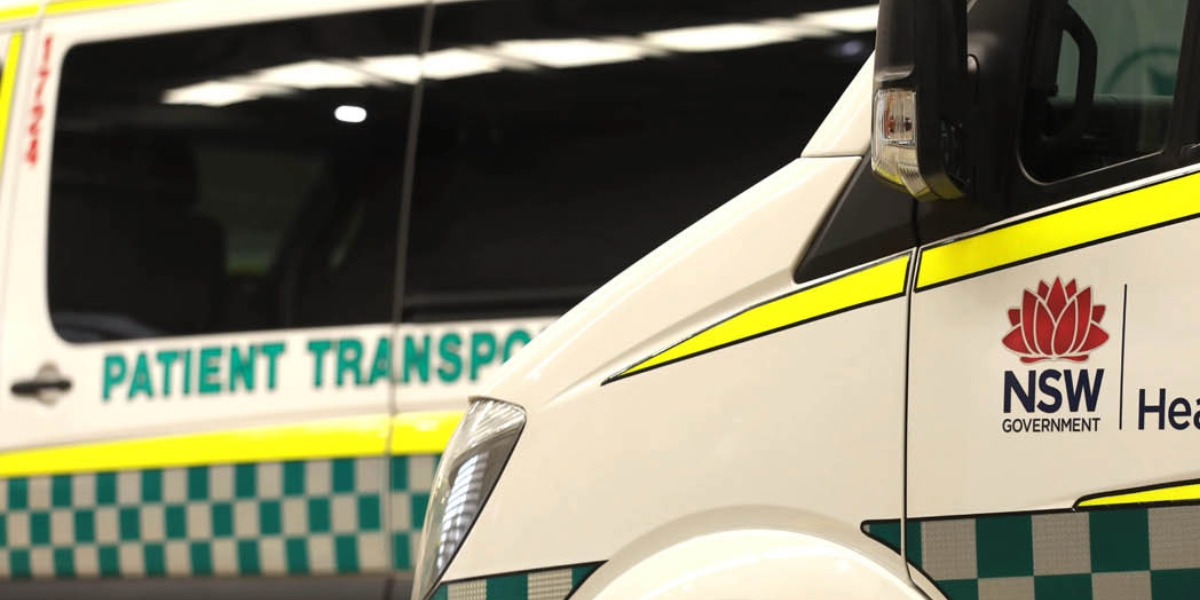
Patients in the New England are being required to cover the cost of travelling to and from medical care, with health authorities confirming that transport home after transfer to another town is “generally the responsibility of the patient”, even as fuel prices skyrocket.
Responses from Hunter New England Local Health District (HNELHD) and NSW Health indicate there are no specific measures in place to reduce reliance on patient transfers, necessary for often basic care in the New England given the lack of doctors and other resources, nor are they providing any additional support to patients during the current fuel crisis.
Questions put to HNELHD asked whether any steps were being taken to reduce “high reliance on patient transfers given fuel shortages”, and what contingency plans existed for patients unable to afford or access fuel to travel for care or return home.
In response, HNELHD said patient transfers are only determined on clinical criteria.
“Decisions about whether a patient requires transfer are made by senior clinicians based on medical need, to ensure patients receive the level of care appropriate to their condition, regardless of external factors,” a spokesperson said.
The response did not indicate any change to transfer practices in response to fuel constraints.
On patient travel, the district confirmed that the cost to get home again after being transferred to a bigger hospital rests with the individual.
“Transport home following discharge from hospital is generally the responsibility of the patient,” the spokesperson said.
The statement outlined existing transport support options, including the NSW Patient Transport Service, which cannot be used if the patient is well enough to travel by other means, and the Isolated Patients Travel and Accommodation Assistance Scheme (IPTAAS), which provides funding for those who have to travel for planned specialist care.
“Eligibility for transport assistance is assessed on a case-by-case basis, taking into account each patient’s clinical needs, personal circumstances and access to other supports,” the spokesperson said, adding that patients “may be required to contribute to transport costs.”
These responses align with correspondence from the Parliamentary Secretary for Health and Regional Health, Dr Michael Holland, to local upper house politician Aileen MacDonald, seen by New England Times, which stated that patient transfers occur “for a range of clinical reasons and priorities” but that transport home remains the responsibility of the patient.
“I acknowledge your concerns about the steps being taken to ensure regional patients are not disadvantaged by system‑driven transfers or by being discharged without appropriate support,” he wrote.
“I understand that when a patient a patient no longer needs treatment and is ready to be discharged home, they are generally responsible for their own transport, often with help from family or carers.”
“If a patient does not have family, carers, or other supports available to help with transport, staff will help wherever possible, often with the support of hospital social workers.”
Numerous locals have reported being offered no help to get home from as far away as Sydney and Newcastle, after being transferred with nothing other than the clothes on their back as part of emergency admissions. Those flown out to the city for emergency care are often told not to take a bag with them on the plane or helicopter.
NSW Health said there had been no direct operational impacts from the fuel crisis.
“There are currently no disruptions to the NSW Health system related to fuel supply,” the spokesperson said.
NSW Ambulance and Patient Transfer vehicles are predominantly adapted Mercedes Sprint vans that run on diesel.
NSW Health also pointed to IPTAAS as the primary mechanism by which the NSW Government supports patients who have to travel to access specialist care.
IPTAAS operates as a reimbursement model, with patients required to pay travel costs upfront and claim a subsidy after the fact. The current reimbursement rate for private vehicle travel under IPTAAS is 40 cents per kilometre, less than half the 88c per kilometre the ATO allows you to claim for private vehicle use for work related trips. Returning home after emergency treatment at another town is generally not covered by the scheme, and any travel under 100 kilometres is not eligible for reimbursement.
Premier Chris Minns, who is in Tamworth today for education-related announcements, did not respond to a request for comment on the response provided by HNELHD.
National Party Leader Gurmesh Singh also did not provide comment addressing patient travel or healthcare access, a spokesperson for Mr Singh only providing comment attacking Premier Minns for refusing to support a grab bag of populist demands from the Opposition relating to consumer fuel supply and fuel excise.
Got something you want to say about this story? Have your say on our opinion and comment hub, New England Times Engage