

The federal government is moving to shore up Australia’s fuel supplies, proposing new powers to underwrite private fuel purchases, while the opposition pushes for an immediate tax cut, as the national fuel crisis continues to put pressure on prices and availability.
Prime Minister Anthony Albanese said the measures, to be considered by parliament on Monday, would allow the government to back private companies importing additional petrol and diesel cargoes amid ongoing global uncertainty linked to the conflict in the Middle East.
“Put simply, there is a risk of a private purchase of shiploads of fuel at higher prices because there is so much uncertainty with the war in the Middle East,” Mr Albanese said.
“This is about risk mitigation for (private companies) to add to supply and it will give suppliers the confidence to secure additional and discretionary cargoes used to service uncontracted demand, including for regional and independent fuel suppliers.”
Six of the 81 fuel cargo ships scheduled to arrive in Australia in April have cancelled, although replacements have been secured.
Mr Albanese said the government was taking steps to be “over prepared” in the face of ongoing uncertainty.
“We’re working to get more fuel to Australia but we’re also working on distribution to get it to where it needs to go, which is why we’ve ensured the fuel reserves that have been released are going to regional areas, to areas that are most in need,” he said.
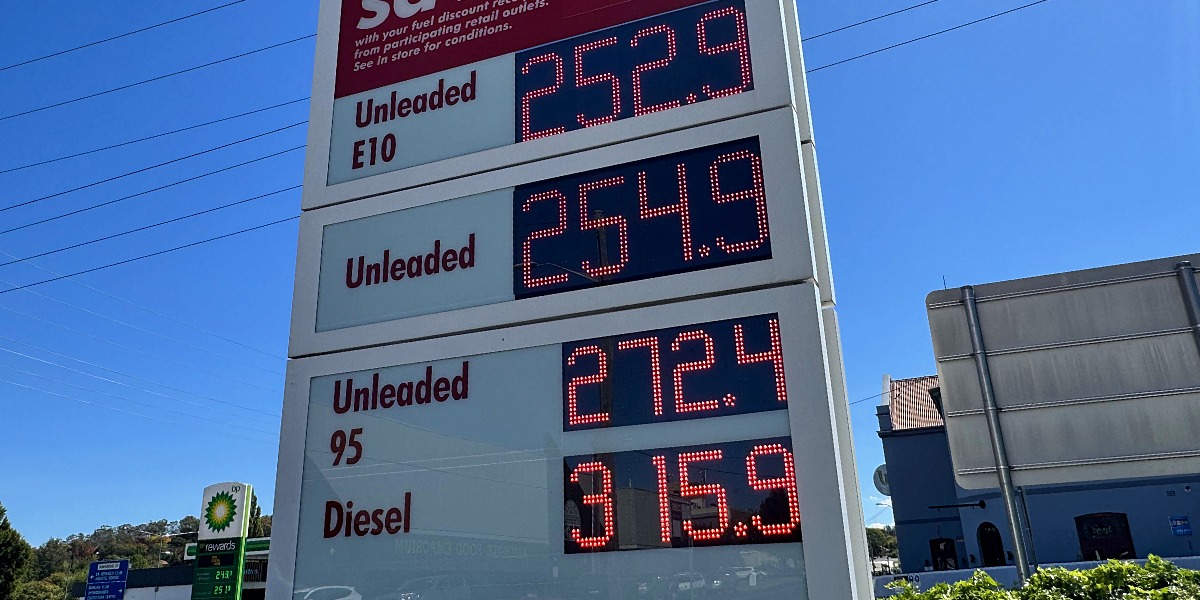
Despite those assurances, fuel prices remain elevated, with the Australian Competition and Consumer Commission reporting sharp increases across both metropolitan and regional markets.
Average diesel prices in the five largest cities reached 303.5 cents per litre in the week to March 25, up 27.8 cents in a week, while regional prices climbed even higher to 307.6 cents per litre, a rise of 28.6 cents.
Unleaded petrol prices also increased, reaching 252.2 cents per litre in metropolitan areas.
The increases have been driven by global benchmark movements, with diesel prices rising around 17 per cent in a week, compared to about 9 per cent for petrol.
The ACCC said it had received more than 3,000 reports from consumers and small businesses about fuel prices in March, with concerns ranging from rapid price increases to supply shortages and rationing at service stations.
“We remain concerned about supply issues for both petrol and diesel impacting a range of locations, including capital city suburbs, regional towns and remote areas,” ACCC Deputy Chair Mick Keogh said.
Opposition Leader Angus Taylor has called for a temporary halving of the fuel excise, arguing it would deliver immediate relief to households and businesses facing rising costs.
That proposal has been backed by Federal Member for Parkes Jamie Chaffey, who said communities across the New England were already feeling the strain.
“Families and businesses in the electorate of Parkes are paying more for everything, and now they are being hit at the bowser as well,” Mr Chaffey said.
“Inflation has already beaten this Government, and now a national fuel crisis is making it worse.”
“Across the Parkes electorate, we are seeing independent fuel distributors who have no fuel to supply, farmers unable to farm and families who will not be able to get together at Christmas.
“There will be a huge flow-on effect in the form of higher prices for all Australians if farmers cannot farm, and transporters can’t get the goods that are available to market.”
The proposal would halve the 52.6 cents per litre fuel excise for three months, reducing prices by around 26 cents per litre, alongside a corresponding cut to the heavy vehicle road user charge.
Industry groups have also backed calls for urgent support, with the National Road Transport Association outlining a range of short-term measures, including emergency financial assistance, a six-month loan repayment moratorium, and a suspension of the road user charge.
“A consistent, nationwide approach is critical to ensure operators aren’t facing a patchwork of measures and can access the same level of support regardless of where they operate,” chief executive Warren Clark said.
“These are practical, short-term measures that would deliver immediate cashflow relief and help keep trucks on the road.”
However, a temporary excise cut would not provide the same level of benefit for all sectors, particularly in regional areas.
Many farmers and heavy industry operators already access the diesel fuel tax credit scheme, meaning the excise is effectively refunded and any temporary reduction would have limited additional impact.
The federal government has also granted interim authorisation to the Australian Institute of Petroleum to coordinate supply chain responses, as part of efforts to manage ongoing disruptions.
Mr Albanese is set to meet with state and territory leaders on Monday as part of a national cabinet response aimed at coordinating supply and distribution.
What do you need to know to get through the fuel crunch?
Tell us what information you need to make it through the fuel shortage crisis. Suggest a story!
Read other fuel crunch stories here.
Put your business in a story like this – find out more here.