

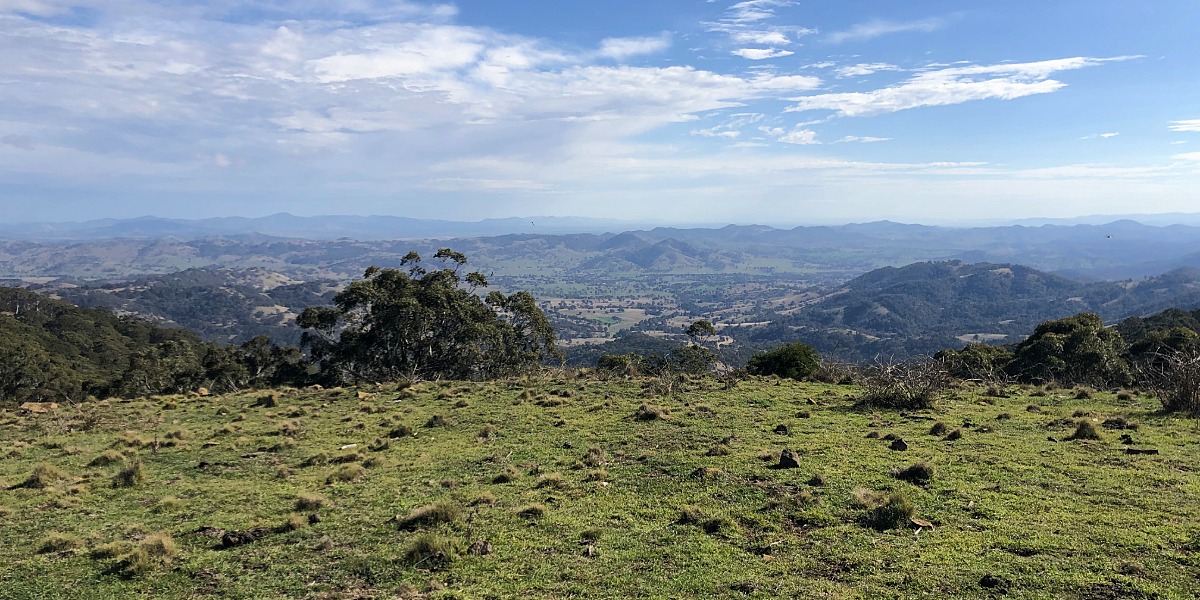
The proposed Hills of Gold Wind Farm has been cleared to proceed after the Land and Environment Court of NSW approved the project, ending an 18-month legal challenge and years of bitter dispute over the development near Nundle.
The ruling follows Tamworth Regional Council conceding it would no longer argue for the refusal of the project, closing one of the most contentious renewable energy battles in the New England in recent years.
The project has been the centre of a prolonged and often divisive conflict between supporters and opponents, sparking the “Not in Nundle” campaign and featuring in an investigation by Four Corners into wind farm planning issues.
Developer Someva Renewables welcomed the outcome, describing it as a significant step for both the region and the state’s energy transition.
Development Director Tim Mead said the decision reinforced confidence in the planning system.
“Someva Renewables welcomes this result which is important for the local community and the energy transition in NSW,” Mr Mead said.
“The approval of the proposed Hills of Gold Wind Farm by the Land and Environment Court of NSW proves that the independent environmental assessment process for renewable energy projects in NSW is rigorous and withstands legal scrutiny.”
The project’s pathway to approval has been complex and evolving.
It was first recommended for approval by the NSW Department of Planning, Housing and Infrastructure in late 2023, but in a significantly reduced form, with 47 turbines and a capacity of 290 megawatts, down from 64 turbines in its final application and the 97 turbines originally proposed.
Then-owner Engie initially accepted that position but later sought to have 15 of the removed turbines reinstated, arguing the smaller project would not be commercially viable.
That argument was ultimately accepted by the NSW Independent Planning Commission, which reassessed the proposal and approved a revised version consisting of 62 turbines and a 100 megawatt battery with four hours of storage.
The scale of community interest in the project was substantial, with 1122 submissions lodged during the planning process, including 747 objections.
Following the IPC’s approval in September 2024, the project moved into the courts.
A local opposition group, Hills of Gold Preservation Inc, launched the initial legal challenge and later convinced Tamworth Regional Council to join the case. While the group subsequently withdrew, it supported the council continuing the appeal.
The council pressed ahead, focusing its arguments largely on road access and transport impacts associated with construction.
During preliminary hearings, Chief Justice Brian Preston questioned the scope of the council’s case and the use of public resources.
“Council has to make some hard calls here. Is this a wise use of public resources to be fighting this?” he said.
“I know they’ve got a bee in their bonnet about this case but it seems to me that they’ve lost perspective as to what it is they’re doing here.”
However, a Tamworth Regional Council spokesperson said key concerns had been addressed through mediation.
“Tamworth Regional Council is pleased to have resolved several key issues following a legal challenge against the Independent Planning Commission’s (IPC) previous decision in relation to the Hills of Gold renewable energy project proposed for Nundle,” the spokesperson said.
“Council’s key areas of concern for the project included the feasibility of the transport route, proposed changes to road infrastructure impacting on Council’s maintenance costs, the constructability of internal roads, biodiversity impacts, flooding impacts in Nundle, site suitability and the public interest.”
The spokesperson said mediation between the parties had resulted in changes to the project conditions.
“During Court-mandated mediation between Council, the IPC and Someva Renewables, the parties notified the Court they had reached an in-principal agreement and as a result, the original consent conditions, and the approved plans, have been revised. No further legal proceedings are anticipated in this matter.”
They said council’s intent had been to minimise impacts on the community and ratepayers.
“Council’s intent has always been to achieve resolution of the significant adverse impacts of the development on the community of Nundle and to avoid long-term maintenance costs along the transport route which had the potential to negatively impact ratepayers across the region.”
With the council no longer contesting the approval, the Court has now formalised the project’s progression.
Mr Mead said the lengthy legal process had delayed critical energy infrastructure.
“While it is disappointing that Tamworth Regional Council pursued these lengthy and unnecessary legal proceedings at ratepayers’ expense, we hope this outcome sends a clear message: State Significant Developments like renewable energy projects, approved through independent processes, can and should proceed on their merits.”
He said ongoing delays to renewable projects posed broader risks.
“This case shows renewable energy projects in NSW continue to face unnecessary delays that are costing energy users, local communities and these delays are threatening NSW’s energy security and transition.”
The Hills of Gold Wind Farm is proposed to include 62 turbines generating about 372 megawatts, enough to power around 163,000 homes.
The site is located about five kilometres south of Hanging Rock and eight kilometres south-east of Nundle, spanning the Tamworth Regional, Upper Hunter and Liverpool Plains local government areas.
Someva said the project remains largely consistent with its original approval, with some road upgrade requirements adjusted through the court process.
“It is worth noting that the proposed Hills of Gold Wind Farm remains essentially as approved by the IPC following these legal proceedings,” Mr Mead said.
“In fact, the road upgrades now required under the Court’s approval are in some cases less extensive than those originally mandated by the IPC.”
Someva, which acquired the project from Engie, said it would now focus on community engagement before outlining the next steps.
“Someva Renewables is a proudly NSW-based, 100% Australian owned renewable energy company and we are pleased this legal case has come to an end,” Mr Mead said.
“After a prolonged period of uncertainty, we look forward to taking the time to engage with the Nundle community and local stakeholders, before providing an update on next steps for the project.”
Read all the way through to the end of the story? So did lots of other people. Advertise with New England Times to reach New England locals who are interested and engaged. Find out more here.