

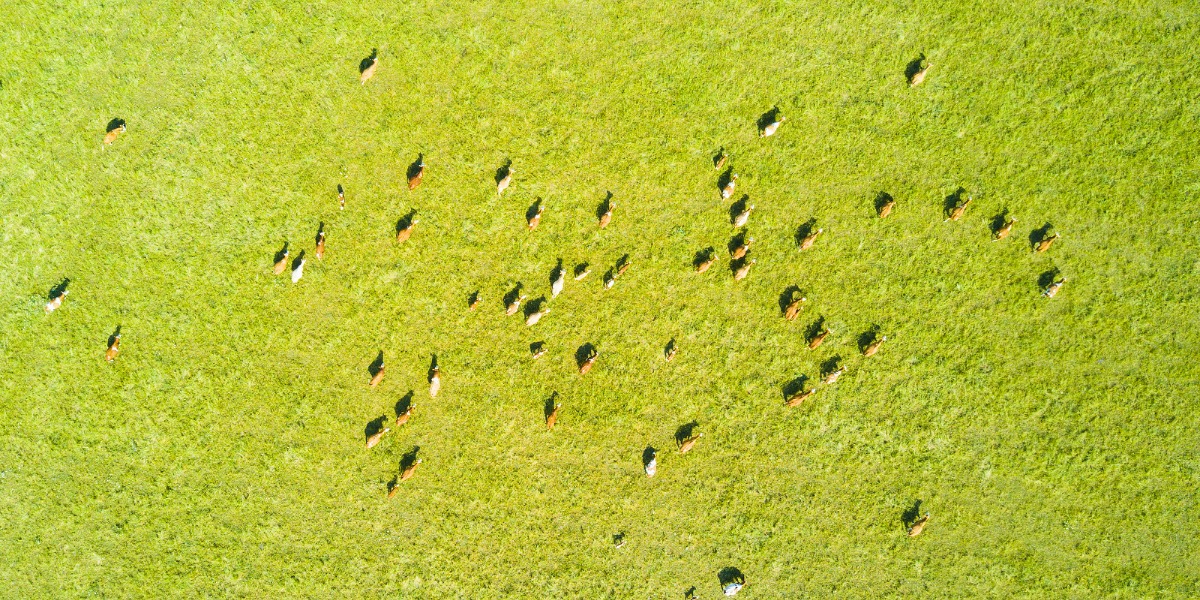
A new satellite technology capable of monitoring entire livestock herds in real time could soon transform farming across the region, following the successful completion of a major industry-backed trial.
Meat & Livestock Australia has announced the results of an AgTech project demonstrating reliable, low-cost, two-way satellite connectivity for livestock tracking and on-farm sensors, addressing one of the biggest barriers to digital adoption in agriculture.
The project, led by eSAT Global with support from Smart Paddock and Viasat, tested the technology in field trials at Pinjarra Hills and Rockhampton in Queensland in June 2025.
Results showed message success rates above 99 per cent using low power and low bandwidth systems while maintaining two-way connectivity between devices and cloud-based platforms.
MLA Group Manager for Science and Innovation Michael Lee said connectivity has long limited the uptake of digital tools across large-scale grazing operations.
“For many, connectivity has been the missing link for broad adoption of digital tools in extensive grazing systems,” Mr Lee said.
“With this project, the team have shown the potential for producers to achieve reliable, two-way satellite data at a cost that stacks up, supporting better grazing decisions, earlier health interventions, and stronger traceability.”
The technology enables whole-of-herd livestock tracking through smart ear tags, alongside monitoring of on-farm infrastructure such as water troughs, soil moisture probes, and other sensors.
By combining satellite connectivity with integrated dashboards, producers can receive real-time data on animal location, behaviour, and environmental conditions while also sending commands back to devices in the field.
eSAT Global CEO Rick Somerton said the trials validated the company’s purpose-built satellite system, designed specifically for agricultural use.
“Our GEO satellite approach is purpose-built for tiny messages, ultra-low power, and seconds-level latency,” Mr Somerton said.
“In Australian field trials, we validated the robustness needed for smart tags and sensors, and we’re targeting cost points that enable connectivity at whole-herd scale.”
Viasat Enterprise Vice President Andy Kessler said satellite technology was essential for agriculture in remote areas where traditional networks are unavailable.
“Agriculture needs dependable and resilient coverage where terrestrial networks can’t reach,” Mr Kessler said.
“By supporting these demonstrations in Australia, we’ve helped show how scalable, affordable satellite IoT can create value by lifting productivity.”
Beyond convenience, the system is expected to deliver significant productivity and management benefits.
Regular location tracking can improve grazing and pasture utilisation, while behavioural data can help detect health issues earlier and support breeding decisions.
Continuous identification and movement tracking also strengthen biosecurity and traceability, while remote monitoring of infrastructure reduces the need for manual checks across large properties.
The technology could also play a role in reducing stock theft, with alerts triggered by unusual movement patterns.
With research and development now complete, eSAT is moving towards commercial rollout, including partnerships with tag and sensor manufacturers.
A producer program is also being developed to scale the technology, integrate additional data sources, and demonstrate measurable gains for the livestock industry.
Like what you’re reading? Support New England Times by making a small contribution today and help us keep delivering local news paywall-free. Donate now