

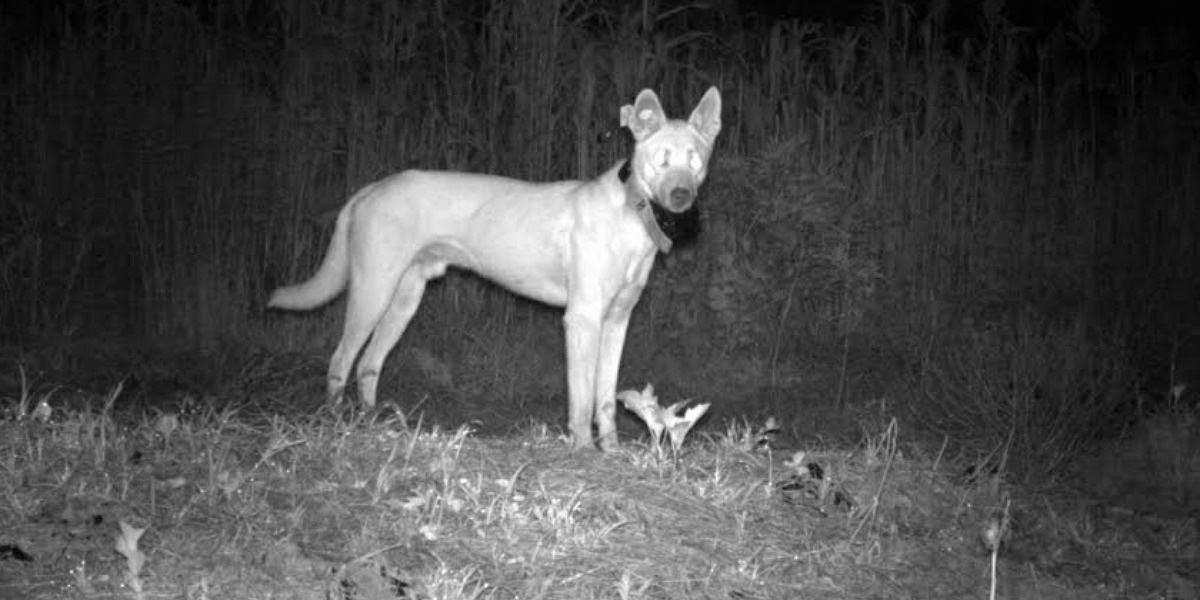
The NSW Government has launched its autumn wild dog control campaign, with aerial and ground baiting programs underway across the state to help protect livestock, native wildlife and pets.
Wild dog activity typically increases during the autumn breeding season, making this a key time for coordinated control efforts across farming regions. The seasonal program aims to reduce wild dog populations and minimise predation and harassment of livestock and wildlife.
Wild dogs are found throughout NSW, and landholders are required under the NSW Biosecurity Act 2015 to work together to manage pest animals on their land.
The control campaign forms part of the state’s broader biosecurity investment, which includes $1.05 billion in funding to protect farming operations and agricultural lands. Since July 2023, more than 1.5 million baits have been distributed through bait collection points across NSW.
Nearly half of those have been deployed through aerial baiting programs, where 1080 chemical baits are dropped by aircraft along planned control lines. In total, aircraft have covered around 40,000 kilometres of strategic baiting lines as part of the program.
Minister for Agriculture and Regional NSW Tara Moriarty said coordinated action was the most effective way to manage wild dogs.
“We know that a united front is our best defence against wild dogs and foxes that can impact our important livestock farming and native mammals, birds and reptiles,” she said.
“When farmers and neighbouring landholders participate in coordinated control programs with LLS support, the effort to control these pests is magnified across a landscape-scale impact that is far more effective than any landholder acting alone.”
Local Land Services facilitates coordinated wild dog control programs across the state. The agency supplies subsidised 1080 baits to certified landholders and supports both public and private land managers in undertaking control activities.
Aerial baiting is considered particularly useful in rugged or remote terrain where ground-based control is difficult. It can also help manage fox populations during autumn, when young cubs feed more opportunistically.
Minister Moriarty said the autumn program is an important part of a broader annual approach to pest management.
“The autumn baiting program demonstrates the Government’s ongoing commitment to supporting landholders in the fight against feral animals with the right tools, at the right time,” she said.
“With the appropriate controls and safeguards, baiting is a highly effective tool for managing wild dogs and is just one of the ways our Government supports farmers and landholders to meet their biosecurity duty to manage pest animals.”
Participation in baiting programs requires landholders to complete training. Those involved must hold a Vertebrate Pesticide Induction Training qualification or AQF3 Chemical Accreditation before handling baits.
Local Land Services offers the VPIT course both online and face to face, with certification valid for five years. Since July 2023, more than 6,000 landholders across NSW have completed the training.
Local Land Services Principal Program Manager Biosecurity Jake Tanner said coordinated efforts between neighbours were critical to the program’s success.
“Managing wild dogs is a shared responsibility, and we all have a role to play in protecting livestock, the environment and regional communities,” he said.
“Local Land Services is here to make wild dog control as practical and effective as possible for farmers. We provide training to certify farmers, supply baits to certified landholders, coordinate broadscale baiting programs and help bring neighbours together so we can together control what is happening across a region.”
He encouraged landholders who have not previously participated in a coordinated program to contact their local office.
“We encourage any landholder who hasn’t become certified or been involved in a coordinated control program before to reach out to their nearest Local Land Services office,” he said.
“Our biosecurity officers can talk through the best options for your property and help you get started.”
The autumn and spring baiting campaigns work together to target wild dog populations throughout the year. Autumn baiting targets animals during the breeding season, while follow-up control in spring focuses on young pups after they are born.
Don’t miss any of the important stories from around the region. Subscribe to our email list.