

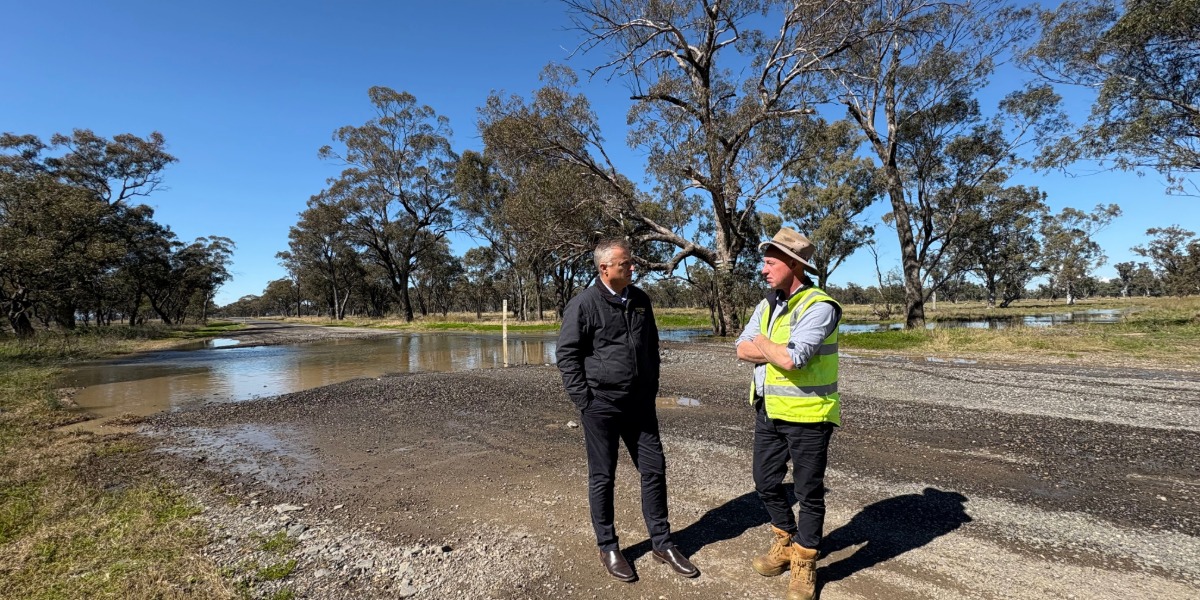
Federal Member for Parkes Jamie Chaffey is calling on Treasurer Jim Chalmers to address the urgent needs of regional councils after consulting with the 20 local government areas that make up the vast Parkes electorate.
Among those consulted were Moree Plains, Narrabri, and Gunnedah shire councils, the three New England councils that fall within the Parkes electorate.
Mr Chaffey asked each council to nominate their top priorities for the 2026–27 Federal Budget, aiming to highlight the shared challenges faced by communities across regional NSW.
“The message councils have sent me is clear – they need support and they need it now,” Mr Chaffey said.
He said the feedback revealed a consistent set of concerns across the electorate, which stretches across large parts of western and northern NSW.
“Labor has put regional Australians in the corner for too long,” he said.
“I have spoken out against piece after piece of legislation that adds to the burden on the shoulders of regional Australians – new water legislation, the new superannuation Bill, questionable wind, solar and battery decisions, gun reforms, road funding decisions, telecommunications shortfalls. The list goes on and on.”
After gathering responses from councils, Mr Chaffey identified eight key challenges that he says require federal attention in the upcoming budget.
One of the most pressing issues raised by councils was financial sustainability, with rising costs placing increasing strain on local government budgets.
Mr Chaffey said councils were experiencing unprecedented cost escalation that was affecting their ability to maintain infrastructure and deliver essential services.
“There is a strong call for reform of the Financial Assistance Grants to better reflect the needs of councils,” he said.
Road maintenance, freight efficiency, and road safety were also identified as major concerns.
The Parkes electorate includes some of the country’s busiest regional freight routes, with local governments responsible for maintaining extensive road networks used by heavy vehicles.
Mr Chaffey said councils were seeking greater certainty and increased long-term funding through programs such as the Safer Local Roads and Infrastructure Program.
Natural disaster preparedness and recovery was another key issue raised by councils, with many still dealing with the financial and infrastructure impacts of recent floods and severe weather events.
Councils said disaster funding arrangements need to be improved to support recovery efforts and long-term resilience.
Other priorities identified by councils included investment in community infrastructure such as pools, libraries, sporting facilities, and recreation centres, which play an important role in regional communities.
Several councils also highlighted the need for upgrades to regional airport infrastructure, which supports passenger services, freight operations, and medical evacuation capability.
Reliable telecommunications infrastructure remains one of the most pressing challenges across the electorate, with many communities continuing to experience poor connectivity.
Mr Chaffey also emphasised the importance of continued federal commitment to the Inland Rail project, which will run through parts of the electorate.
“One significant way the Albanese Labor Government could support regional areas is by getting on with the Inland Rail project,” he said.
“This nation-building infrastructure is essential to regional productivity, export competitiveness, and long-term freight efficiency.”
He said reliable water infrastructure was also fundamental to the sustainability of regional towns, agriculture, and industry.
The issues raised are largely reflective of those raised by the Australian Local Government Association in their pre-budget submission.
“Local governments are increasingly called upon to address national challenges at the community level, from delivering affordable housing and responding to natural disasters, to improving road safety and adapting to climate change,” ALGA President Mayor Matt Burnett said.
“While councils are prepared to lead with tailored, place-based solutions that meet the unique needs of every community, they are being asked to do more with less.”
“The ability to deliver on these priorities depends on financial sustainability and adequate funding.”
“Long-term, secure funding arrangements are urgently needed to enable councils to plan effectively, respond to growing community pressures and contribute to national productivity goals,” he said.
Mr Chaffey said the concerns raised by councils should be reflected in the upcoming federal budget.
“I call on the Labor Government to listen to our councils,” he said.
“They have the responsibility for absolutely essential services for regional people, often without the financial means to do so.
“This must be recognised in the 2026–27 Federal Budget.”
Got something you want to say about this story? Have your say on our opinion and comment hub, New England Times Engage