

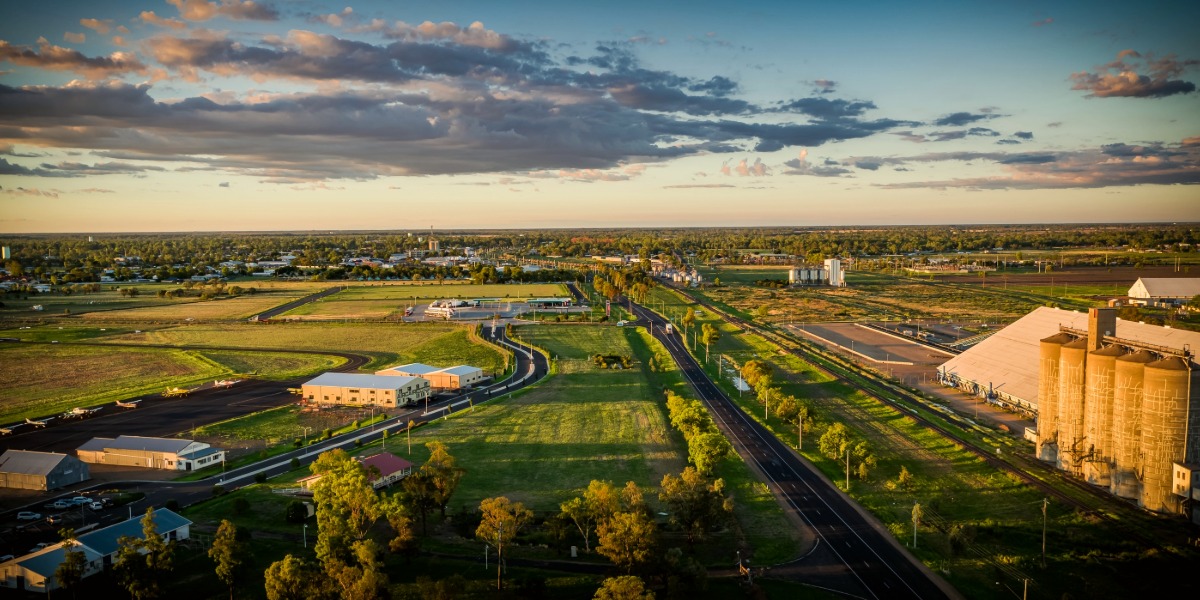
The NSW Government has agreed to scale back the Moree Special Activation Precinct, adopting a revised approach put forward by Moree Plains Shire Council to reduce long-term financial pressure on the community.
The decision follows concerns from council that the original plan was too large and would leave ratepayers carrying an estimated $2 million annual cost for maintenance, staffing and depreciation.
Under the revised plan, the precinct will now activate around 100 hectares of serviced industrial land, down from the originally proposed 300 hectares, along with about 1.9 kilometres of road instead of 3.3 kilometres.
Moree is not unusual in this move, most of the original Special Activation Precincts announced under the previous Coalition Government have been scrapped or scaled down, largely at the request of stakeholders.
Despite the scaled-back scope, the precinct is still expected to provide a 10-year supply of industrial land and support long-term economic growth, with projections of up to 4,000 jobs over 40 years across sectors including agriculture, logistics, renewable energy and food processing.
Minister for Regional NSW Tara Moriarty said the government had responded directly to local concerns.
“We’ve listened to Moree Plains Shire Council and agreed to adjust the scope of infrastructure delivery to ensure the precinct is delivered responsibly and sustainably,” she said.
“This is a decision that ensures the project can progress without placing unnecessary financial pressure on families and businesses in the Moree region.”
Moree Plains Shire Mayor Susannah Pearse said the change struck a better balance between growth and affordability.
“We are hugely grateful to the Minister and the NSW Government for listening to our concerns and supporting our request to further stage the works on the Moree Special Activation Precinct,” she said.
“Whilst the upfront costs of the precinct are funded by the NSW Government, the ongoing maintenance costs are funded by our ratepayers – who are grappling with the cost of living and the cost of doing business, and do not want a rate rise.”
The government will still deliver key infrastructure including roads, drainage and utilities, alongside streamlined planning pathways and business support services aimed at attracting private investment.
Council has reaffirmed its support for the long-term vision of the precinct, describing it as a once-in-a-generation opportunity to diversify the local economy while ensuring development remains financially sustainable.
Got something you want to say about this story? Have your say on our opinion and comment hub, New England Times Engage