

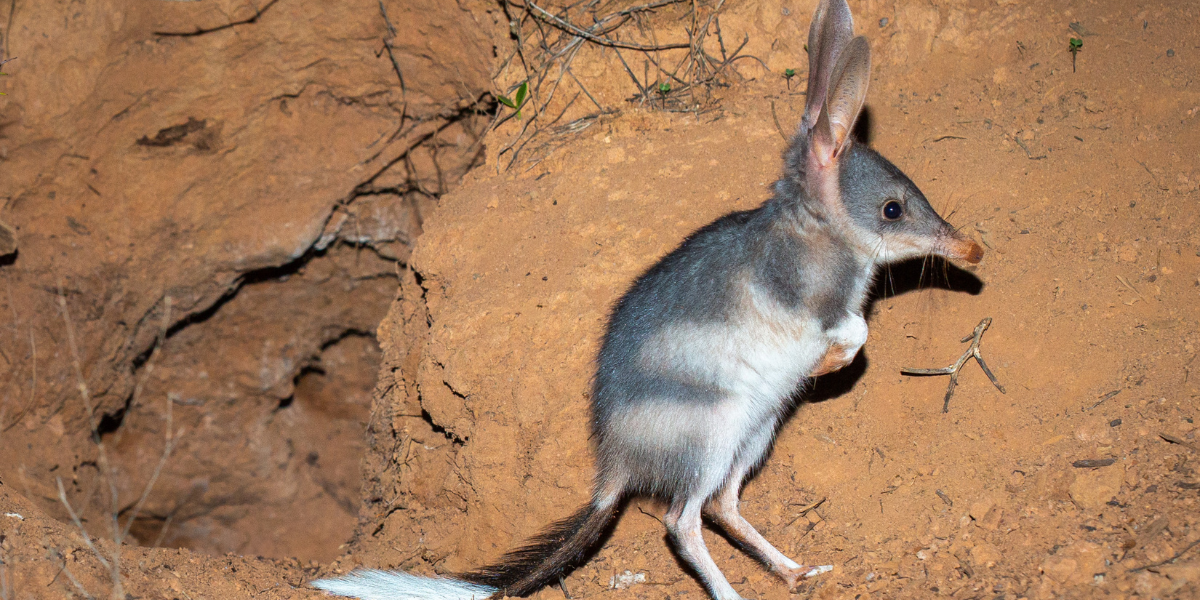
This Easter, Australia’s beloved “Easter Bilby” is hopping into the spotlight – and in the Pilliga State Conservation Area on Gamilaroi Country, there’s plenty to celebrate. The Greater Bilby population here has remained stable and thriving across the sanctuary’s 5,800-hectare feral predator-free fenced area, showing how careful conservation can give this iconic species a real chance to flourish.
The Pilliga sanctuary, managed by the Australian Wildlife Conservancy (AWC) in partnership with the NSW National Parks and Wildlife Service, has become a beacon of hope for Bilbies. The last population estimate, conducted shortly after the removal of the internal breeding area fence, recorded around 120 individuals. Since then, remote surveillance cameras have shown that Bilbies are gradually spreading across the wider fenced area, using the full extent of their protected habitat. In fact, Bilbies were detected at 100% of cameras in 2025, suggesting the population is not only stable but actively thriving.
“This shows the value of providing safe, predator-free environments,” said Tim Allard, AWC Chief Executive Officer. “When freed from the relentless pressures of feral cats and foxes, Bilbies can naturally rebuild their populations. The Pilliga sanctuary demonstrates how conservation, partnerships, and careful habitat management can make a real difference for threatened wildlife.”
Bilbies are more than just Easter mascots; they are “ecosystem engineers,” and their digging has a profound impact on the Pilliga landscape. By foraging for seeds, roots, and insects, and constructing burrows, they help turn over the soil, retain rainfall, and promote new vegetation growth. Their burrows also provide shelter for other native species, contributing to the overall health of the ecosystem.
In the centre of Australia, Dr Tim Henderson, AWC Wildlife Ecologist, said Newhaven’s Bilby population growth can also be attributed to great environmental conditions, with above-average rainfall of 637 mm in 2024 – the highest since 2001, and the 5th wettest year on record.
“Bilbies are amazing diggers and have absolutely transformed the environment by foraging for food and constructing burrows,” said Dr Henderson. “Their digging turns over large amounts of soil, helping retain rainfall and promote new vegetation growth. The burrows they create are also sometimes used by other reintroduced species such as Golden Bandicoots and Brushtail Possums, as well as extant species like the Mulgara.”
The Pilliga sanctuary is part of a network of AWC sites across Australia where Bilbies are seeing remarkable growth. Nationally, the AWC Annual Bilby Census estimates more than 5,330 individuals across sanctuaries in Western Australia, the Northern Territory, South Australia, and New South Wales, four times the population recorded in 2021. Yet the Pilliga remains a special site, demonstrating the benefits of long-term, carefully managed conservation in a local context.
Bilbies at Pilliga have thrived thanks not only to predator-free conditions but also to steady environmental management. Unlike some desert sanctuaries where population numbers can fluctuate dramatically due to rainfall patterns, Pilliga’s Bilbies have maintained stable numbers, making it a model of sustained recovery. Their success here also underscores the importance of partnership between conservation organisations and government agencies, combining expertise, resources, and local knowledge to protect threatened species.
As families prepare for Easter, with chocolate bunnies and egg hunts, the real stars are quietly digging and burrowing across the Pilliga’s sandy dunes. Each hole they dig, each seed they unearth, is a small act of restoration, a sign that the native landscape is bouncing back alongside its iconic inhabitants. For the Gamilaroi people and the wider community, these Bilbies are a living reminder of what can be achieved when humans work to protect nature rather than exploit it.
Looking ahead, the future for Bilbies at the Pilliga is bright. While environmental conditions and desert cycles can cause numbers to fluctuate, the sanctuary’s secure, predator-free habitat provides a strong foundation for long-term resilience. Conservationists remain hopeful that the Pilliga population will continue to thrive, providing a safe haven for these remarkable marsupials and an enduring symbol of Australia’s commitment to protecting its native wildlife.
“We expect the population to continue increasing over the next three-to-six years,” said Dr Henderson. “However, the boom-and-bust nature of the desert means numbers may fluctuate with changing conditions, particularly if we’re heading into drier years. Even so, the resilience we’re seeing now gives us real confidence in the long-term future of the species.”
This Easter, the Pilliga Bilbies are more than just a conservation success story; they are a reminder of resilience, hope, and the difference that protection, patience, and partnership can make. And as they dig, forage, and burrow, they quietly transform the landscape, leaving behind a legacy that extends far beyond the holiday season.
Something going on in your part of the New England people should know about? Let us know by emailing newsdesk@netimes.com.au