

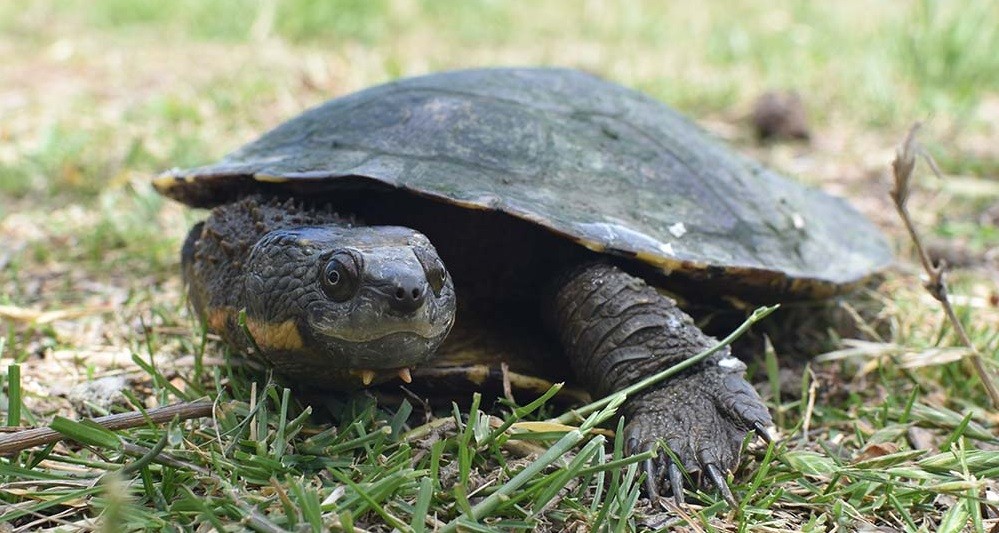
Aboriginal communities across the Northern Tablelands are playing a hands-on role in bringing one of the region’s most threatened native species back from the brink, helping release more than 450 Bell’s turtle (Myuchelys bellii) hatchlings into local waterways this year.
The release marks an important milestone in a long-running conservation effort aimed at rebuilding populations of the endangered freshwater turtle, which is found only in the Northern Tablelands of New South Wales.
The program is funded by the Australian Government through the Natural Heritage Trust and delivered by Northern Tablelands Local Land Services, a member of the Commonwealth Regional Delivery Partners panel.
Northern Tablelands Local Land Services, in partnership with the University of New England, has been incubating Bell’s turtle eggs since 2016 to improve survival rates. This year, for the first time, some hatchlings will be released on Indigenous Protected Areas in collaboration with Traditional Custodians and local community members.
Bell’s turtles can live for many decades, but their nests are highly vulnerable to fox predation. In many seasons, entire nests are destroyed before hatchlings ever reach the water. Without intervention, younger turtles are not replacing the aging adults that remain in the rivers.
“Without intervention, these populations are heading towards extinction,” said Dr Lou Streeting, Postdoctoral Fellow, University of New England.
Local Aboriginal Land Council rangers have been central to the recovery effort, installing fox-exclusion fencing to protect nests and helping release hatchlings back into rivers. Rangers from Guyra, Amaroo and Glen Innes Local Aboriginal Land Councils have taken part, alongside the Boorabee Aboriginal Corporation.
“Support and hands-on involvement from landholders, community members and Indigenous rangers have been very important to the success of this long-term conservation project,” said Anya Salmon, Senior Land Services Officer with Northern Tablelands Local Land Services.
“To see some of the hatchlings released back into the care of the Aboriginal land managers is incredibly special,” Anya said.
This year’s hatchlings will be released into the Severn and Beardy Waters catchments, where scientists say populations are aging and natural recruitment is limited.
“The females we’re finding in these catchments are some of the largest we’ve ever recorded, weighing up to 3.5 kilograms,” said Dr Streeting. “That tells us they’re very old animals. These big, old females are so valuable reproductively because they produce more eggs, larger eggs and, ultimately, fitter hatchlings than younger, smaller turtles. When those adults are gone, the population goes with them. In the Severn–Beardy system, that could happen within a single generation.”
For many Aboriginal community members, the project is also about caring for Country and protecting species that have been part of local waterways for thousands of years.
Cultural Broker James Sheather from Northern Tablelands Local Land Services said the project shows the power of community-led conservation.
“Projects like these that bring Aboriginal communities together from across the Northern Tablelands to care for Country are so important,” he said. “These turtles have been a part of these rivers for thousands of years. Conservation works best when it’s shared, local and connected to the community.”
More information about the initiative is available on the Local Land Services website under the Strong Culture–Healthy Country and Highland Wetlands projects:
https://www.nsw.gov.au/departments-and-agencies/local-land-services/projects/natural-heritage-trust
Don’t miss any of the important stories from around the region. Subscribe to our email list.